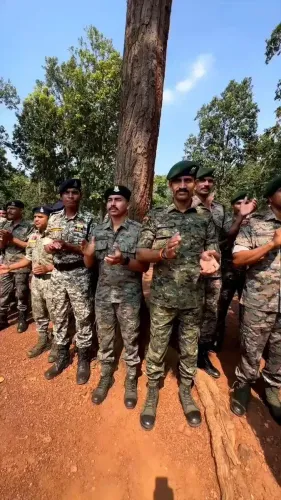
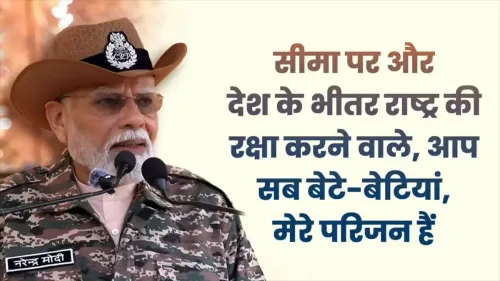
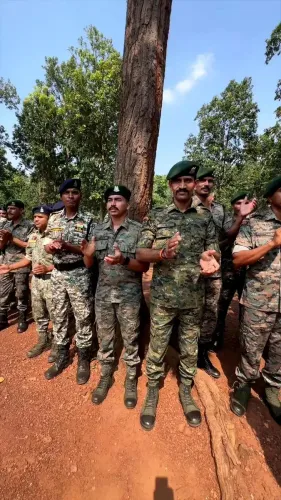
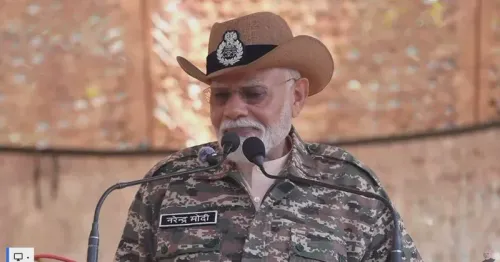
CM Bhupendra Patel salutes PM Modi's Diwali with jawans in Bastar
Synopsis
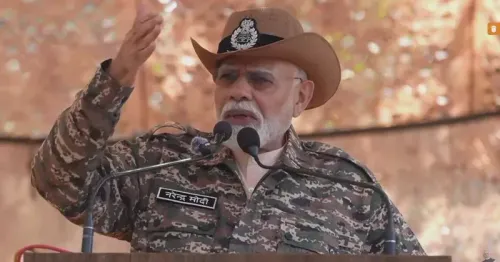
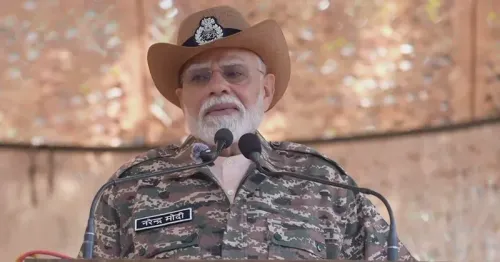
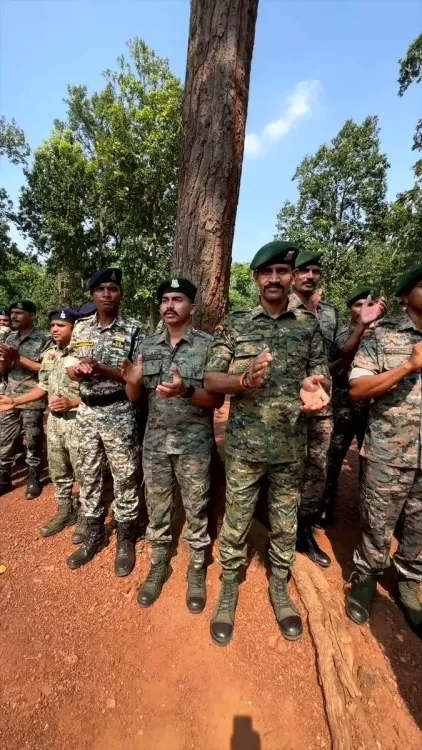
Gujarat Chief Minister Bhupendra Patel on November 8, 2026 hailed Prime Minister Modi's Diwali visit to troops in Bastar as a nation's salute to unyielding courage, extending a tradition of festival solidarity with deployed forces that dates to 2014.
Key Takeaways
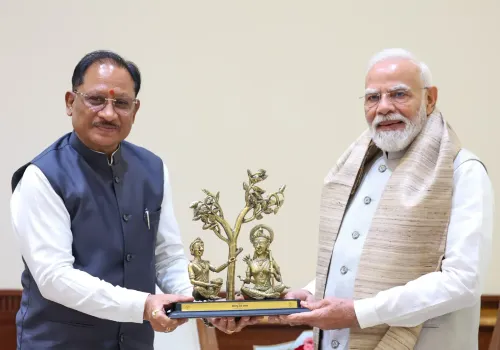
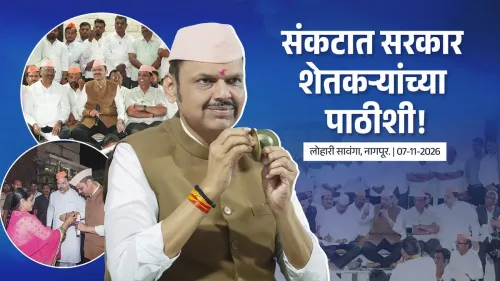
CM Bhupendra Patel posted a tribute on November 8, 2026 honouring PM Modi's Diwali visit to jawans in Bastar, Chhattisgarh .
PM Modi has maintained the practice of spending major festivals with deployed troops since 2014 .
Bastar is a focal zone for counter-Naxal (Left Wing Extremism) operations, making the visit symbolically significant beyond a routine festive gesture.
Patel described the moment as 'more than a tradition — a nation's heartfelt salute to unyielding courage.' The post is part of a recurring BJP communication pattern linking festive occasions with public expressions of civil-military solidarity.
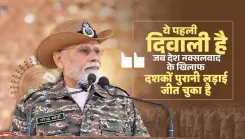
Every Diwali, one image cuts through the noise of festivities: a Prime Minister sharing sweets with soldiers standing watch so the rest of the country can celebrate. Gujarat Chief Minister Bhupendra Patel on Sunday, November 8, 2026, voiced that sentiment directly, hailing Prime Minister Narendra Modi's Diwali visit to troops deployed in Bastar, Chhattisgarh as 'more than a tradition — a nation's heartfelt salute to unyielding courage.'
Modi's Bastar gesture and what it signals to the forces
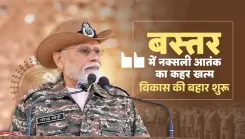
Bastar is not a ceremonial posting. The district in southern Chhattisgarh sits at the heart of India's decades-long counter-Naxal operations, where central paramilitary units and state forces maintain a near-permanent operational footing. When the Prime Minister arrives there with sweets and festive warmth during Diwali, the symbolism is pointed — the nation's highest office travelling toward the danger, not away from it.
CM Patel's post captured the spirit precisely: 'Every lamp in the country shines brighter because our brave soldiers stand vigilant across every frontier.' The line is not just rhetoric. It frames the soldiers' vigil as the precondition for every civilian's celebration — a framing that carries real weight in a state like Gujarat, which has contributed significantly to India's paramilitary and defence rosters.
A Diwali-with-jawans tradition that stretches back to 2014
Prime Minister Modi has maintained the practice of spending major festivals — Diwali in particular — alongside deployed troops since taking office in 2014. Over more than a decade, the visits have ranged from forward posts along the northern borders to internal security deployments in insurgency-affected zones. Each visit is designed to put the Prime Minister visibly on the same ground as the forces, however briefly.
Bastar, as a destination, sharpens that message further. Left Wing Extremism-affected districts are not headline postings in the conventional military sense, but the operational tempo and risk remain acute. Choosing such a location communicates a deliberate acknowledgement of the men and women engaged in the country's longest-running internal security challenge.
Gujarat CM's voice in a nationwide chorus of tribute
CM Bhupendra Patel's post is part of a broader pattern of BJP leaders publicly amplifying the Prime Minister's troop-visit moments during festive seasons — a coordinated expression of civil-military solidarity that has become a fixture of the party's political communication. The tone, however, cuts across party lines; the sentiment of honouring soldiers on Diwali draws broad public resonance well beyond any single political alignment.
What makes the message land is its specificity: not a generic tribute to 'the armed forces,' but a named visit, a named location, a named leader sharing sweets and smiles in a place most citizens will never see. That concreteness is what transforms a Diwali post into something closer to a national moment.
The lamps burn across millions of homes tonight — but in Bastar, they burn in the company of the Prime Minister and the soldiers who keep the frontier. That is the image CM Patel wanted every Indian to hold.
Point of View
Reinforcing the party's strongman-patriot brand at peak public attention moments. Choosing Bastar — an active internal-security theatre — over a ceremonial cantonment sharpens the message considerably, signalling that the acknowledgement is meant for the most exposed, least-visible deployments. CM Patel's amplification from Gujarat, a state with deep paramilitary recruitment roots, extends the resonance geographically. Together, the gesture and the response illustrate how festive-season political messaging in India has become inseparable from the security-patriotism narrative that dominates prime-time political discourse.
NationPress
8 Nov 2026
Frequently Asked Questions
Why does PM Modi visit jawans on Diwali?
PM Modi has maintained a practice since 2014 of spending major festivals, particularly Diwali, with deployed troops to express national gratitude for their service. The visits place the Prime Minister visibly alongside soldiers in operational areas rather than at ceremonial events.
Where is Bastar and why is it significant for security forces?
Bastar is a district in southern Chhattisgarh and remains one of India's most active zones for counter-Naxal (Left Wing Extremism) operations. Central paramilitary units and state forces maintain sustained deployments there, making it a high-risk posting for security personnel.
What did CM Bhupendra Patel say about PM Modi's Diwali visit?
CM Patel stated that PM Modi sharing sweets, smiles, and festive warmth with jawans in Bastar is 'more than a tradition — it is a nation's heartfelt salute to unyielding courage,' and said every lamp shines brighter because soldiers stand vigilant on the frontier.
How long has PM Modi been celebrating Diwali with soldiers?
PM Modi has been celebrating Diwali with deployed troops since 2014, the year he took office. Over more than a decade, these visits have covered forward posts on northern borders as well as internal security deployments in insurgency-affected zones.
What is the significance of a politician honouring soldiers on Diwali in India?
In India, Diwali tributes to deployed forces carry broad bipartisan resonance, as millions of soldiers and paramilitary personnel spend the festival away from their families. Such gestures reinforce the idea that civilian celebrations are made possible by the sacrifice and vigilance of security forces.