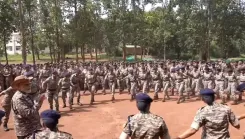
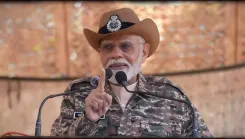
PM Modi marks Diwali with troops in Naxal-hit Bastar
Synopsis
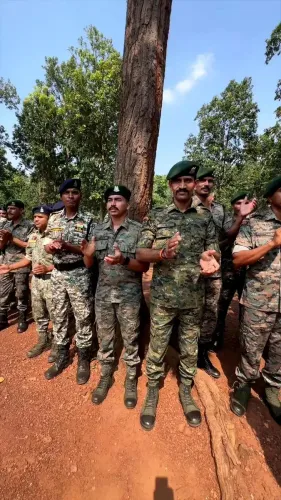
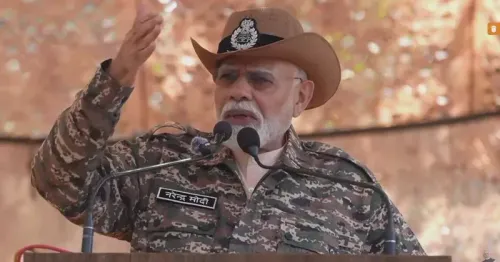
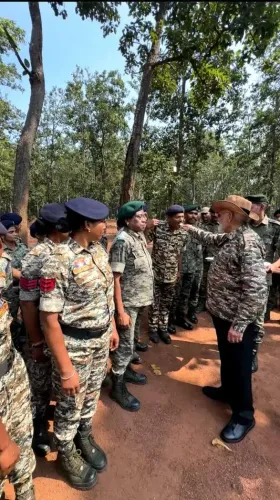
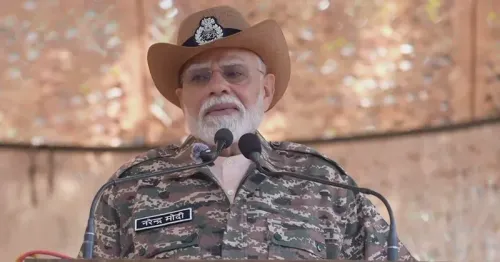
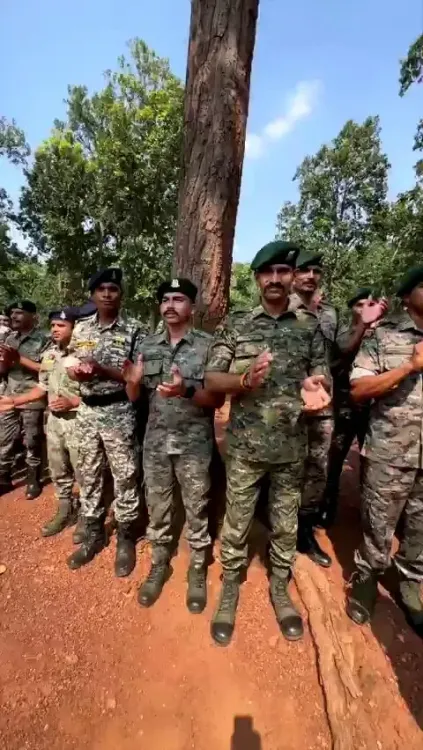
Prime Minister Modi celebrated Diwali with security personnel in Bastar, Chhattisgarh — a former Naxal stronghold — on 8 November 2026. Coal Minister G. Kishan Reddy shared the moment as evidence of a peace dividend in one of India's most contested regions.
Key Takeaways
PM Narendra Modi marked Deepawali 2026 with security personnel deployed in Bastar, Chhattisgarh .
Bastar was long considered a core area of Naxal influence within India's 'Red Corridor'.
Union Coal and Mines Minister G.
Kishan Reddy shared the moment on X, framing it as a symbol of a 'New India' emerging from insurgency.
From 2014 , the Ministry of Home Affairs has combined security operations with development delivery to reduce Left-Wing Extremism-affected districts.
Security forces and Bastar's tribal communities are the two groups whose lives have been most shaped by decades of Naxal conflict.
Official MHA data on Naxal incidents will be the next key measure of whether the ground reality matches the narrative.
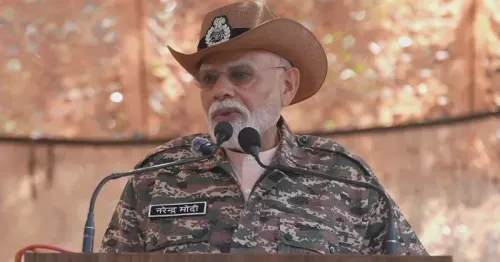
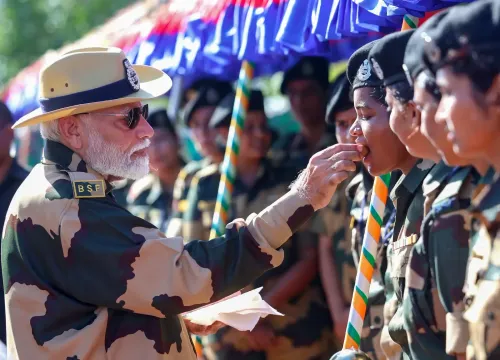
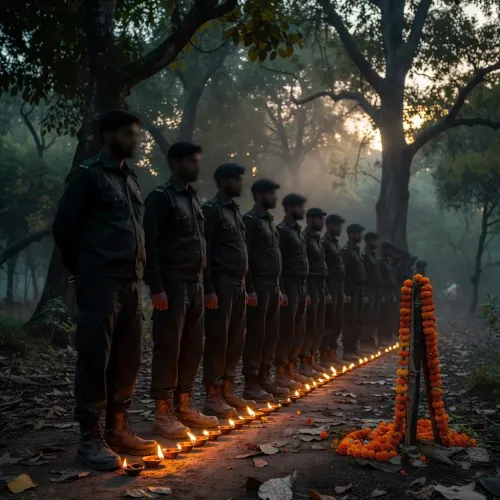
In a symbolically charged gesture, Prime Minister Narendra Modi celebrated Deepawali with security personnel in Bastar, Chhattisgarh — a region once synonymous with Naxal violence and now increasingly held up as a marker of the central government's counter-insurgency progress. The visit, shared on 8 November 2026 by Union Coal and Mines Minister G. Kishan Reddy, frames the moment as a turning point: diyas lit in terrain where, not long ago, landmines were the more familiar fixture.
Bastar's long shadow — and what has changed
Bastar sits at the heart of what security planners once called the 'Red Corridor' — a swath of forested, mineral-rich districts across Chhattisgarh, Jharkhand, and Odisha where the Communist Party of India (Maoist), commonly called Naxals, operated with near-impunity for decades. At its peak, Left-Wing Extremism (LWE) affected over 90 districts across India. Security-force casualties and civilian deaths were a grim annual constant.
The shift did not happen overnight. From 2014 onwards, the Ministry of Home Affairs pursued a twin-track strategy: intensified coordinated operations between central paramilitary forces and state police, alongside accelerated delivery of roads, electricity, mobile connectivity, and welfare schemes into formerly inaccessible tribal areas. The logic was blunt — deny the insurgency both sanctuary and a grievance base.
Modi in Bastar: the politics of presence
A sitting Prime Minister celebrating a major festival with jawans deployed in a former insurgency zone carries unmistakable political weight. It signals confidence in the security situation on the ground — and amplifies the government's narrative of a 'New India' where the state has re-established its writ in territory that once resisted it. Kishan Reddy's post carries that message explicitly: 'Where Naxalism once cast a shadow, the light of diyas now shines brightly.'
The security forces and the tribal communities of Bastar are the two communities whose lives have been most directly shaped by the insurgency and its suppression. For the former, Diwali in Bastar is a marker of hard-won ground. For the latter — many of whom were caught between Maoist intimidation and state action for years — the symbolism of a peaceful festival in their villages carries a different, more personal weight.
What the data will confirm — or complicate
The government's claim of a transforming Bastar rests on a broader trend: the Ministry of Home Affairs has progressively reduced the number of officially 'LWE-affected' districts as incident counts fall. What to watch next are the official annual data releases on Naxal violence — the numbers that will either underwrite the narrative of a pacified Bastar or introduce the complexity that ground realities always reserve the right to deliver.
For now, the image is a Prime Minister, soldiers, and diyas — in Bastar. That image alone tells a story India's security establishment has worked more than a decade to make possible.
Point of View
Shareable symbol. The honest test, however, will come from the MHA's annual LWE incident data — which will confirm or qualify the triumphalism.
NationPress
8 Nov 2026
Frequently Asked Questions
Why did PM Modi visit Bastar on Diwali 2026?
PM Modi visited Bastar to celebrate Deepawali with security personnel deployed in the region, using the occasion to highlight the government's progress in reducing Naxal influence in what was once a core Left-Wing Extremism zone.
Is Bastar still Naxal-affected in 2026?
The Indian government has steadily reduced the number of officially LWE-affected districts since 2014 through coordinated security operations and development schemes. The official position, reinforced by Modi's visit, is that significant progress has been made in Bastar, though complete pacification is an ongoing process tracked through MHA data.
What is G. Kishan Reddy's role in this news?
G. Kishan Reddy is India's Union Minister of Coal and Mines and the BJP's Telangana state president. He shared PM Modi's Diwali visit to Bastar on his official X account, framing it as a symbol of hope and development in New India.
What was the Red Corridor in India?
The Red Corridor referred to a belt of forested, tribal districts — primarily across Chhattisgarh, Jharkhand, and Odisha — where Maoist (Naxal) groups held significant operational presence for decades, conducting attacks on security forces and disrupting state governance.
How has India tackled Naxalism since 2014?
Since 2014 the Ministry of Home Affairs pursued a twin strategy: intensified joint operations by central paramilitary forces and state police, combined with accelerated delivery of roads, electrification, mobile connectivity, and welfare schemes into formerly inaccessible tribal districts to reduce the insurgency's support base.