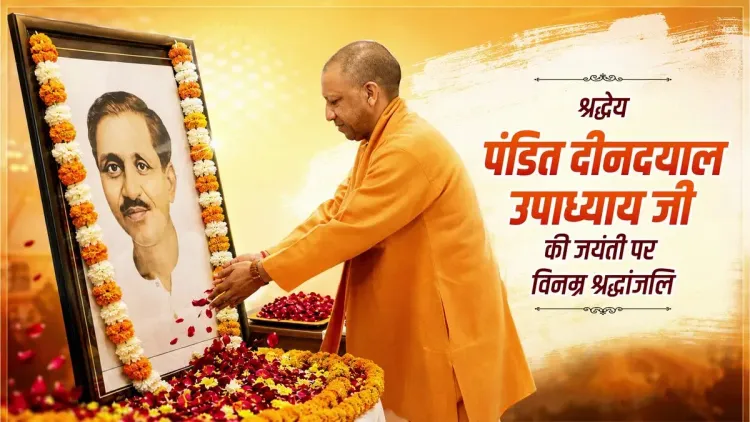
CM Yogi pays tribute to Deendayal Upadhyay on birth anniversary
Synopsis
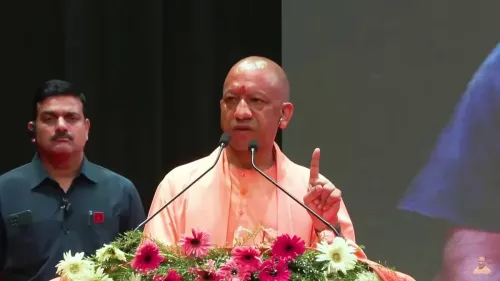
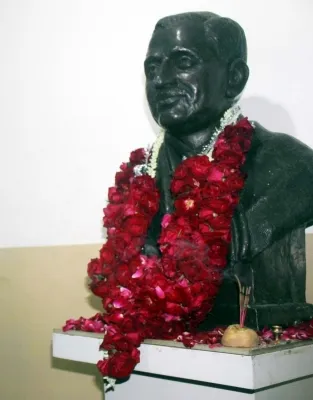
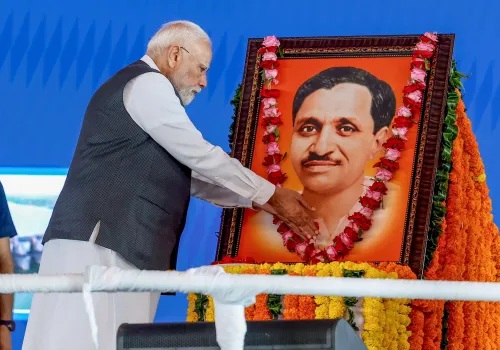
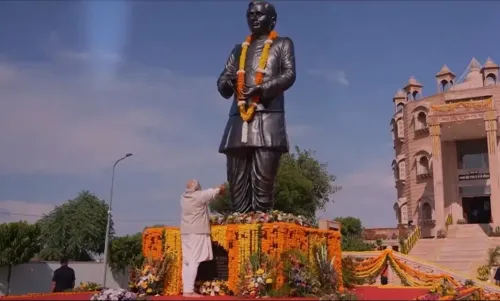
Uttar Pradesh CM Yogi Adityanath paid tribute to Pandit Deendayal Upadhyay on his birth anniversary, calling the Jana Sangh founder's Integral Humanism and Antyodaya philosophies an enduring inspiration for inclusive and self-reliant national development.
Key Takeaways
Uttar Pradesh Chief Minister Yogi Adityanath posted a tribute to Pandit Deendayal Upadhyay on his birth anniversary, 25 September 2026 .
Upadhyay was a founding member of the Bharatiya Jana Sangh (established 1951 ), the precursor to the BJP.
His twin philosophies — Ekatma Manavvad (Integral Humanism) and Antyodaya — prioritise the upliftment of the poorest citizen above all others.
The BJP formally adopted Integral Humanism as its core ideology upon its founding in 1980 .
The Antyodaya Anna Yojana , launched in 2000 , directly operationalised Upadhyay's principle of serving the last person in line.
CM Yogi described Upadhyay's thought as a living 'source of inspiration' for building an inclusive and self-reliant India.
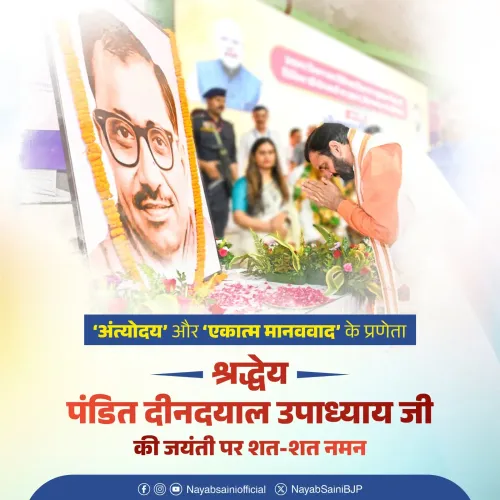
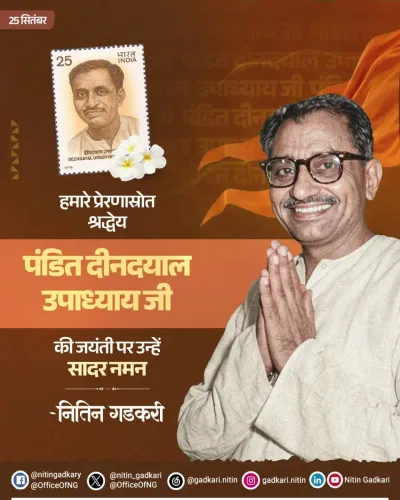
The idea that a nation's progress must be measured by the condition of its very last citizen has never gone out of fashion in Indian politics — and every year on 25 September, it returns to the centre of public discourse. Uttar Pradesh Chief Minister Yogi Adityanath marked the birth anniversary of Pandit Deendayal Upadhyay on Friday with a tribute honouring the thinker as the architect of two of India's most enduring political philosophies: Ekatma Manavvad (Integral Humanism) and Antyodaya (upliftment of the last person in line).
The philosopher who shaped a party's soul
CM Yogi's tribute, posted in Hindi, described Upadhyay as a 'fervent national thinker' and a founding member of the Bharatiya Jana Sangh, the political formation established in 1951 whose ideological DNA would later flow directly into the Bharatiya Janata Party. 'He presented a concept of development rooted in Indian culture and life values,' the Chief Minister wrote, 'in which the upliftment of the person standing in the last row of society was given the highest priority.' The BJP formally adopted Integral Humanism as its core philosophy when it was founded in 1980 — a lineage the party has consistently invoked ever since.
Antyodaya: from philosophy to food-grain policy
Upadhyay's Antyodaya principle did not remain confined to party manifestos. In 2000, the central government launched the Antyodaya Anna Yojana, a scheme designed to deliver subsidised food grains specifically to the poorest households — arguably the most direct translation of a mid-twentieth-century philosophical concept into a living welfare programme. The scheme remains operational, and its framing still echoes Upadhyay's core argument: that development which does not reach the weakest rung of society is, by definition, incomplete.
Why BJP leaders invoke this anniversary every year
The ritual tribute is also a statement of identity. By returning annually to Upadhyay's ideas, the party anchors its contemporary governance vocabulary — Aatmanirbhar Bharat (self-reliant India), inclusive development, cultural nationalism — in a pre-independence intellectual tradition rather than in purely electoral positioning. CM Yogi reinforced this frame explicitly, calling Upadhyay's thinking 'a source of inspiration for building an inclusive, self-reliant, and developed India' even today.
Upadhyay's anniversary falls at a moment when Uttar Pradesh, India's most populous state, is pursuing an aggressive welfare agenda across housing, food security, and rural connectivity — programmes that administrators in Lucknow regularly frame in the language of reaching the 'last mile' beneficiary. Whether that rhetorical continuity translates into measurable policy shifts is the question analysts and budget-watchers will keep tracking.
Seventy-five years after the Jana Sangh's founding, the man who never held elected office remains the BJP's most cited philosopher — proof that ideas, when they outlast their author, have a politics of their own.
Point of View
Reaffirming the party's claim that its welfare agenda traces directly to a coherent mid-century philosophy rather than to transient electoral calculation. For CM Yogi, invoking Antyodaya from Lucknow ties Uttar Pradesh's vast welfare machinery — spanning food security, rural housing, and rural roads — to a legitimising intellectual lineage. The move also subtly frames inclusivity as a right-of-centre value, complicating the opposition's ownership of that terrain. Analysts watching UP's budget priorities will note whether 'Antyodaya' resurfaces as a rhetorical label for new scheme launches in the coming legislative session.
NationPress
25 Sept 2026
Frequently Asked Questions
Who was Pandit Deendayal Upadhyay?
Pandit Deendayal Upadhyay was a founding member of the Bharatiya Jana Sangh, established in 1951, and the thinker who developed the philosophies of Integral Humanism and Antyodaya, both of which later became central to the BJP's ideology.
What is Antyodaya in Indian politics?
Antyodaya, coined by Deendayal Upadhyay, means the upliftment of the last and poorest person in society. It inspired the Antyodaya Anna Yojana launched in 2000, which provides subsidised food grains to the most vulnerable households in India.
What is Integral Humanism (Ekatma Manavvad)?
Integral Humanism is Upadhyay's philosophy that development must be rooted in Indian cultural values and must address the holistic — physical, intellectual, and spiritual — needs of the individual, rather than importing Western economic models wholesale. The BJP adopted it as its official ideology in 1980.
Why do BJP leaders pay tribute to Deendayal Upadhyay every year?
BJP leaders observe Upadhyay's birth anniversary on 25 September to reinforce the party's ideological roots in cultural nationalism and inclusive development, linking contemporary governance programmes to a pre-independence intellectual tradition.
What did CM Yogi say about Deendayal Upadhyay on his 2026 birth anniversary?
CM Yogi Adityanath called Upadhyay the architect of a development model that placed the upliftment of the weakest citizen at the highest priority, and said his thinking remains a source of inspiration for building an inclusive, self-reliant, and developed India.