CM Yogi pays floral tribute on Deendayal Upadhyay's 110th birth anniversary
Synopsis
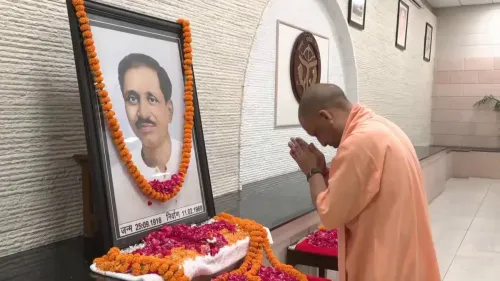
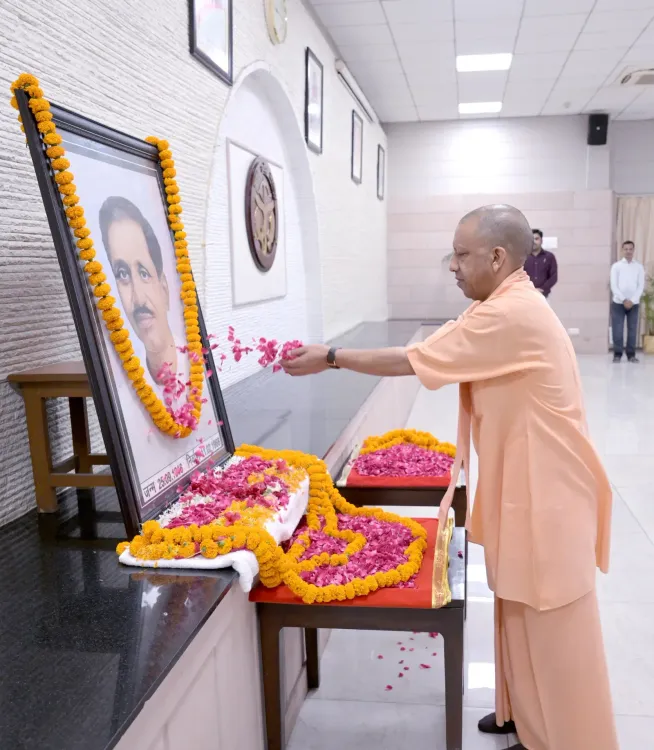
On Pandit Deendayal Upadhyay's 110th birth anniversary, CM Yogi Adityanath offered a floral tribute at his Lucknow official residence, honouring the founding architect of Integral Humanism and the Antyodaya principle — ideas that continue to shape BJP governance and welfare policy.
Key Takeaways
CM Yogi Adityanath paid a pushpanjali to Pandit Deendayal Upadhyay at his official Lucknow residence on 25 September 2026 .
The occasion marks Upadhyay's 110th birth anniversary .
Upadhyay (1916–1968) propounded Ekatma Manavavad (Integral Humanism) and the Antyodaya principle of uplifting the weakest sections of society.
The Deendayal Antyodaya Yojana , a national rural livelihoods mission, was launched in 2015 directly invoking his philosophy.
BJP-governed states observe 25 September annually with formal tributes, reaffirming Upadhyay's thought as a foundational ideological reference.
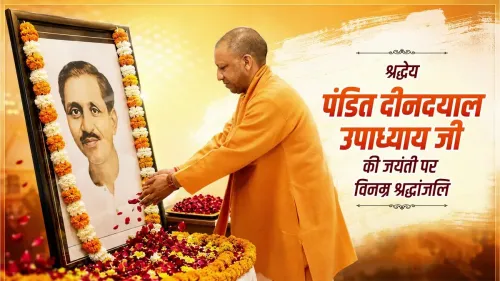
A portrait, a garland, and a philosophy that has shaped Indian conservative politics for six decades — Chief Minister Yogi Adityanath on Friday, 25 September 2026, paid floral tribute to Pandit Deendayal Upadhyay at his official residence in Lucknow, marking the thinker's 110th birth anniversary with a formal pushpanjali (floral homage).
The Chief Minister's Office of Uttar Pradesh announced the observance on X, noting that CM Yogi 'reverentially bowed to the sacred memories' of the ideologue described as the 'Praneta of Ekatma Manavavad evam Antyodaya' — the founding architect of Integral Humanism and the Antyodaya doctrine.
The man behind the philosophy
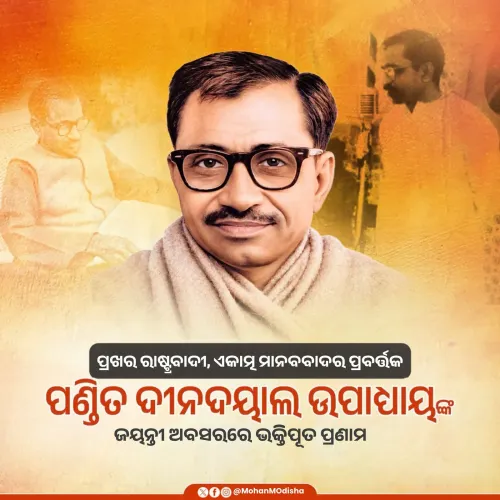
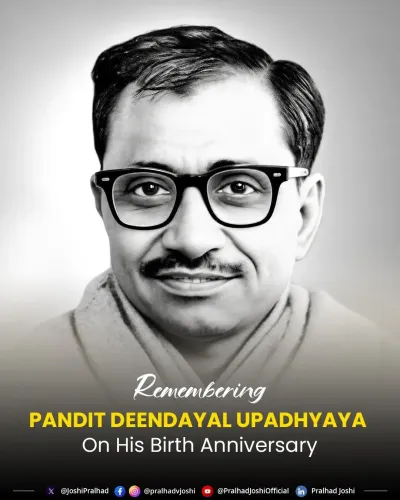
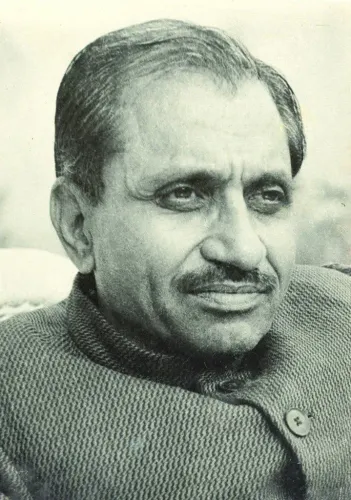
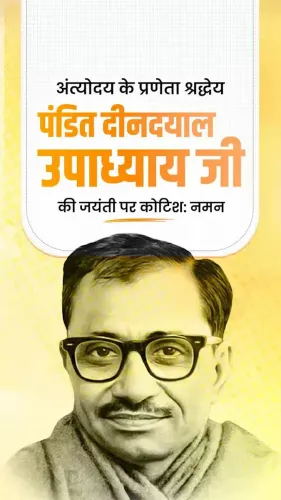
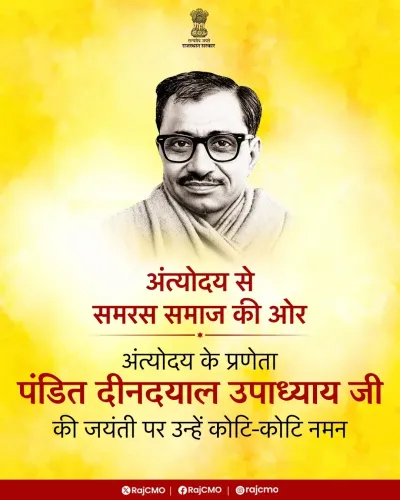
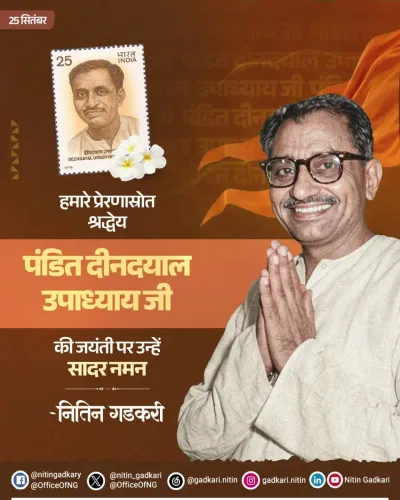
Pandit Deendayal Upadhyay (1916–1968) served as president of the Bharatiya Jana Sangh, the precursor to today's BJP, and constructed two ideas that remain central to India's ruling party's self-image. His Ekatma Manavavad, or Integral Humanism, argued for a distinctly Indian developmental model rooted in cultural continuity rather than either Western capitalism or Soviet socialism. His Antyodaya principle demanded that progress be measured not by the rise of the privileged but by the uplift of the very last person on the socio-economic ladder.
Those ideas were not left on the bookshelf. In 2015, the central government launched the Deendayal Antyodaya Yojana — a national rural livelihoods mission — explicitly invoking his name and philosophy, embedding Upadhyay's thinking into a welfare architecture that now reaches millions of households.
A ritual the BJP keeps faithfully
Across BJP-governed states, 25 September is treated as a day of ideological reaffirmation. Party offices, chief ministers' residences, and public squares host ceremonies that blend personal veneration with a broader political statement: that the BJP's policy instincts trace a direct lineage to Upadhyay's thought. For CM Yogi Adityanath, who has governed Uttar Pradesh since 2017, such observances are a recurring feature of the official calendar — a signal to both the RSS-BJP ideological ecosystem and to the wider electorate about the value system underpinning governance.
The Antyodaya frame, in particular, offers political utility: it allows the party to present welfare spending not as populism but as philosophical imperative, rooted in a tradition that predates independence-era socialist frameworks.
Whether this anniversary catalyses new scheme announcements or state-level events aligned with the Antyodaya agenda in the days ahead will be worth watching — it is the kind of occasion that often provides a political hook for welfare launches in BJP-ruled states.
Point of View
Signalling continuity between a pre-independence political philosophy and contemporary governance. For CM Yogi Adityanath, participation reinforces his standing within the broader RSS-BJP ecosystem. The Antyodaya frame is particularly potent because it allows the party to recast welfare delivery as philosophical imperative rather than electoral incentive — a distinction the BJP has long sought to project. With Uttar Pradesh heading into continued political competition, such observances also serve as quiet outreach to the party's ideological base.
NationPress
25 Sept 2026
Frequently Asked Questions
Who was Pandit Deendayal Upadhyay?
Pandit Deendayal Upadhyay (1916–1968) was an Indian philosopher and politician who served as president of the Bharatiya Jana Sangh. He is best known for propounding Ekatma Manavavad (Integral Humanism) and the Antyodaya principle, which calls for prioritising the uplift of the most marginalised sections of society.
Why is 25 September significant for the BJP?
25 September is Pandit Deendayal Upadhyay's birth anniversary. The BJP and its affiliated organisations observe the day annually with floral tributes and events, treating it as a moment of ideological reaffirmation, as Upadhyay's philosophy is considered a foundational pillar of the party's thought.
What is Ekatma Manavavad or Integral Humanism?
Ekatma Manavavad, translated as Integral Humanism, is a political-philosophical framework articulated by Deendayal Upadhyay. It argues for an Indian developmental model rooted in cultural continuity, rejecting both Western capitalism and Soviet socialism in favour of a holistic approach centred on the individual, family, society, and nature in harmony.
What is the Deendayal Antyodaya Yojana?
The Deendayal Antyodaya Yojana is a central government scheme launched in 2015 as a rural livelihoods mission. It was named after Deendayal Upadhyay and explicitly draws on his Antyodaya principle of improving the conditions of the poorest and most vulnerable households.
How long has Yogi Adityanath been Chief Minister of Uttar Pradesh?
Yogi Adityanath has served as Chief Minister of Uttar Pradesh since 2017, making him one of the longest-serving sitting chief ministers in the state's history.