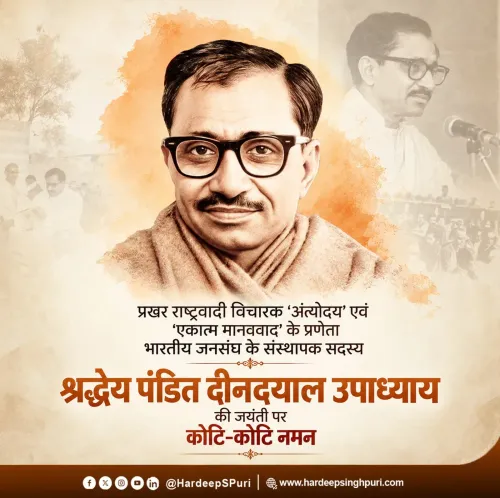
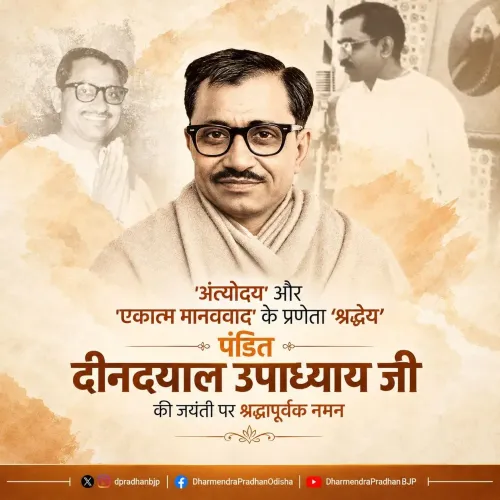
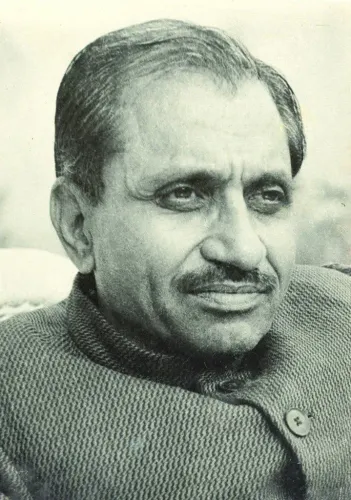
Pralhad Joshi Pays Tribute to Deendayal Upadhyaya on Birth Anniversary
Synopsis
Union Minister Pralhad Joshi marked Pandit Deendayal Upadhyaya's birth anniversary by invoking Integral Humanism and Antyodaya as India's ideological compass for inclusive, self-reliant growth — underlining the BJP's six-decade philosophical lineage.
Key Takeaways
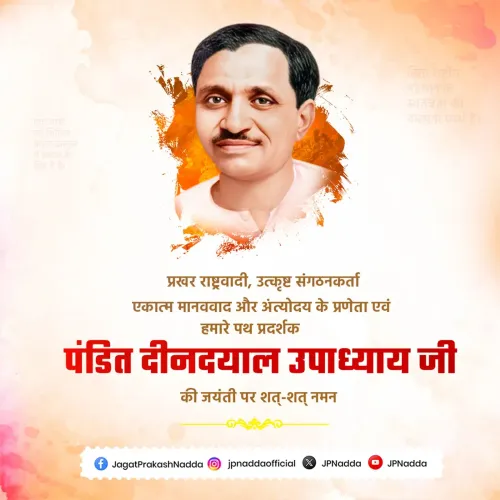
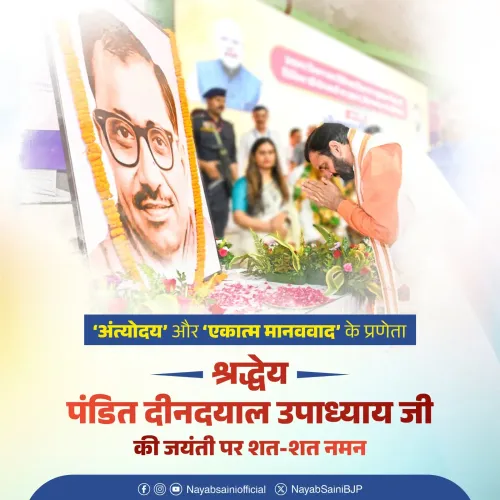
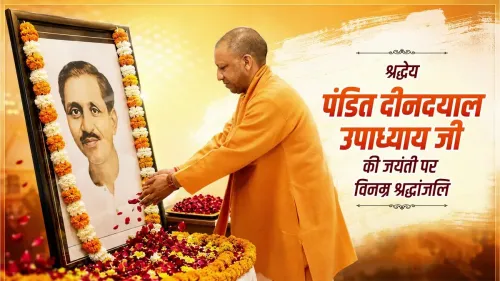
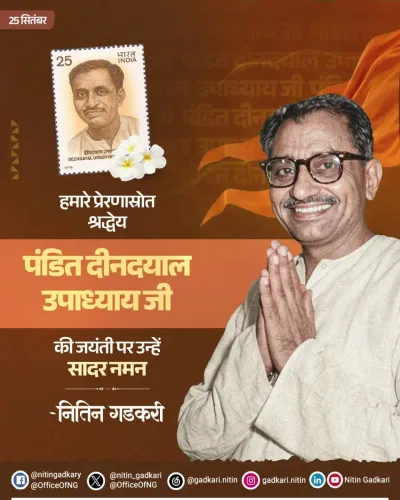
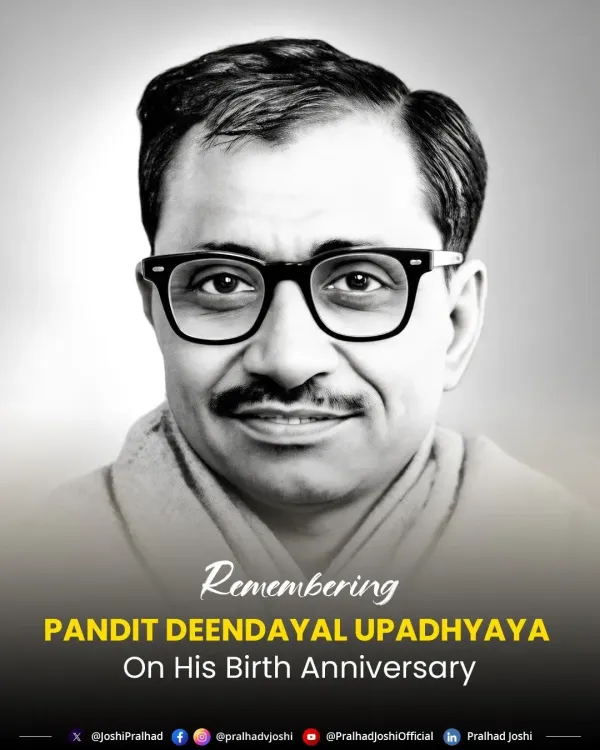
Union Consumer Affairs Minister Pralhad Joshi paid tribute to Pandit Deendayal Upadhyaya on his birth anniversary on September 25, 2026 .
Upadhyaya presented Integral Humanism ( Ekatma Manavvad ) in four lectures in 1965 as an alternative to both capitalism and socialism.
Antyodaya — the principle of prioritising the welfare of the poorest — was institutionalised as the Antyodaya Anna Yojana in 2000 , providing subsidised foodgrains to marginalised families.
Joshi reaffirmed commitment to 'an inclusive, self-reliant, and truly prosperous India' — language that aligns directly with his ministry's mandates over consumer protection and public distribution.
The BJP consistently cites Upadhyaya's thought as the philosophical foundation for its flagship welfare and self-reliance programmes.
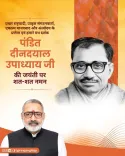
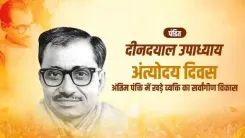
On the birth anniversary of one of independent India's most consequential ideological architects, Union Consumer Affairs Minister Pralhad Joshi paid tribute to Pandit Deendayal Upadhyaya on Friday, September 25, 2026, reaffirming the BJP's foundational commitment to welfare reaching the last person in the queue.
The philosopher who redrew India's ideological map
Pandit Deendayal Upadhyaya was no armchair thinker. As the ideological anchor of the Bharatiya Jana Sangh — the BJP's predecessor — he delivered four landmark lectures in 1965 that laid out Ekatma Manavvad, or Integral Humanism: a philosophy that explicitly rejected both Western capitalism and Soviet-style socialism, arguing instead for a model rooted in Indian civilisational thought and the organic unity of the individual, society, and nature.
Minister Joshi described this concept as 'the foundational blueprint for our nation's socio-economic growth, ensuring that development reaches the very last person in the queue.' In Kannada, he added: 'ಅಂತ್ಯೋದಯದ ಮೂಲಕ ಸಮಾಜದ ಕಟ್ಟಕಡೆಯ ವ್ಯಕ್ತಿಯ ಕಲ್ಯಾಣವೇ ರಾಷ್ಟ್ರದ ನಿಜವಾದ ಪ್ರಗತಿ' — [Through Antyodaya, the welfare of the last person in society is the nation's true progress].
Antyodaya: from philosophy to policy pipeline
The word Antyodaya — literally 'rise of the last' — moved from Upadhyaya's lectures into statute in 2000, when the central government launched the Antyodaya Anna Yojana, a scheme providing heavily subsidised foodgrains to the poorest families across India. It is one of the clearest instances of a mid-20th-century philosophical concept being operationalised as a 21st-century welfare programme.
The BJP has consistently positioned Upadhyaya's thought as the moral grammar behind its flagship schemes — from food security and rural development to the self-reliance framing of Atmanirbhar Bharat. For a minister who holds charge of both Consumer Affairs and Food and Public Distribution, invoking Antyodaya is not merely ceremonial; it signals the ideological register within which public distribution reform is conceived and justified.
A tribute that doubles as a policy signal
Joshi called for 'building an inclusive, self-reliant, and truly prosperous India' — language that maps directly onto his ministry's mandates over consumer protection, price stability, and the public distribution system. Upadhyaya's simplicity, nationalism, and dedication to public service, the minister wrote in Kannada, 'are always a source of inspiration.'
Birth anniversaries of ideological founders in Indian politics are rarely neutral occasions. They serve as annual moments for a party to restate its core commitments — and for senior ministers to align their portfolios, publicly, with that founding vision. Today's tribute is precisely that: a reminder that the BJP's welfare architecture claims a philosophical lineage stretching back six decades.
Point of View
Invoking Antyodaya is a deliberate alignment of portfolio with party doctrine. The BJP's repeated invocation of Integral Humanism across decades signals a sustained effort to project welfare policy not as populism but as civilisational continuity. Watch whether this anniversary rhetoric translates into concrete reform announcements in the public distribution system or consumer protection architecture in the months ahead.
NationPress
25 Sept 2026
Frequently Asked Questions
Who was Pandit Deendayal Upadhyaya?
Pandit Deendayal Upadhyaya was an Indian political thinker and leader of the Bharatiya Jana Sangh who developed the philosophy of Integral Humanism in 1965, proposing a development model rooted in Indian civilisational thought rather than capitalism or socialism.
What is Integral Humanism or Ekatma Manavvad?
Integral Humanism, or Ekatma Manavvad, is a political-economic philosophy articulated by Deendayal Upadhyaya in four lectures in 1965. It argues for the organic unity of the individual, society, and nature, rejecting both Western capitalism and Soviet socialism in favour of a uniquely Indian development framework.
What is Antyodaya and how did it become a government scheme?
Antyodaya literally means 'rise of the last' and is Upadhyaya's concept of prioritising the welfare of the most marginalised. In 2000, the central government translated this into the Antyodaya Anna Yojana, which provides heavily subsidised foodgrains to India's poorest families.
Why did Pralhad Joshi pay tribute to Deendayal Upadhyaya?
September 25 is the birth anniversary of Pandit Deendayal Upadhyaya. Union Minister Pralhad Joshi paid tribute to mark the occasion, reaffirming the BJP's commitment to the ideological principles of Integral Humanism and Antyodaya as the basis for inclusive national development.
What is Pralhad Joshi's ministerial portfolio?
Pralhad Joshi is the Union Minister of Consumer Affairs, Food and Public Distribution, and Minister of New and Renewable Energy. He is a senior BJP leader from Karnataka.