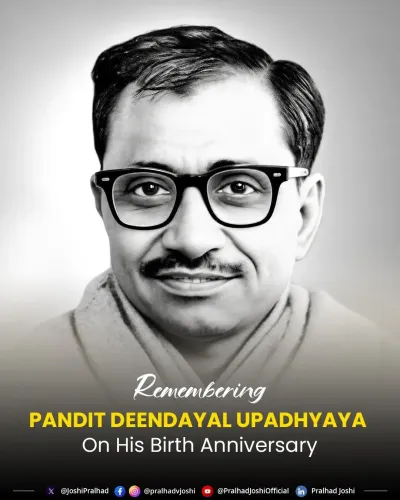
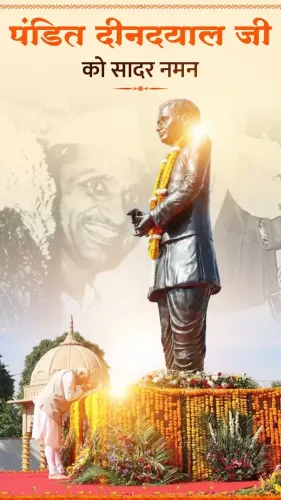
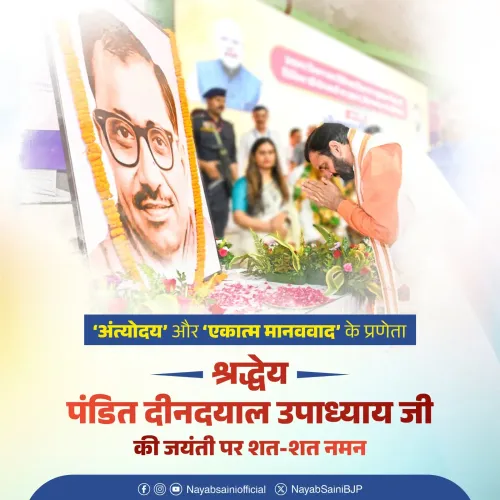
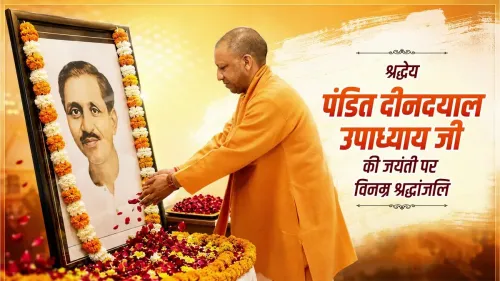
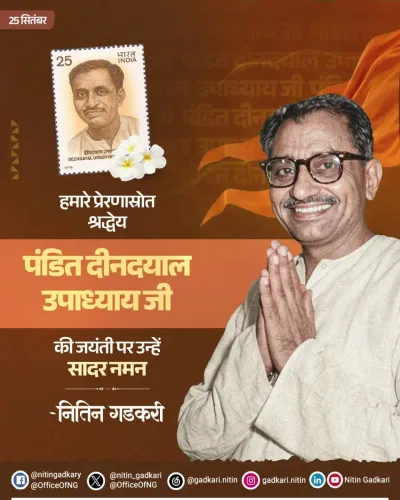
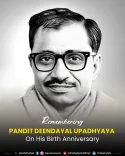
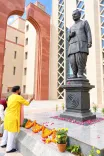
Nadda pays tribute to Deendayal Upadhyay on birth anniversary
Synopsis
Union Health Minister J. P. Nadda marked the birth anniversary of Pandit Deendayal Upadhyay on September 25, saluting the Integral Humanism philosopher and pledging that the government remains committed to delivering welfare to every last citizen — the core of Upadhyay's Antyodaya vision.
Key Takeaways
Union Health Minister J.
Nadda paid tribute to Pandit Deendayal Upadhyay on his birth anniversary, September 25 .
Upadhyay was a founder member of the Bharatiya Jana Sangh (est.
1951 ), predecessor to the BJP, and the proponent of Integral Humanism ( Ekatma Manavaad ).
His Antyodaya principle places the upliftment of the poorest citizen at the centre of governance.
The Antyodaya Anna Yojana (launched 2000 ) is the most direct policy embodiment of this philosophy, extending subsidised food grains to the poorest households.
Nadda pledged the current government is 'committed to delivering development and public welfare to the last person in society,' framing ongoing schemes as extensions of Upadhyay's ideas.
Every year on September 25, the BJP pauses to remember the ideological architect who gave it its founding grammar — and Union Health Minister J. P. Nadda opened the day with a tribute to Pandit Deendayal Upadhyay, saluting the philosopher-politician whose concept of Antyodaya — 'upliftment of the last person' — continues to frame the party's welfare vocabulary seven decades on.
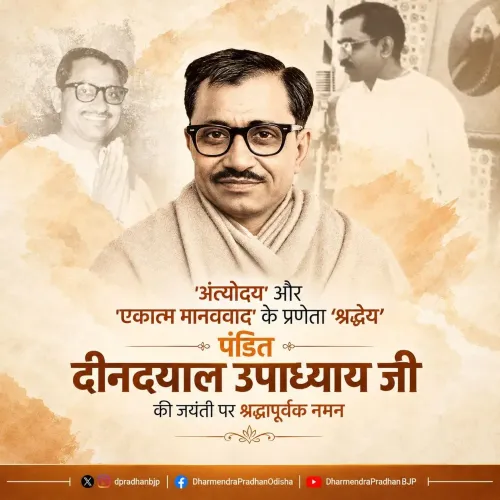
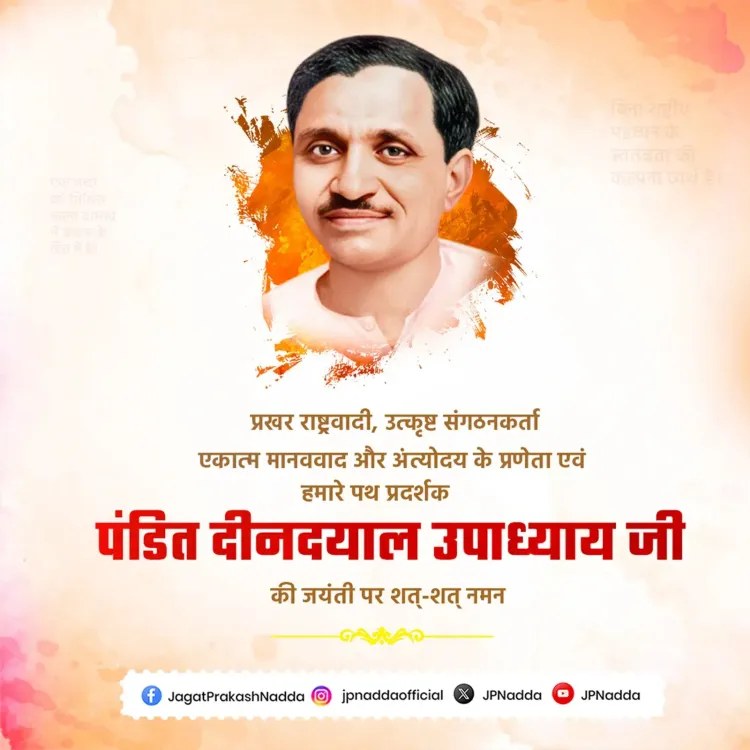
Writing in Hindi, Nadda offered what he called 'kotish naman' — a million-fold salute — to Upadhyay, describing him as the 'proponent of Integral Humanism, founder member of the Bharatiya Jana Sangh, and our guiding light.' He credited Upadhyay with charting a path toward 'the upliftment of the person standing on the last rung of society and the self-reliance of the nation.'
The man behind 'Integral Humanism'
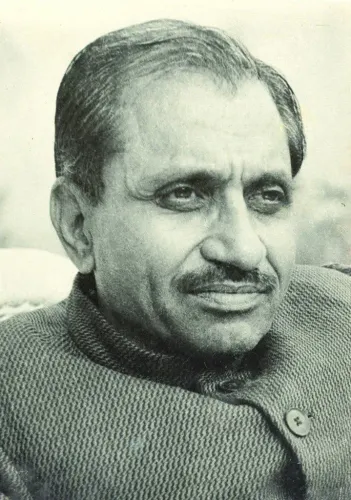
Pandit Deendayal Upadhyay was born on September 25, 1916, and rose to become one of the defining intellectual forces of Indian conservative nationalism. As a founder member of the Bharatiya Jana Sangh — the political party established in 1951 that would eventually evolve into the Bharatiya Janata Party — he articulated a philosophy he called Ekatma Manavaad, or Integral Humanism: the idea that genuine national development must be rooted in Indian culture and must reach its most marginalised citizens first.
His concept of Antyodaya placed the dignity of the poorest person at the moral centre of governance. It was a radical inversion of trickle-down thinking — start at the bottom, not the top.
From philosophy to policy: Antyodaya's welfare legacy
The Antyodaya principle found its most direct policy expression in the Antyodaya Anna Yojana, launched in 2000, which extended heavily subsidised food grains to the poorest households across India. Successive NDA governments have invoked the same ideological lineage to frame a broader basket of social-sector programmes — from housing and sanitation to health cover and direct benefit transfers — as continuations of Upadhyay's vision.
Nadda made that link explicit on Friday, writing that 'today our government, carrying forward his ideas, is committed to delivering the benefits of development and public welfare to the last person in society.' It is a formulation BJP leaders repeat with deliberate consistency each year on this date, anchoring contemporary policy ambition in a fixed ideological source.
A simple life as political symbol
Nadda also highlighted what he called Upadhyay's 'simple life, nation-devoted thought, and unwavering dedication to Indian culture' as an inspiration for all. This framing — the ascetic, principled leader uncorrupted by personal ambition — remains a powerful rhetorical touchstone for the BJP, contrasting an idealised founding ethos with the perceived transactionalism of rival political traditions.
Upadhyay's legacy grows sharper, not softer, with each passing anniversary — because the party he helped found now governs at the Centre and must continuously answer whether the last person on the ladder has, in fact, moved up.
Point of View
Reminding voters that the party's welfare architecture has a philosophical spine older than its current electoral dominance. By invoking Antyodaya each year, senior leaders like Nadda simultaneously honour a founding legacy and set a self-imposed accountability standard: last-mile delivery is not just policy, it is doctrine. The persistence of this framing matters because it makes welfare shortfalls harder to dismiss as administrative lapses — they become ideological failures. As the government pushes schemes in health, nutrition, and housing, the Upadhyay anniversary serves as an annual audit question the party asks of itself.
NationPress
25 Sept 2026
Frequently Asked Questions
Who was Pandit Deendayal Upadhyay?
Pandit Deendayal Upadhyay (born September 25, 1916) was a philosopher, organiser, and founder member of the Bharatiya Jana Sangh who developed the political philosophy of Integral Humanism, emphasising India's cultural roots and the primacy of uplifting the weakest citizen through his concept of Antyodaya.
What is Antyodaya and why is it important in Indian politics?
Antyodaya means 'upliftment of the last person' and is a principle associated with Deendayal Upadhyay. It holds that true development must begin with the most marginalised. BJP-led governments have used this concept to justify and name major welfare schemes, most notably the Antyodaya Anna Yojana launched in 2000.
What is Integral Humanism (Ekatma Manavaad)?
Integral Humanism is Deendayal Upadhyay's political philosophy, which argues that India's development must be grounded in its own cultural and civilisational values rather than imported Western ideologies, and must treat the individual, society, and nature as an integrated whole rather than competing interests.
What is the Antyodaya Anna Yojana?
The Antyodaya Anna Yojana is a government food security scheme launched in 2000 that provides heavily subsidised food grains to the poorest of the poor households in India. It is named directly after Upadhyay's Antyodaya principle.
Why do BJP leaders mark Deendayal Upadhyay's birth anniversary every year?
Upadhyay is regarded as the primary ideological architect of the BJP and its predecessor the Bharatiya Jana Sangh. BJP leaders mark his birth anniversary annually to reaffirm the party's commitment to his welfare-first and culturally-rooted philosophy, and to frame current government programmes as continuations of his vision.