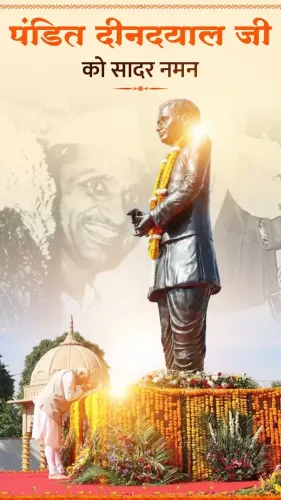
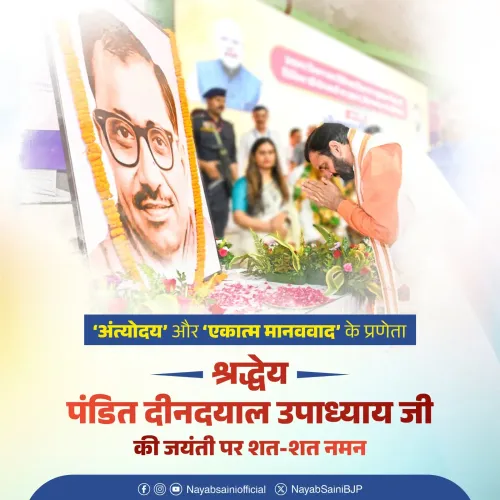
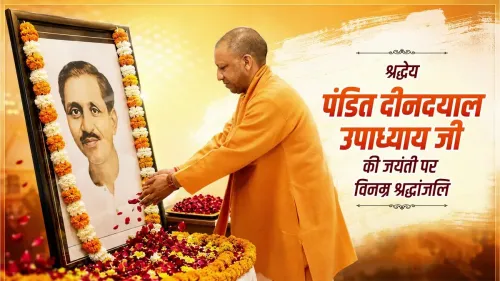
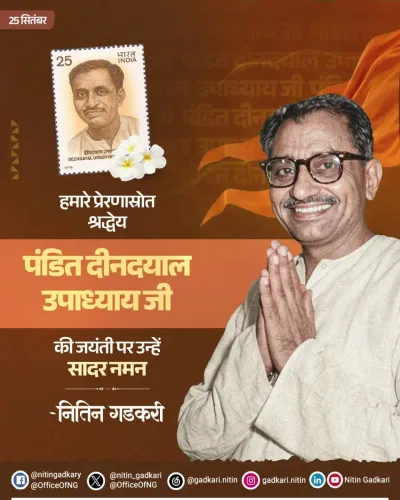
Amit Shah pays tribute to Deendayal Upadhyay on birth anniversary
Synopsis
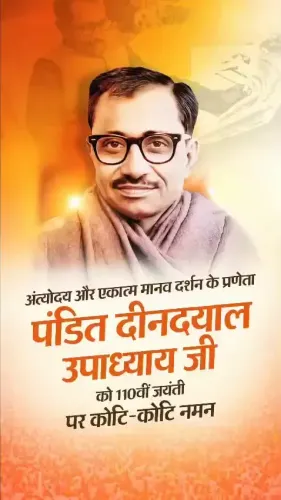
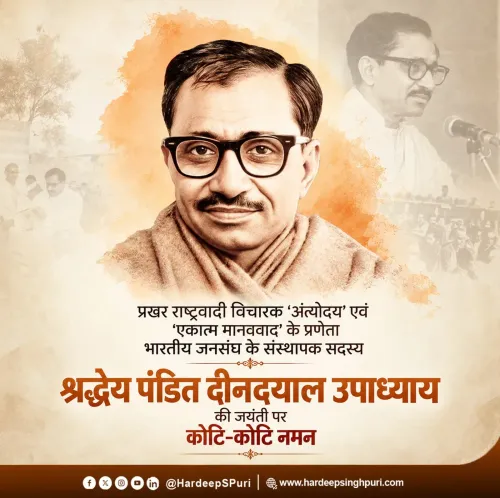
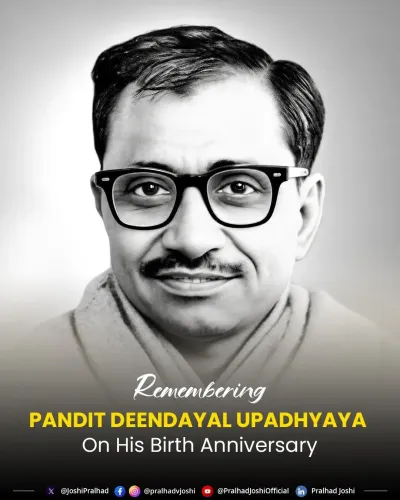
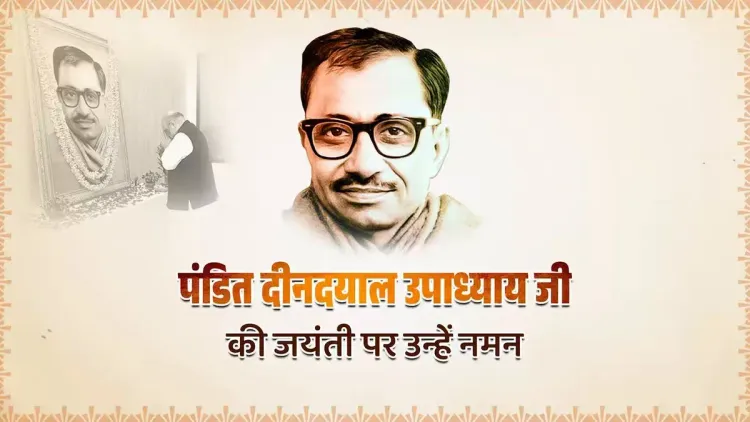
On Pandit Deendayal Upadhyay's birth anniversary, Union Home Minister Amit Shah paid tribute to the BJP's founding ideologue, honouring his Antyodaya philosophy and Integral Humanism — a vision of politics as service to the last person in society.
Key Takeaways
Amit Shah posted a tribute to Pandit Deendayal Upadhyay on his birth anniversary, 25 September 2026 .
Shah described Upadhyay as the pioneer of Antyodaya (upliftment of the last person) and Ekatma Manavvad (Integral Humanism).
Upadhyay articulated Integral Humanism in lectures in 1965 , forming the philosophical bedrock of the Bharatiya Jana Sangh and later the BJP.
He edited and wrote for Rashtradharma and Panchjanya , two key publications that shaped nationalist discourse.
BJP leaders mark this anniversary annually to reaffirm the party's ideological commitment to welfare-first, service-oriented governance.
Politics as a means of serving the last person in society — not a ladder to power. On the birth anniversary of Pandit Deendayal Upadhyay on 25 September, Union Home Minister Amit Shah invoked that foundational idea in a heartfelt tribute, calling Upadhyay's philosophy a 'pole star' guiding national service and public welfare.
Shah wrote: 'अंत्योदय' और एकात्म मानववाद के प्रणेता, महान राष्ट्रसेवक श्रद्धेय पंडित दीनदयाल उपाध्याय जी की जयंती पर उन्हें कोटि-कोटि नमन।' — 'Heartfelt salutations to the revered Pandit Deendayal Upadhyay, the pioneer of Antyodaya and Integral Humanism, on his birth anniversary.' He added that Upadhyay viewed politics not as a means to acquire power, but as an instrument for national service and the upliftment of the last person in society.
The philosopher who redefined political purpose
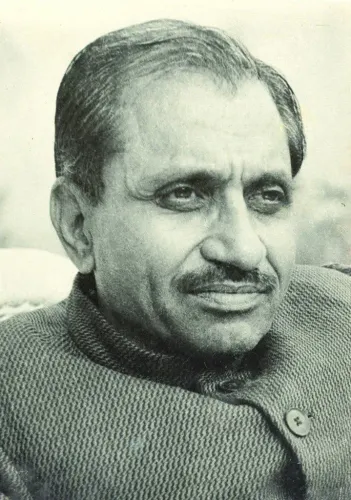
Pandit Deendayal Upadhyay was the principal ideologue of the Bharatiya Jana Sangh, the predecessor of today's BJP. In 1965, he delivered a landmark series of lectures articulating Ekatma Manavvad — Integral Humanism — a philosophy that rejected both Western capitalism and Soviet-style socialism in favour of a distinctly Indian framework centred on the holistic development of the individual within society, the nation, and nature.
His concept of Antyodaya — 'rise of the last one' — placed the poorest and most marginalised citizen at the centre of governance. The idea was not charity but structural priority: policies must be measured by how they serve those at the very bottom. It is a principle that BJP governments have repeatedly cited as the intellectual scaffolding for welfare programmes targeting the rural poor, the homeless, and the unbanked.
Rashtradharma, Panchjanya, and a voice for national unity
Shah's tribute specifically highlighted Upadhyay's role as editor and writer for two influential publications — Rashtradharma and Panchjanya — through which he shaped nationalist intellectual discourse at a time when India was still defining its post-independence identity. Through these platforms and numerous movements, he raised questions of national unity with clarity and conviction.
For the BJP, invoking Upadhyay on his birth anniversary is an annual act of ideological reaffirmation. Party workers and leaders across the country mark the day with seminars, community service events, and tributes — a ritual that doubles as a reminder of the philosophical lineage the party claims to carry forward.
A legacy that still frames the debate
Shah's closing line — that Upadhyay's ideas will 'always show the way like a pole star' in the direction of national service and public welfare — captures how the BJP continues to anchor contemporary policy language in his thought. Schemes targeting the rural poor, cooperative sector reforms, and welfare-first budgeting are routinely framed through the lens of Antyodaya, keeping a 1960s philosophical vision alive at the heart of 21st-century governance claims.
Sixty-plus years after those Integral Humanism lectures, the question Deendayal Upadhyay posed — whether politics can genuinely serve the last person — remains the sharpest measure of any government's intent.
Point of View
The BJP positions its governance not as a break from the past but as the fulfilment of a 1960s vision. In a political climate where welfare delivery and the reach of government schemes are hotly contested, invoking Upadhyay's 'last person first' principle is both a philosophical claim and a political one. How faithfully that principle translates into policy outcomes remains the live debate.
NationPress
25 Sept 2026
Frequently Asked Questions
Who was Pandit Deendayal Upadhyay?
Pandit Deendayal Upadhyay was the chief ideologue of the Bharatiya Jana Sangh, the predecessor of the BJP. He is best known for articulating Ekatma Manavvad (Integral Humanism) in 1965 and the concept of Antyodaya, which places the welfare of the poorest citizen at the centre of governance.
What is Integral Humanism (Ekatma Manavvad)?
Integral Humanism is the political philosophy articulated by Deendayal Upadhyay in a series of lectures in 1965. It rejected both Western capitalism and Soviet socialism, proposing an Indian framework centred on the holistic development of the individual within the family, society, nation, and nature.
When is Deendayal Upadhyay's birth anniversary?
Pandit Deendayal Upadhyay's birth anniversary falls on 25 September. It is observed annually by BJP leaders and party workers across India with tributes, seminars, and community service events.
What were Rashtradharma and Panchjanya?
Rashtradharma and Panchjanya were nationalist publications through which Deendayal Upadhyay shaped intellectual discourse on national unity and social service in post-independence India. Panchjanya continues to be published and is closely associated with the RSS.