CM Rekha Gupta joins Navratri Garba and Ramleela at three Delhi venues
Synopsis
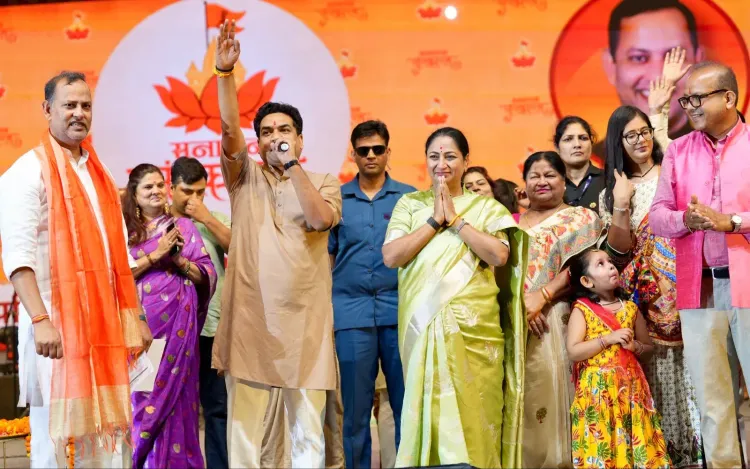
On the occasion of Navratri 2026, Delhi Chief Minister Rekha Gupta attended three festive events in Rohini and Azadpur — a Garba Mahotsav by Sanatan Sanskaram Society and Ramleela productions by two separate community organisations — celebrating the capital's Sanatan cultural traditions.
Key Takeaways
Delhi CM Rekha Gupta attended three Navratri events on the night of 13–14 October 2026 .
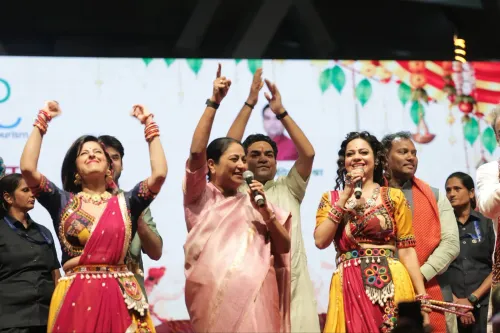
The Garba Mahotsav was organised by 'Sanatan Sanskaram' Society at Ramleela Maidan, Rohini .
Two separate Ramleela productions were staged at Japanese Park, Rohini (Shri Ramleela Committee) and Kewal Park, Azadpur (Shri Adarsh Kala Kendra).
CM Gupta described the experience as a privilege and highlighted Delhi's Sanatan cultural traditions on X under #Navratri2026 .
Attention now shifts to official arrangements for Dussehra celebrations across Delhi.
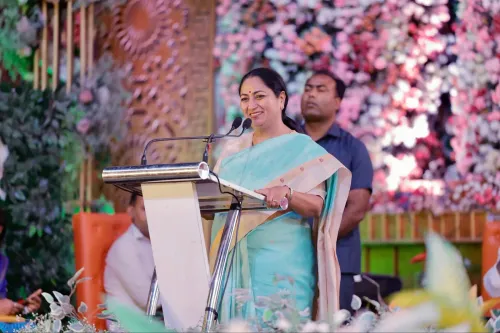
Delhi blazed with devotion on the night of 13–14 October 2026 as Delhi Chief Minister Rekha Gupta stepped into the festive heart of the capital, joining three simultaneous Navratri celebrations across two of the city's busiest neighbourhoods — a gesture that placed the city's highest elected office squarely amid its oldest living traditions.
Sharing the experience on X, CM Gupta wrote: 'नवरात्रि के पावन दिनों में पूरी दिल्ली अपनी सनातन परंपराओं, भक्ति और उत्सव के रंगों में रंगी है' — 'In the sacred days of Navratri, all of Delhi is coloured in its Sanatan traditions, devotion and festivity.' She described attending three events as a 'privilege' and closed with a proud declaration: 'This is our Delhi — where every celebration carries a beautiful glimpse of our Sanatan culture.'
Three stages, one city in full colour
The evening took CM Gupta first to Ramleela Maidan, Rohini, for the Garba Mahotsav organised by 'Sanatan Sanskaram' Society — a congregation of devotees celebrating the nine nights dedicated to Goddess Durga through dance and music. From there she moved to Japanese Park, Rohini, where Shri Ramleela Committee was staging its dramatic enactment of the Ramayana. The third stop was Kewal Park, Azadpur, home to the Ramleela production of Shri Adarsh Kala Kendra.
The geography matters. Rohini and Azadpur are densely populated residential belts in north and northwest Delhi, where community-organised Ramleela grounds have been a neighbourhood fixture for generations. Attending three events in a single evening — rather than a flagship state ceremony — signals an emphasis on grassroots cultural engagement.
Navratri and Ramleela in Delhi's public calendar
Navratri, the nine-night festival honouring the forms of Goddess Durga, is one of India's most widely observed religious occasions. In Delhi, it runs in parallel with Ramleela — the outdoor theatrical retelling of the Ramayana that culminates in the burning of Ravana's effigy on Dussehra, typically the tenth day after Navratri begins. Delhi hosts dozens of Ramleela productions every year, ranging from grand state-sponsored spectacles to intimate neighbourhood affairs; together they draw millions of residents into shared public space.
Indian political leaders across party lines routinely participate in Navratri and Ramleela events — the tradition sits at the intersection of religious observance and civic identity. For a sitting Chief Minister, such appearances also carry an implicit endorsement of municipal infrastructure: the grounds, the lighting, the crowd management that make these events possible each year.
Eyes now on Dussehra arrangements
With Navratri drawing toward its close, attention will turn to Dussehra — the climactic celebration that follows. How the Delhi government facilitates the city's largest Ramlila grounds, manages crowd safety, and participates in the effigy-burning ceremonies will be the next measure of official commitment to the capital's festive calendar. CM Gupta's visible presence across multiple neighbourhood events this Navratri sets an early signal.
Point of View
Public participation in religious festivals has long been a tool for reinforcing cultural identity politics alongside governance. The choice of Rohini and Azadpur, densely populated and politically significant belts, is unlikely to be coincidental. As Dussehra approaches, how the administration translates this cultural enthusiasm into logistical support for public celebrations will be the real test of intent.
NationPress
14 Oct 2026
Frequently Asked Questions
Which Navratri events did Delhi CM Rekha Gupta attend in 2026?
CM Rekha Gupta attended a Garba Mahotsav by Sanatan Sanskaram Society at Ramleela Maidan in Rohini, and two Ramleela performances — one by Shri Ramleela Committee at Japanese Park, Rohini, and another by Shri Adarsh Kala Kendra at Kewal Park, Azadpur.
What is Navratri and how is it celebrated in Delhi?
Navratri is a nine-night Hindu festival honouring Goddess Durga. In Delhi it is celebrated with Garba dances, devotional music and Ramleela — outdoor theatrical enactments of the Ramayana — across dozens of community venues, culminating in Dussehra.
What is a Ramleela and when does it happen?
Ramleela is a traditional dramatic enactment of the Ramayana performed publicly during the Navratri and Dussehra period. It concludes with the burning of Ravana's effigy on Dussehra, typically the tenth day after Navratri begins.
Where is Sanatan Sanskaram Society's Garba Mahotsav held in Delhi?
According to CM Gupta's post, the Sanatan Sanskaram Society organised its Garba Mahotsav at Ramleela Maidan in the Rohini area of Delhi.
What comes after Navratri in Delhi's festive calendar?
Dussehra follows Navratri and is one of Delhi's largest public celebrations, marked by grand Ramleela finales and the burning of Ravana effigies at venues across the city.