CM Rekha Gupta Offers Navratri Prayers at Jhandewalan Temple
Synopsis
Delhi Chief Minister Rekha Gupta offered prayers at Jhandewalan Temple on the opening day of Shardiya Navratri 2026, invoking blessings for all Delhiites and reflecting on the nine divine forms of Maa Adishakti.
Key Takeaways
Delhi CM Rekha Gupta visited Jhandewalan Temple on October 11, 2026 — the first day of Shardiya Navratri .
She performed prayers with full ritual rites ( vidhi-vidhaan ) and sought blessings for Delhi residents' happiness, peace, prosperity, and health.
Gupta described Navratri as a 'mahapaarv' celebrating the nine divine forms of Maa Adishakti , naming each form and the virtue it embodies.
Her message called for auspiciousness in every home and the 'light of devotion' in every mind.
Navratri 2026 concludes with Dussehra on October 19 , a major civic and religious occasion in Delhi.
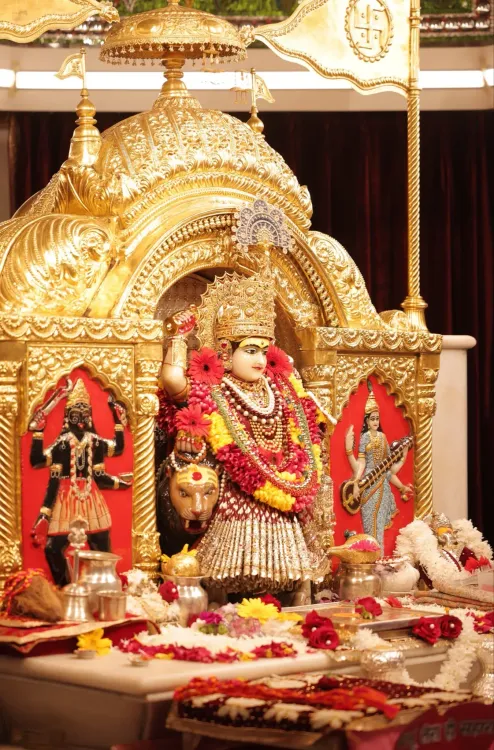
On the first sacred day of Shardiya Navratri 2026, Delhi Chief Minister Rekha Gupta visited the iconic Jhandewalan Temple in New Delhi to seek the blessings of Maa Bhagwati with full religious rites — and prayed for the happiness, peace, prosperity, and good health of every resident of the capital.
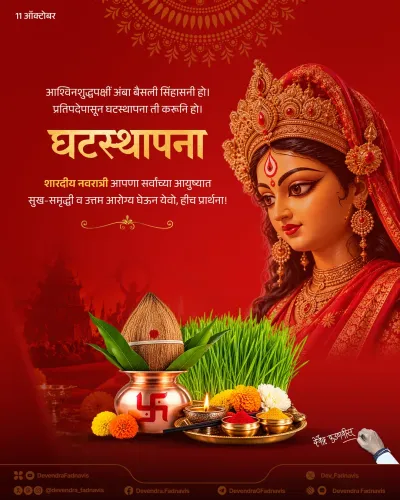
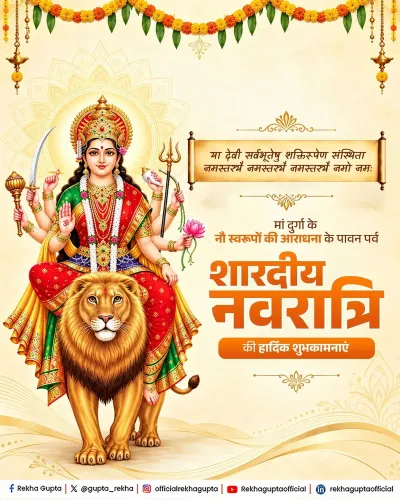
Sharing the occasion on Sunday, October 11, CM Gupta invoked the ancient Sanskrit verse: 'Ya Devi Sarvabhuteshu Shaktiroopeyna Sansthita, Namastasyai Namastasyai Namastasyai Namo Namah' — 'To the Goddess who dwells in all beings as energy, we bow to her, we bow to her, we bow to her, again and again.' The verse, drawn from the Devi Mahatmyam, set the tone for her post — devotional, communal, and forward-looking.
Nine Forms, Nine Virtues — Gupta's Message to Delhi
The Chief Minister used the occasion to outline what each of the nine nights of Navratri represents: the steadiness of Shailputri, the penance of Brahmacharini, the courage of Chandraghanta, the creative power of Kushmanda, the maternal love of Skandamata, the valour of Katyayani, the protective force of Kalaratri, the purity of Mahagauri, and the divine grace of Siddhidatri. She described Navratri as a 'mahapaarv' — a grand festival of worshipping the nine divine forms of Maa Adishakti over nine holy days.
Her closing message was a blessing addressed to every household in Delhi: 'May there be auspiciousness in every home, may the light of devotion illuminate every mind, and may all lives be filled with happiness, peace, and prosperity. Jai Mata Di.'
Jhandewalan: A Temple at the Heart of Delhi's Devotion
Jhandewalan Temple, dedicated to Maa Jhandewali (a form of Devi), sits in the Karol Bagh area and draws tens of thousands of devotees during Navratri — one of the most heavily attended religious festivals in the national capital. The temple's significance during both Chaitra and Shardiya Navratri makes it a natural focal point for public figures and ordinary worshippers alike. For a sitting Chief Minister to offer prayers here on the first day signals both personal devotion and a public acknowledgment of the festival's centrality to Delhi's civic and cultural life.
Navratri — literally 'nine nights' — culminates in Dussehra (Vijayadashami), which this year falls on October 19, 2026, marking the symbolic victory of good over evil. The nine days ahead will see temples across Delhi host jagrans, kanya poojas, and cultural programmes that bind neighbourhoods together each autumn.
Point of View
A high-profile Navratri darshan at one of the capital's most venerated temples is both a deeply personal act of faith and a calculated piece of political symbolism — reinforcing the party's identity as a custodian of Hindu cultural life in a city it has historically struggled to hold. Gupta's detailed enumeration of the nine Navdurga forms lifts the post above a routine festival greeting, framing governance virtues — courage, purity, creative power, protection — within a devotional idiom that resonates widely with the capital's electorate. Whether seen as sincere devotion or political outreach, the gesture underscores how festivals remain one of the most direct bridges between elected leaders and the communities they represent.
NationPress
11 Oct 2026
Frequently Asked Questions
Where did CM Rekha Gupta offer Navratri prayers in 2026?
Delhi Chief Minister Rekha Gupta offered prayers at Jhandewalan Temple in New Delhi on October 11, 2026, the first day of Shardiya Navratri.
What did Rekha Gupta pray for on Navratri?
She prayed at the feet of Maa Bhagwati for the happiness, peace, prosperity, and good health of all residents of Delhi.
What is the significance of Jhandewalan Temple during Navratri?
Jhandewalan Temple, dedicated to Maa Jhandewali in the Karol Bagh area of Delhi, is one of the most visited temples during both Chaitra and Shardiya Navratri, drawing lakhs of devotees across the nine-day festival.
What are the nine forms of Maa Adishakti in Navratri?
The nine forms are Shailputri, Brahmacharini, Chandraghanta, Kushmanda, Skandamata, Katyayani, Kalaratri, Mahagauri, and Siddhidatri — each worshipped on a separate night of the festival.
When does Navratri 2026 end?
Shardiya Navratri 2026 concludes on October 19, 2026, with Dussehra (Vijayadashami), marking the victory of good over evil.