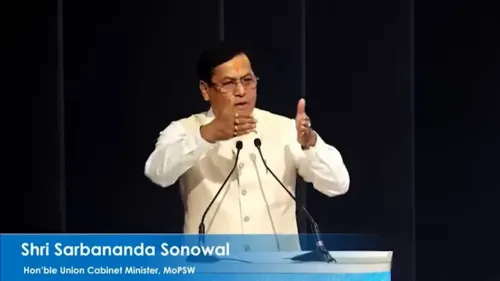
Sonowal hails global praise for India's shipbuilding rise at Busan diaspora event
Synopsis
Union Minister Sarbananda Sonowal shared a video from a diaspora event in Busan where a 50-year shipbuilding veteran praised India's maritime rise under PM Modi, reinforcing India's push to grow its global shipbuilding footprint through Sagarmala and Maritime India Vision 2030.
Key Takeaways
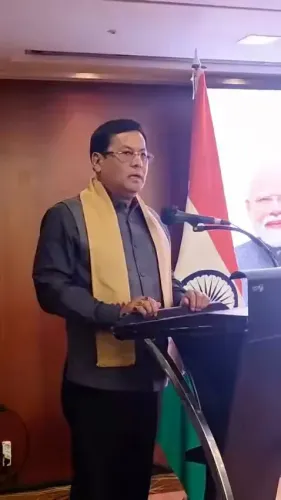
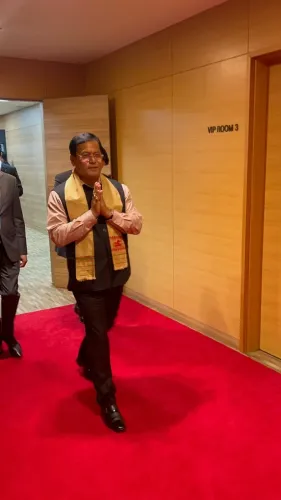
Union Minister Sarbananda Sonowal posted a video on 25 October 2026 from a diaspora event held in Busan, South Korea .
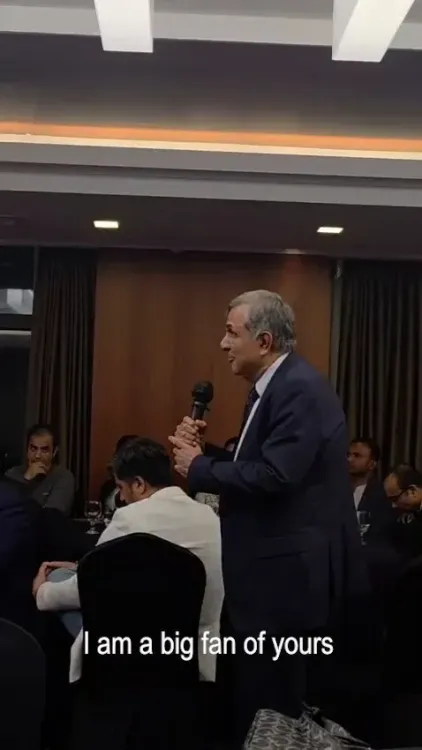
A veteran with 50 years of shipbuilding experience praised India's maritime sector growth at the event.
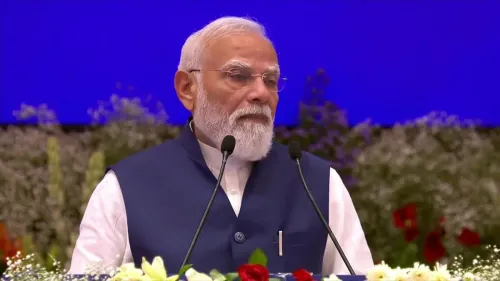
Sonowal credited the progress to the leadership of PM Narendra Modi and called the recognition 'deeply encouraging.' India's shipbuilding ambitions are backed by the Sagarmala Project (2015) and Maritime India Vision 2030 (2021) .
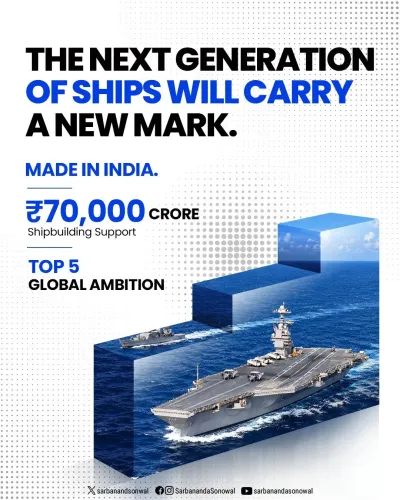
Global shipbuilding is currently dominated by China, South Korea and Japan ; India is working to expand its share under the Atmanirbhar Bharat framework.
The diaspora in shipbuilding hubs like Busan is being cultivated as a bridge for expertise, technology and investment.
When a veteran with five decades of hands-on shipbuilding experience stands up at a diaspora gathering in Busan — the heartland of the global ship-construction industry — and praises India's maritime ambitions, it is the kind of third-party validation that policy announcements rarely manufacture. Union Minister of Ports, Shipping and Waterways Sarbananda Sonowal shared a video of exactly that moment on Sunday, 25 October 2026, calling the endorsement 'deeply encouraging' and framing it as proof that India's maritime rise is being noticed where it matters most.
What the Busan moment signals
Busan, South Korea's second-largest city, is not a random backdrop. It is one of the world's premier shipbuilding and port hubs, home to yards that have shaped the modern global fleet. Holding a diaspora engagement in that city — and drawing affirmation from a practitioner with 50 years of industry experience — is a deliberate piece of soft diplomacy for a country that currently holds a sliver of global shipbuilding market share dominated by China, South Korea and Japan. Sonowal noted that 'India's shipbuilding dreams will be fulfilled with the support and help of our brothers and sisters across the world,' anchoring the outreach firmly in the overseas-Indian community as a bridge for expertise, capital and technology.
The policy scaffolding behind the ambition
The enthusiasm in Busan does not exist in a vacuum. The Sagarmala Project, launched in 2015, laid the groundwork for port-led industrial development and began pushing domestic shipbuilding capacity. Maritime India Vision 2030, released in 2021, set explicit targets to grow India's share in global shipbuilding and maritime trade over the decade. Together, these frameworks represent a sustained, cross-term national bet that India can move from being a consumer of ships to a builder of them — an aspiration that sits squarely within the broader Atmanirbhar Bharat self-reliance drive championed by Prime Minister Narendra Modi.
Diaspora as a strategic asset in shipbuilding
Diaspora events in industrial nerve centres like Busan are increasingly a tool of economic statecraft, not just cultural fellowship. For a sector that requires cutting-edge metallurgy, advanced engineering design and decades of yard-floor knowledge, the Indian diaspora embedded in South Korean, Japanese and European shipbuilding ecosystems represents a pipeline of know-how that formal government-to-government negotiations alone cannot replicate. Sonowal's post makes that logic explicit: global experts appreciating India's strides today could become collaborators and investors tomorrow.
The immediate question is whether this momentum converts into concrete agreements — technology-transfer MoUs, joint-venture frameworks, or revisions to India's shipbuilding incentive structures. The validation from Busan is real. The yards that can match it still need to be built.
Point of View
The countries that already dominate global ship construction. The optics of third-party, practitioner-level validation are valuable precisely because India's current market share remains marginal, making aspiration easier to assert than to demonstrate. The real test of this outreach will be whether it generates measurable technology transfers or investment commitments under Maritime India Vision 2030's timelines. Without that downstream conversion, diaspora endorsements risk becoming atmospherics rather than architecture.
NationPress
25 Oct 2026
Frequently Asked Questions
Why did Sarbananda Sonowal visit Busan?
Sonowal attended a diaspora event in Busan, South Korea , a major global shipbuilding hub, as part of outreach to engage overseas Indians who can support India's maritime and shipbuilding ambitions through expertise, technology and investment.
What is India's current position in global shipbuilding?
India currently holds a small share of the global shipbuilding market, which is dominated by China, South Korea and Japan . The government is working to expand this through the Sagarmala Project and Maritime India Vision 2030 .
What is Maritime India Vision 2030?
Maritime India Vision 2030 is a policy framework released in 2021 that sets targets to increase India's share in global shipbuilding and maritime trade over the decade, building on the earlier Sagarmala Project launched in 2015.
What is the Sagarmala Project?
The Sagarmala Project , launched in 2015 , is a central government initiative to promote port-led industrial development and build domestic shipbuilding capacity as part of India's broader maritime growth strategy.
How is the Indian diaspora connected to India's shipbuilding goals?
Overseas Indians embedded in established shipbuilding industries in South Korea, Japan and Europe represent a potential pipeline of technical know-how, investment and partnerships that India is actively cultivating to accelerate its own shipbuilding sector under the Atmanirbhar Bharat framework.