CM Fadnavis: Preserve India's Ancient Education Heritage
Synopsis
Chief Minister Devendra Fadnavis declared at IPEC2026 that preserving India's ancient educational heritage is a necessity, echoing NEP 2020's call to embed traditional knowledge systems in modern curricula across Maharashtra and beyond.
Key Takeaways
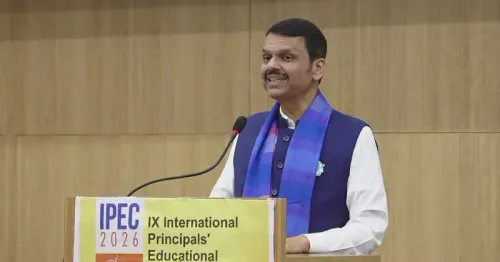
CM Devendra Fadnavis stated on 25 October 2026 that preserving India's ancient education heritage is necessary, speaking at the #IPEC2026 platform.
The statement aligns with the National Education Policy 2020 , which explicitly calls for integrating traditional Indian knowledge into mainstream schooling.
Maharashtra joins several Indian states actively referencing ancient gurukul models and indigenous knowledge in education discourse.
Key stakeholders — students and educators — stand to see curriculum and teacher-training changes if the principle translates into policy.
Follow-up announcements on Maharashtra's curriculum reforms or participation in national education forums are the immediate indicators to watch.
India's ancient knowledge traditions must not be left behind in the race to modernise — that was the pointed message Chief Minister Devendra Fadnavis of Maharashtra delivered on Sunday, 25 October 2026, stressing the need to safeguard the country's historic educational legacy.
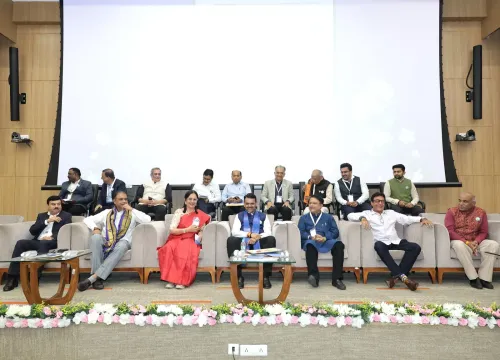
The Chief Minister's Office of Maharashtra posted the statement — 'भारतीय शिक्षण व्यवस्थेचा प्राचीन वारसा जपणे गरजेचे' ('It is necessary to preserve the ancient heritage of India's education system') — on the sidelines of what is tagged as #IPEC2026, an education-focused event whose formal proceedings align with the broader national conversation on cultural rootedness in schooling.
NEP 2020 and the push to revive traditional knowledge
Fadnavis's remarks land squarely inside a policy current that has been building since the National Education Policy 2020 explicitly called for integrating India's traditional knowledge systems — from gurukul pedagogy to indigenous science and philosophy — into mainstream curricula. Several states have since hosted forums and conferences to translate that mandate into classroom reality. Maharashtra, as one of India's largest and most urbanised states, carries particular weight in that conversation.
The argument is straightforward: a generation educated entirely on Western epistemological frameworks risks losing fluency in the civilisational knowledge that shaped Indian thought for millennia. Fadnavis's framing — that preservation is a necessity, not nostalgia — signals that Maharashtra intends to take that obligation seriously at the policy level.
What heritage preservation in education actually looks like
In practice, states pursuing this agenda have explored measures such as including classical texts in regional-language curricula, recognising traditional occupational knowledge in vocational streams, and inviting scholars of Sanskrit, Ayurveda, and ancient mathematics into teacher-training programmes. The challenge — acknowledged by education reformers across the spectrum — is integrating that heritage without crowding out the science, technology, and critical-thinking skills students need for a competitive economy.
That tension is exactly what makes Fadnavis's call worth watching. A statement of principle at an education platform is one thing; the follow-through in Maharashtra's curriculum policy and state budget allocations will be the real test.
The next move belongs to Maharashtra's education department — and the country will be paying attention.
Point of View
Not merely a pedagogical one. For Maharashtra, a state that balances a powerful industrial economy with deep historical identity, the political calculus of championing civilisational knowledge is significant. The harder question is whether the rhetoric translates into funded, measurable curriculum change or remains a statement of aspiration. Analysts watching the state's education budget and syllabus revision cycles will find the real answer there.
NationPress
25 Oct 2026
Frequently Asked Questions
What did CM Devendra Fadnavis say about India's education system?
Fadnavis stated that preserving the ancient heritage of India's education system is a necessity, speaking at the IPEC2026 education event on 25 October 2026.
How does NEP 2020 connect to preserving ancient Indian education?
The National Education Policy 2020 explicitly calls for integrating India's traditional knowledge systems — including gurukul pedagogy, classical texts, and indigenous sciences — into mainstream curricula, providing the policy basis for Fadnavis's remarks.
Which Indian states are working to include ancient knowledge in education?
Several Indian states have referenced ancient gurukul models and indigenous knowledge frameworks while aligning with NEP 2020's emphasis on cultural rootedness, with Maharashtra being one of the latest to publicly champion the agenda.
What policy changes could follow Fadnavis's education heritage statement in Maharashtra?
Potential follow-up measures include curriculum revisions to include classical texts, recognition of traditional occupational knowledge in vocational streams, and changes to teacher-training programmes — subject to state education department decisions and budget allocations.