CM Mohan Yadav Reviews Phase 2 of Shajapur Blackbuck Rescue
Synopsis
Madhya Pradesh CM Dr. Mohan Yadav reviewed Phase 2 of a Boma-technique wildlife rescue at Ranthbhanwar in Shajapur on October 28, 2026. Over 1,236 blackbucks and hundreds of nilgai have been relocated to resolve crop-damage conflicts while keeping both wildlife and farmers safe.
Key Takeaways
Mohan Yadav visited Ranthbhanwar village, Shajapur on October 28, 2026 to review Phase 2 of the wildlife rescue drive.
More than 1,236 blackbucks and hundreds of nilgai have been safely rescued to date under the programme.
The operation uses the Boma method — a non-lethal enclosure technique — to capture and relocate animals without injury.
Madhya Pradesh launched the Boma-based drive last year to address crop damage by blackbucks and nilgai in Shajapur's farmlands.
Both blackbuck and nilgai are protected under the Wildlife (Protection) Act, 1972 , making non-lethal relocation the only legal route.
The initiative is designed to protect rural farmers' livelihoods and wildlife simultaneously, with further rescue phases still ongoing.
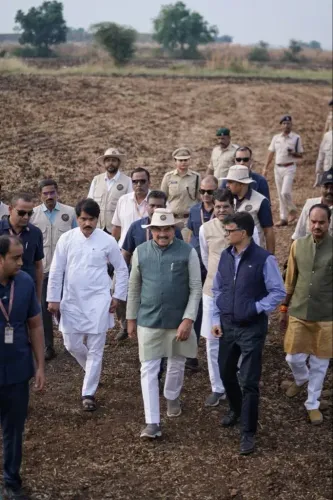
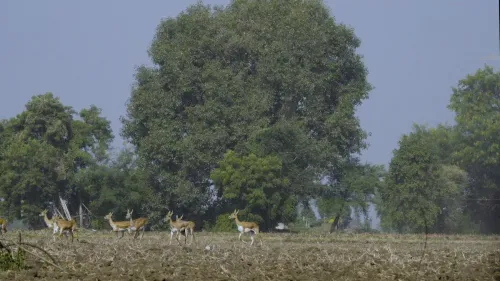
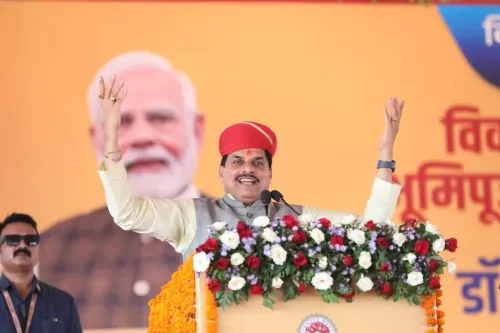
More than 1,236 blackbucks and hundreds of nilgai have been safely relocated from farmland in Madhya Pradesh's Shajapur district — and on Wednesday, October 28, 2026, Madhya Pradesh Chief Minister Dr. Mohan Yadav arrived at Ranthbhanwar village to inspect the second phase of a wildlife rescue drive that is quietly rewriting how the state handles one of rural India's oldest conflicts: wildlife versus the farmer's field.
What the Boma method actually does in Shajapur's fields
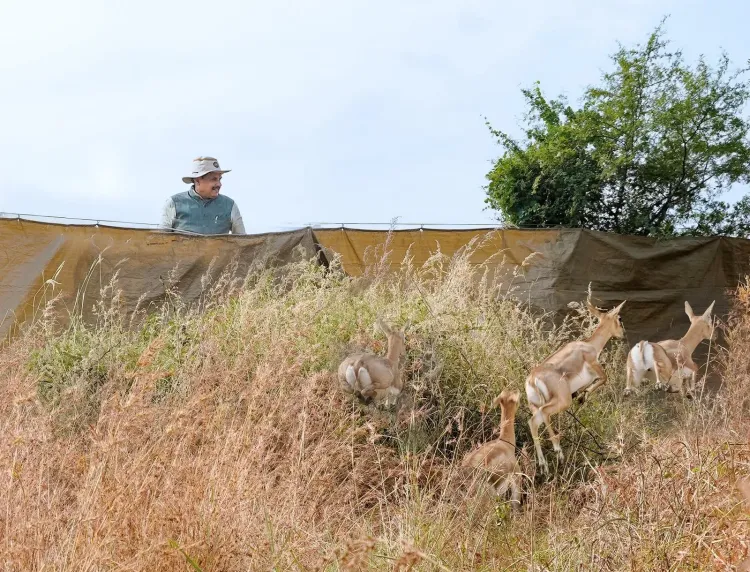
The rescue operation relies on the Boma technique — a centuries-old enclosure method now adopted by modern conservation programmes across the world. Forest department teams construct temporary funnel-shaped barriers to channel free-roaming herbivores into a safe holding pen, from where the animals are transported to protected habitats without injury or stress. The key word is non-lethal: no culling, no chemicals, no animal casualties.
Madhya Pradesh launched this Boma-based drive last year specifically in response to sustained crop-damage complaints from Shajapur farmers. The blackbuck (krishnamrig) and the nilgai are both protected under the Wildlife (Protection) Act, 1972, which means lethal control is not an option for the state. Finding a humane middle ground — one that keeps biodiversity intact and rural livelihoods secure — is precisely what makes the Boma drive significant.
CM Yadav at Ranthbhanwar: the on-ground review
Dr. Yadav personally walked the rescue site at Ranthbhanwar, meeting forest department and district administration officials to assess the operation's progress and logistics. He noted that the government had designed the exercise with the farmer at its centre — 'kisan bhaiyon ke khet dono surakshit rahein' (so that both wildlife and the fields of our farmer brothers remain protected).
The second phase builds on the momentum of the first, and the cumulative figure now crosses 1,236 blackbucks rescued, alongside hundreds of nilgai — numbers that make this one of the larger single-district wildlife relocation drives in recent Madhya Pradesh history.
Why this matters beyond Shajapur
Central Indian states have long wrestled with a triangle of pressures: expanding farmland, shrinking wildlife corridors, and constitutionally protected species that cannot be culled. The standard response has historically been compensation after crop damage — a slow, contested, and demoralising process for farmers who have already lost a harvest.
The Boma-based model shifts the intervention upstream, removing the animals before the conflict peaks. If Shajapur's crop-loss data shows measurable improvement across the post-rescue season, the model becomes a template other districts — and other states — will be watching closely. The Madhya Pradesh Forest Department is expected to compile field reports once the remaining rescue phases are complete.
Point of View
Two constituencies that rarely appear in the same frame. The Boma drive reflects a broader BJP-governed state strategy of managing wildlife conflict without the political and legal exposure that culling orders invite. If the crop-loss data from Shajapur validates the model post-relocation, Madhya Pradesh could position itself as the benchmark for human-wildlife conflict resolution in central India. The real test, however, lies in whether the rescued animals are relocated to adequately sized and protected habitats — a detail the government has yet to put on public record.
NationPress
28 Oct 2026
Frequently Asked Questions
What is the Boma method used in the Shajapur rescue operation?
The Boma method is a non-lethal wildlife capture technique that uses temporary funnel-shaped enclosures to guide animals into a holding pen, from where they are safely transported to protected habitats. Madhya Pradesh adopted it to relocate blackbucks and nilgai from farmland without harming the animals.
How many blackbucks have been rescued in Shajapur so far?
According to CM Dr. Mohan Yadav's October 28, 2026 post, more than 1,236 blackbucks and hundreds of nilgai have been safely rescued under the Shajapur operation to date.
Why are farmers in Shajapur troubled by blackbucks and nilgai?
Blackbucks and nilgai are protected herbivores that frequently enter agricultural fields and damage standing crops. Farmers in Shajapur district have faced repeated crop losses, prompting the Madhya Pradesh government to launch a relocation drive rather than resorting to culling, which is prohibited under the Wildlife (Protection) Act, 1972.
Is killing blackbucks or nilgai legal in India?
No. The blackbuck is a Schedule I protected species under the Wildlife (Protection) Act, 1972, making killing it a serious criminal offence. Nilgai are also protected, though with different schedule classifications in some states. Non-lethal relocation, like the Boma drive, is the legally sanctioned approach.
What is Phase 2 of the Shajapur wildlife rescue drive?
Phase 2 refers to the continued round of Boma-based captures in Ranthbhanwar village and surrounding areas of Shajapur, building on an earlier phase launched last year. CM Yadav reviewed its progress on October 28, 2026, meeting forest department and district administration officials on site.