Rajnath Singh, Australian Deputy PM Marles discuss military interoperability at ADMM-Plus
Synopsis
On the sidelines of the 13th ADMM-Plus in Cebu, Defence Minister Rajnath Singh and Australian Deputy PM Richard Marles agreed to deepen military interoperability under their Comprehensive Strategic Partnership — a signal that India-Australia defence ties are moving from statements to operational alignment as Indo-Pacific competition intensifies.
Key Takeaways
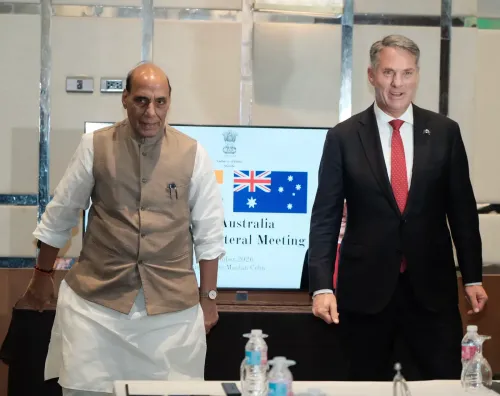
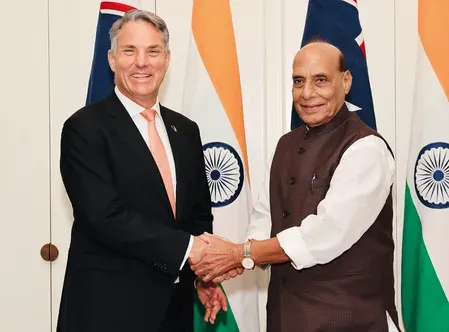
Defence Minister Rajnath Singh met Australian Deputy PM Richard Marles in Cebu, Philippines on 28 October 2026 .
Talks focused on enhancing military interoperability , bilateral defence cooperation, and regional security challenges.
Singh is attending the 13th ADMM-Plus (28–29 October), holding multiple bilateral meetings on the sidelines.
India is co-chairing the Experts Working Group on Counter-Terrorism with Malaysia for the 2024–2027 cycle at the forum.
The ADMM-Plus includes 11 ASEAN states and 8 Dialogue Partners ; the Philippines chairs the forum in 2026 .
India’s engagement reflects its Act East Policy and commitment to a free, open, and secure Indo-Pacific.
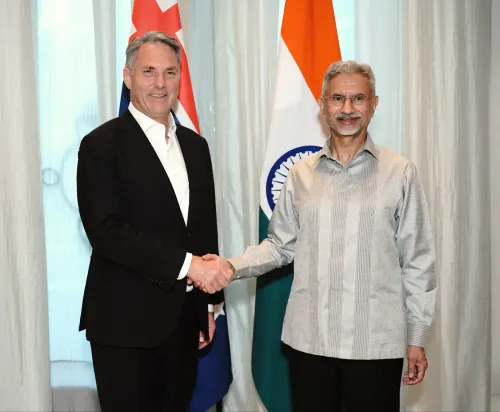
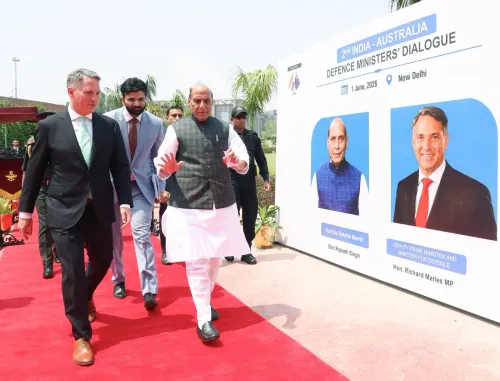
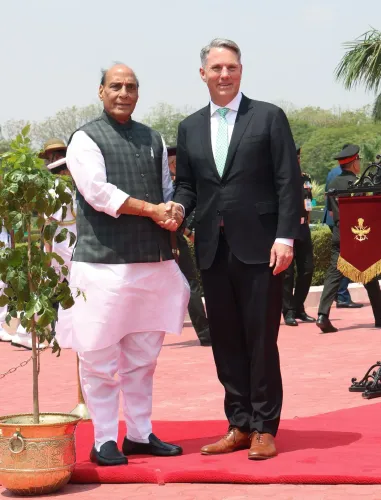
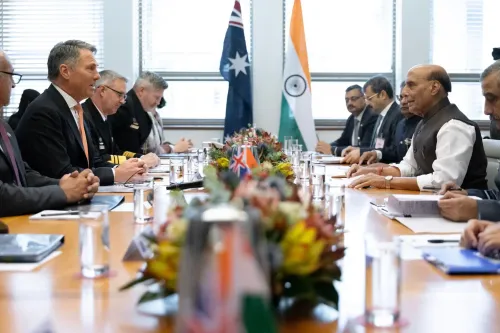
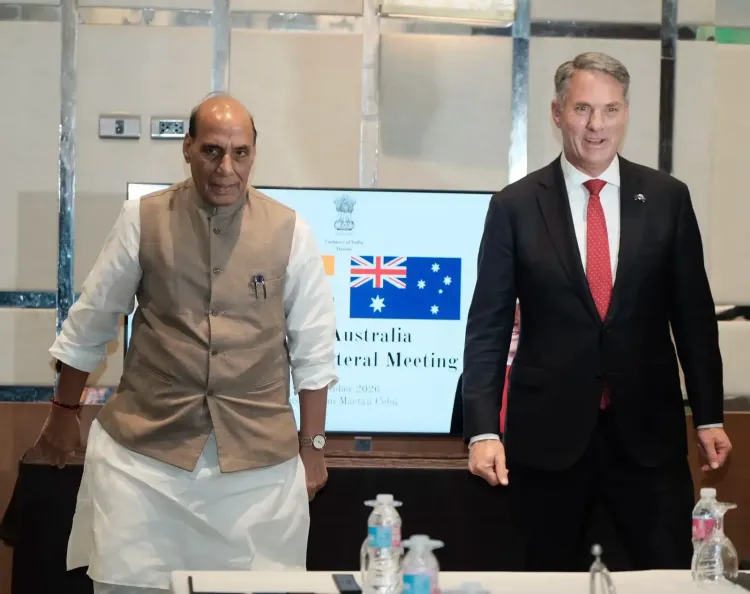
Defence Minister Rajnath Singh met Australian Deputy Prime Minister and Defence Minister Richard Marles on the sidelines of the 13th ASEAN Defence Ministers' Meeting-Plus (ADMM-Plus) in Cebu, Philippines, on 28 October 2026, to review bilateral defence cooperation, enhance military interoperability, and address pressing regional security challenges. The meeting underscores the growing strategic alignment between India and Australia within the broader Indo-Pacific security architecture.
What Was Discussed
The two defence chiefs reviewed the current state of India-Australia Comprehensive Strategic Partnership, with a focus on deepening operational cooperation between their respective armed forces. Singh stressed that India places significant value on this partnership as a cornerstone of efforts to maintain a free, open, and secure Indo-Pacific. The talks covered both bilateral defence ties and shared concerns over regional stability.
In a post on X, Singh said: “Delighted to meet Australia’s Deputy PM and Defence Minister, Mr. Richard Marles, on the sidelines of the ADMM-Plus meeting today. We had productive discussions on reviewing our bilateral defence cooperation, enhancing military interoperability, and addressing regional security challenges. India places great value on its Comprehensive Strategic Partnership with Australia for a free, open, and secure Indo-Pacific.”
India’s Role at the ADMM-Plus Forum
Singh is on an official visit to the Philippines for the 13th ADMM-Plus, scheduled for 28–29 October 2026, where he is holding multiple bilateral meetings with defence counterparts from participating nations. According to the Ministry of Defence, the ADMM-Plus brings together the 11 ASEAN member states — Brunei, Cambodia, Indonesia, Laos, Malaysia, Myanmar, the Philippines, Singapore, Thailand, Timor-Leste, and Vietnam — along with eight Dialogue Partners: India, the United States, China, Russia, Japan, South Korea, Australia, and New Zealand.
The Philippines is chairing the ADMM-Plus in 2026. Notably, India is also co-chairing the Experts Working Group on Counter-Terrorism with Malaysia for the 2024–2027 cycle, reflecting its deepening institutional role within the forum.
India’s Act East Policy and ASEAN Engagement
India became an ASEAN Dialogue Partner in 1992, and the inaugural ADMM-Plus meeting was held in Hanoi, Vietnam, on 12 October 2010. Since 2017, defence ministers have convened annually under this framework to strengthen cooperation between ASEAN states and partner countries.
Ahead of his visit, Singh reiterated India’s commitment to its Act East Policy, posting on X that India “remained committed to strengthening regional security cooperation, promoting ASEAN centrality and ensuring peace and stability in the Indo-Pacific region.” He added that the bilateral engagements would serve as “a great opportunity to review our ongoing defence ties and explore new avenues to strengthen our strategic partnerships.”
Strategic Significance
The Singh-Marles meeting reflects a steady elevation in India-Australia defence ties that has accelerated since the two countries upgraded their relationship to a Comprehensive Strategic Partnership. This comes amid intensifying great-power competition in the Indo-Pacific, with both nations invested in multilateral frameworks — including the Quad — that seek to preserve a rules-based regional order. The ADMM-Plus engagement adds a critical multilateral dimension to what has been a largely bilateral conversation on military cooperation.
The outcomes of Singh’s remaining bilateral meetings at the ADMM-Plus are expected to provide further clarity on India’s regional defence posture heading into 2027.
Point of View
Which has historically been strong on paper but slower on military interoperability. The ADMM-Plus setting is significant: India is choosing multilateral defence forums not just for optics but to co-chair working groups and shape regional security norms. What mainstream coverage misses is that India’s co-chairmanship of the Counter-Terrorism Working Group with Malaysia signals an ambition to lead, not merely attend. The real test will come in whether interoperability commitments translate into joint exercises, logistics agreements, and information-sharing arrangements — areas where India has sometimes moved cautiously even with close partners.
NationPress
28 Oct 2026
Frequently Asked Questions
What did Rajnath Singh and Richard Marles discuss at the ADMM-Plus?
The two defence chiefs discussed enhancing military interoperability, reviewing bilateral defence cooperation, and addressing regional security challenges in the Indo-Pacific. The meeting took place on the sidelines of the 13th ADMM-Plus in Cebu, Philippines, on 28 October 2026.
What is the ADMM-Plus and why does it matter?
The ASEAN Defence Ministers’ Meeting-Plus (ADMM-Plus) is the highest defence consultative mechanism within ASEAN, bringing together 11 ASEAN states and 8 Dialogue Partners including India, the US, China, Australia, and Russia. It has met annually since 2017 to strengthen defence cooperation across the Indo-Pacific region.
What is India’s role at the 13th ADMM-Plus in 2026?
India is participating as a Dialogue Partner and is co-chairing the Experts Working Group on Counter-Terrorism with Malaysia for the 2024–2027 cycle. Defence Minister Rajnath Singh is also holding several bilateral meetings with counterparts from participating nations on the sidelines.
What is the India-Australia Comprehensive Strategic Partnership?
It is the highest tier of the bilateral relationship between India and Australia, covering defence, trade, and strategic cooperation. Singh emphasised India’s commitment to the partnership as a vehicle for maintaining a free, open, and secure Indo-Pacific.
How long has India been engaged with ASEAN on defence matters?
India became an ASEAN Dialogue Partner in 1992 and has participated in the ADMM-Plus since its inaugural meeting in Hanoi, Vietnam, on 12 October 2010. Defence ministers have met annually under the framework since 2017.