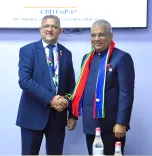
Giriraj Singh: PM MITRA Park in Dhar to boost textile exports
Synopsis
Union Textiles Minister Giriraj Singh spotlighted the PM MITRA Park in Dhar, Madhya Pradesh, calling the Rs 4,445-crore integrated textile scheme a launchpad for investment, export growth, and lakhs of jobs across the cotton-to-garment value chain.
Key Takeaways
PM MITRA (Prime Minister Mega Integrated Textile Region and Apparel) was announced in Union Budget 2021-22 with central assistance of approximately Rs 4,445 crore for seven mega integrated textile parks.
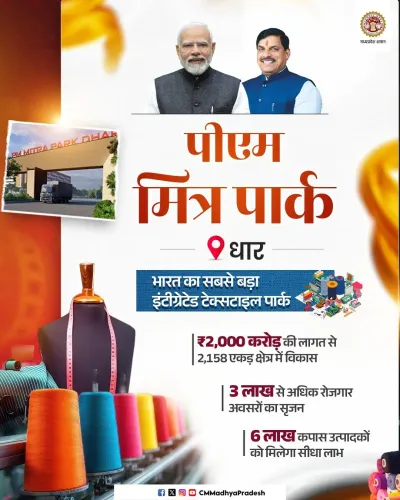
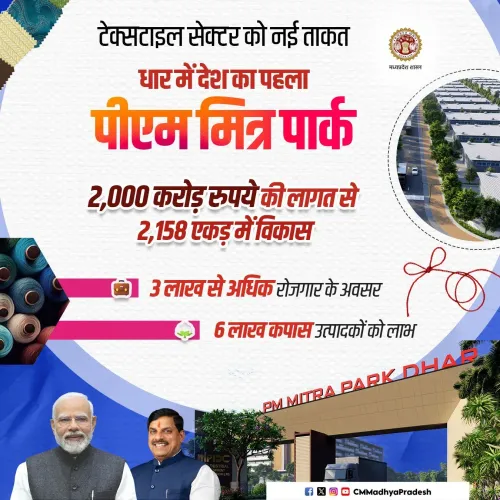
The Dhar, Madhya Pradesh site is one of seven PM MITRA locations, covering the complete value chain from raw cotton to finished apparel under a single campus.
Union Textiles Minister Giriraj Singh stated the park will drive investment, boost exports, and create employment for lakhs of workers.
The PM MITRA model builds on predecessor schemes like SITP and TCIDS by adding significantly greater scale and end-to-end supply-chain integration.
Key beneficiaries include textile manufacturers, cotton farmers, MSME garment exporters , and textile sector workers in the Malwa region.
Anchor-unit investment announcements and employment milestones at Dhar will serve as early indicators of the park's real-world progress.
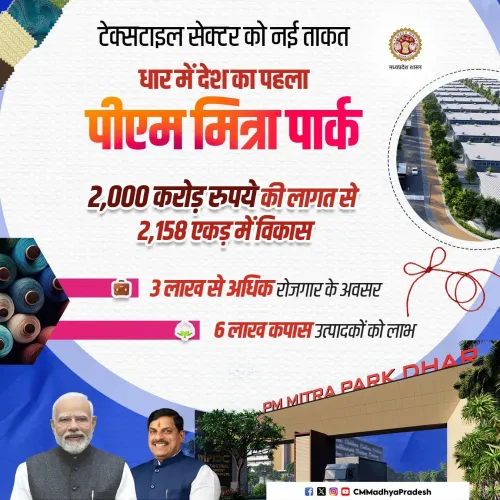
A single industrial park in Dhar, Madhya Pradesh could soon carry Indian cotton all the way to finished garments — without the cargo ever leaving the campus. Union Textiles Minister Giriraj Singh on Wednesday, 28 October 2026 highlighted the transformative potential of the PM MITRA Park coming up in Dhar, calling it a catalyst for investment, exports, and mass employment in India's textile sector.
In his post, the Minister wrote: 'PM MITRA Park jo Madhya Pradesh ke Dhar mein viksit ho raha hai, Bharat ke vastra udyog ko nayi gati dene wala hai' — 'The PM MITRA Park developing in Dhar, Madhya Pradesh, is set to give new momentum to India's textile industry.' He underlined that consolidating the full chain — from raw cotton to yarn, fabric, and finished apparel — under one roof will accelerate both investment inflows and export volumes, while generating employment for lakhs of workers.
What PM MITRA means: fibre to fashion under one roof
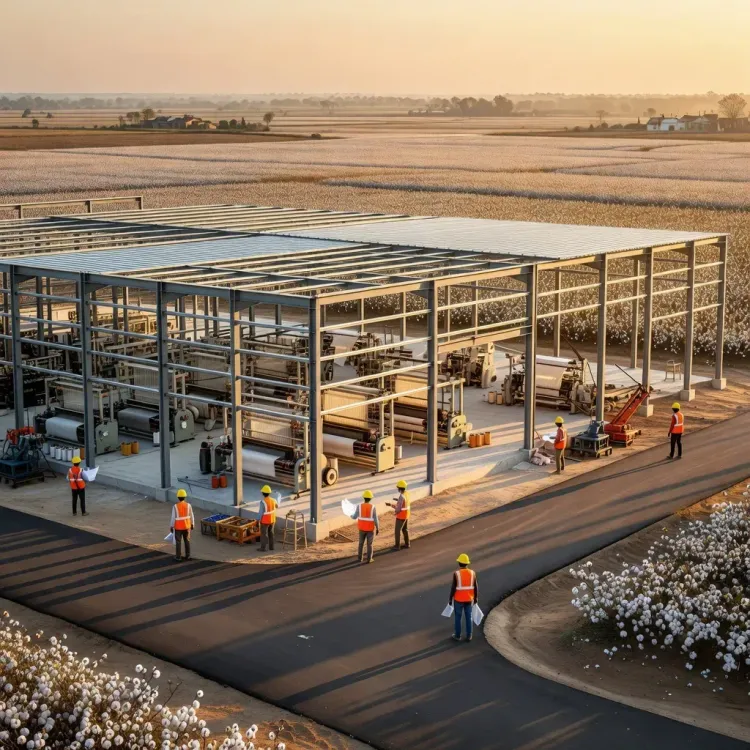
PM MITRA stands for Prime Minister Mega Integrated Textile Region and Apparel. Announced in the Union Budget 2021-22, the scheme earmarks central assistance of approximately Rs 4,445 crore to develop seven such mega parks across India. The core idea is integration: spinning mills, weaving units, processing houses, and apparel manufacturers clustered together so that raw fibre moves seamlessly to a finished export-ready garment without the delays and costs of inter-city logistics.
Dhar was selected as one of the seven sites, anchoring Madhya Pradesh's ambitions in cotton and textile manufacturing. The district sits in the state's Malwa region, historically associated with cotton cultivation — making it a logical hub for the full value chain the scheme envisions.
Building on decades of textile cluster policy
India has tried integrated textile clustering before — through the Scheme for Integrated Textile Parks (SITP) and the Textile Cluster Infrastructure Development Scheme (TCIDS). PM MITRA is designed to dwarf those predecessors in scale and ambition. Where earlier schemes created pockets of specialisation, PM MITRA aims to compress the entire production chain into a single, globally competitive node. Shorter supply chains mean lower costs; lower costs mean more competitive export pricing.
The stakes are real. India is the world's second-largest textile producer but punches below its weight in the high-value apparel export segment, which is dominated by countries with tighter, more efficient supply chains. A fully operational PM MITRA park could directly address that structural gap.
Jobs, investment, and India's global textile ambition
The Minister's emphasis on 'lakhs of employment opportunities' points to the scheme's social arithmetic. Textiles is one of India's most labour-intensive industries, employing tens of millions — disproportionately women and workers from rural districts. An integrated park that attracts anchor investors can generate dense, stable employment in ways that dispersed, fragmented clusters historically have not.
For MSME garment exporters and cotton farmers in the region, a functional Dhar park represents something concrete: proximity to processing infrastructure they currently lack, and a shorter, cheaper route from field to foreign buyer.
Watch for anchor-unit investment announcements, the release of detailed project reports, and early employment milestones at Dhar — those numbers will tell the real story of whether PM MITRA is delivering on its considerable promise.
Point of View
445-crore, seven-park programme represents a structural bet: that consolidating spinning, weaving, and apparel under one roof can compress costs enough to make Indian exporters genuinely competitive against established rivals. With the scheme now in implementation rather than announcement phase, the Minister's communication signals political accountability — he is staking visibility on delivery. Whether land acquisition, anchor investor commitments, and on-ground construction keep pace with that public commitment will define how this narrative evolves heading into the next election cycle.
NationPress
28 Oct 2026
Frequently Asked Questions
What is PM MITRA Park and where is it located in Madhya Pradesh?
PM MITRA stands for Prime Minister Mega Integrated Textile Region and Apparel. One of seven such parks planned nationally is being developed in Dhar district, Madhya Pradesh , to cluster spinning, weaving, processing, and apparel manufacturing in a single location.
How much funding does the PM MITRA scheme carry?
The PM MITRA scheme , announced in the Union Budget 2021-22 , provides central assistance of approximately Rs 4,445 crore across seven mega integrated textile parks.
What jobs will PM MITRA Park in Dhar create?
Union Textiles Minister Giriraj Singh has stated that the Dhar PM MITRA Park is expected to generate employment for lakhs of workers by hosting the full textile value chain from raw cotton to finished garments.
How is PM MITRA different from earlier textile schemes like SITP?
PM MITRA builds on earlier schemes such as SITP and TCIDS but operates at a significantly larger scale, integrating the entire fibre-to-fashion supply chain within a single park to reduce logistics costs and sharpen India's export competitiveness.
Why was Dhar chosen for a PM MITRA Park?
Dhar is in Madhya Pradesh's Malwa region, historically associated with cotton cultivation, making it a natural fit for an integrated textile park that begins its value chain with raw cotton.