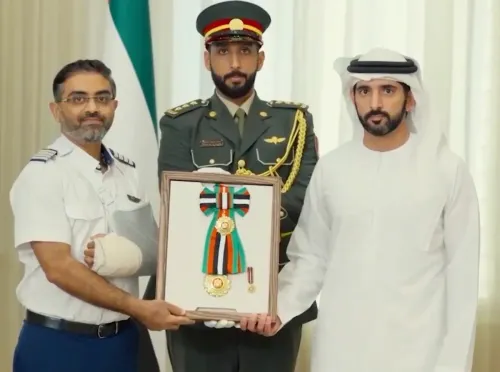
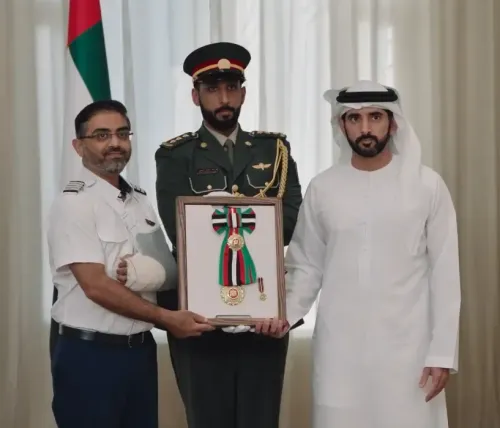
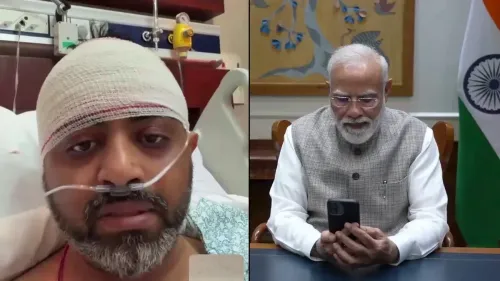
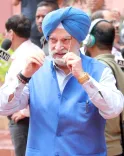
Khattar congratulates Capt Smit Machchhar on UAE's Order of Zayed II

Synopsis
Union Power Minister Manohar Lal Khattar publicly congratulated Captain Smit Machchhar after the UAE awarded him the Order of Zayed II (First Class), praising his decisiveness and professional excellence during a crisis as a source of national pride.
Key Takeaways
Union Minister Manohar Lal Khattar congratulated Captain Smit Machchhar on receiving the UAE's Order of Zayed II (First Class) on October 28, 2026 .
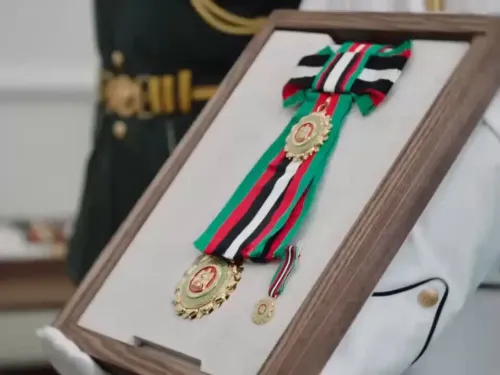
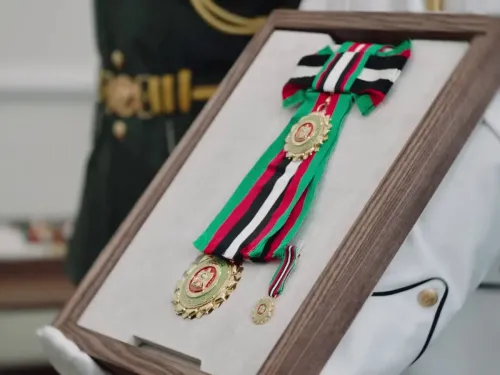
The Order of Zayed is one of the UAE's highest civilian honours , named after founding father Sheikh Zayed bin Sultan Al Nahyan.
Khattar cited Captain Machchhar's 'patience, decisiveness, and professional excellence during a crisis' as the basis for the honour.
The minister described the achievement as a source of national pride and an inspiration for India's youth and citizens.
The post fits a broader pattern of Indian ministers amplifying Gulf civilian awards to reinforce India-UAE bilateral goodwill.
An Indian captain's cool head in a moment of crisis has earned him one of the UAE's most distinguished civilian honours — and a public salute from a Union Cabinet minister. Union Power Minister Manohar Lal Khattar on Wednesday, October 28 extended warm congratulations to Captain Smit Machchhar after the United Arab Emirates conferred upon him the prestigious 'Order of Zayed II (First Class)', a civilian honour named after the UAE's founding father, Sheikh Zayed bin Sultan Al Nahyan.
Posting in Hindi on X, Minister Khattar wrote: 'Captain Smit Machchhar ka yah sahasik yogdan na keval desh ke liye garv ka vishay hai' — 'Captain Smit Machchhar's courageous contribution is not only a matter of pride for the country, but it also proves how invaluable patience, decisiveness and professional excellence are in moments of crisis.' He added that the achievement would continue to inspire citizens and the younger generation toward duty and dedication.A Gulf honour that carries rare weight
The Order of Zayed is among the UAE's highest civilian decorations, awarded to individuals whose actions reflect the values of the nation's revered founding father — leadership, resolve, and service in adversity. The First Class grade signals an exceptional level of recognition, typically reserved for acts of extraordinary distinction. While the precise circumstances of Captain Machchhar's crisis response have not been officially detailed, Khattar's tribute specifically highlighted 'patience, decisiveness, and professional competence' as the qualities that earned the honour.
India-UAE goodwill, one captain at a time
Individual stories like Captain Machchhar's sit within a well-established diplomatic pattern: Indian ministers routinely amplify the achievements of nationals decorated by Gulf states, using them as touchpoints to signal bilateral warmth and people-to-people ties. The Indian diaspora across the Gulf region numbers in the millions, and moments of institutional recognition — where an Indian professional is held up by a Gulf government as exemplifying its own values — carry real soft-power weight in both directions. Khattar's post fits squarely into that tradition.
Whether the Ministry of External Affairs or the UAE Embassy in New Delhi follows with a formal statement on the award ceremony will be the next marker of how much institutional attention this honour draws.
For now, one captain has put his name on a piece of history — and a minister wants the country to know it.
Point of View
A strategic partner hosting millions of Indian workers. By framing Captain Machchhar's honour in terms of duty, resolve, and national pride, the message simultaneously celebrates an individual and signals broader India-UAE goodwill. The choice to highlight 'youth inspiration' reflects a recurring BJP communication motif of channelling individual excellence into a national narrative. A follow-up from the Ministry of External Affairs would elevate this from a ministerial social-media gesture to a formal bilateral moment.
NationPress
28 Oct 2026
Frequently Asked Questions
Who is Captain Smit Machchhar?
Captain Smit Machchhar is an Indian national who was conferred the UAE's Order of Zayed II (First Class) civilian honour for his courageous and professional conduct during a crisis, as acknowledged by Union Minister Manohar Lal Khattar.
What is the Order of Zayed II award?
The Order of Zayed is one of the UAE's highest civilian decorations, named after founding father Sheikh Zayed bin Sultan Al Nahyan. The First Class grade represents an especially distinguished level of recognition for extraordinary service or conduct.
Why did Manohar Lal Khattar congratulate Captain Smit Machchhar?
Minister Khattar posted congratulations on X after the UAE honoured Captain Machchhar with the Order of Zayed II (First Class), calling it a matter of national pride and citing the captain's patience, decisiveness, and professional excellence during a crisis.
What crisis did Captain Smit Machchhar respond to?
The exact nature of the crisis incident has not been officially detailed in public statements. Minister Khattar's tribute referred broadly to courageous conduct and professional competence in a moment of crisis without specifying further details.
What does this award mean for India-UAE relations?
Indian ministers routinely highlight when Indian nationals receive Gulf civilian awards, reinforcing bilateral goodwill. The UAE hosts one of the world's largest Indian diaspora communities, and such recognitions carry soft-power significance for both countries.