Yadav meets South Africa's envoy at CBD COP17 on cheetahs, DSI fund
Synopsis
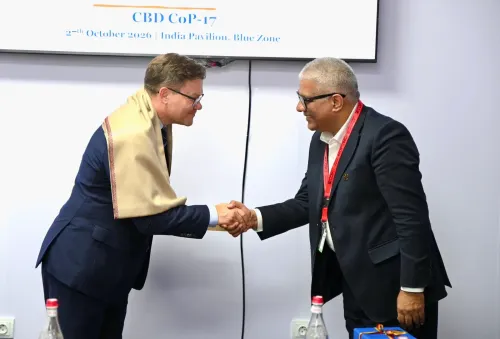
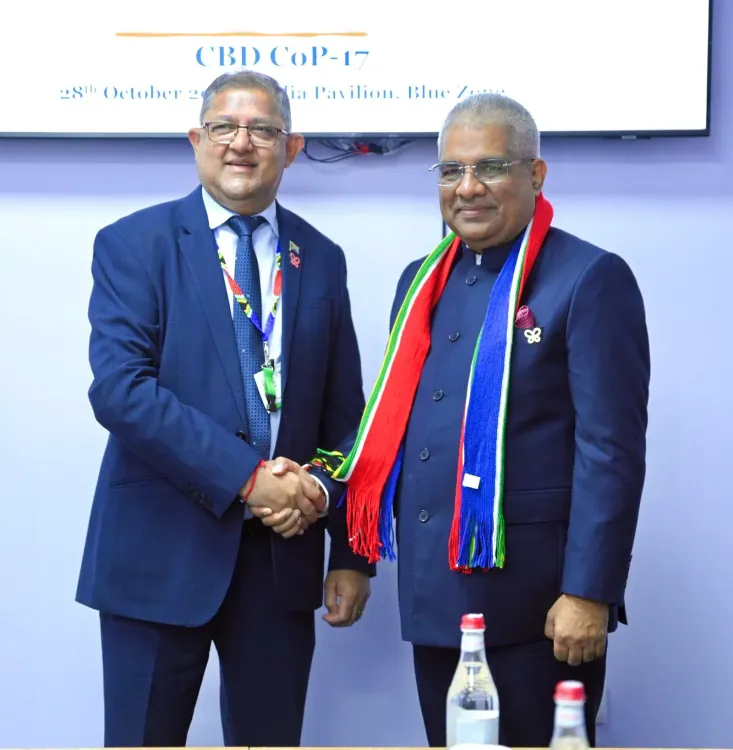
At CBD COP17 in Yerevan, Union Environment Minister Bhupender Yadav met South Africa's Deputy Environment Minister Narend Singh to advance talks on the Cali Fund for digital sequence information benefit-sharing and the next phase of Project Cheetah.
Key Takeaways
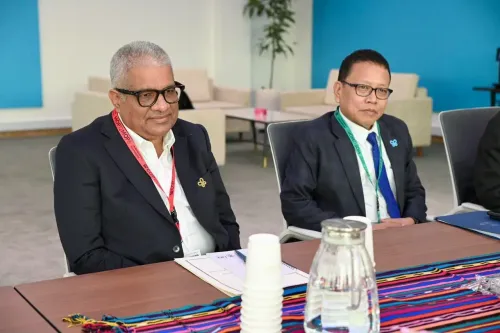
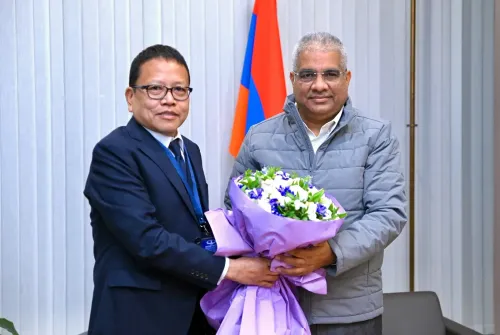
Union Environment Minister Bhupender Yadav held a bilateral with South Africa's Deputy Minister Narend Singh on October 28, 2026 at CBD COP17 in Yerevan, Armenia .
The two sides discussed an 'equitable, effective and adequately funded' multilateral mechanism for benefit-sharing from digital sequence information (DSI) on genetic resources, including the Cali Fund .
Project Cheetah , launched in September 2022 , involved the first intercontinental translocation of a large carnivore — cheetahs flown from South Africa to Kuno National Park .
India acknowledged South Africa's 'sustained support' for Project Cheetah and committed to advancing both the conservation and the DSI benefit-sharing agendas.
The Kunming-Montreal Global Biodiversity Framework (COP15, December 2022) established the mandate for the DSI multilateral mechanism now being negotiated at COP17.
On the sidelines of CBD COP17 in Yerevan, Armenia, Union Environment Minister Bhupender Yadav held a bilateral meeting on Wednesday, October 28, 2026 that wove together two of India's most consequential environmental pursuits — the landmark cheetah reintroduction programme and a hard-fought push for equitable benefit-sharing in global biodiversity governance.
Yadav met with Narend Singh, Deputy Minister of Forestry, Fisheries and the Environment of the Republic of South Africa, using the margins of the Conference of the Parties to the Convention on Biological Diversity (CBD) as an opportunity to advance both agendas in a single conversation. The minister confirmed the meeting on X, noting that the two sides 'exchanged views on matters related to an equitable, effective and adequately funded multilateral mechanism for benefit-sharing from the use of digital sequence information on genetic resources, including the Cali Fund.'
The Cali Fund and India's DSI battle
At the heart of the biodiversity diplomacy agenda sits the question of digital sequence information (DSI) — the genetic data derived from biological samples that pharmaceutical, agricultural, and biotech industries rely on. Biodiversity-rich developing nations, including India, have long argued that the benefits flowing from commercial use of such data must flow back to the countries and communities that are the original stewards of those resources.
The Kunming-Montreal Global Biodiversity Framework, adopted at CBD COP15 in December 2022, established the mandate for a multilateral mechanism to formalise exactly this principle. The Cali Fund, named for the Colombian city where COP16 was held, emerged as the vehicle to operationalise that commitment. India's engagement here is not peripheral — it is a co-architect of the developing-country coalition pressing for a mechanism that is both funded and enforceable, not merely aspirational.
Project Cheetah: South Africa's role in India's wildest conservation bet
Project Cheetah, India's audacious programme to reintroduce the cheetah after its extinction in the country, has South Africa as a central partner. The project was formally launched in September 2022, with the first cohort of cheetahs flown from South Africa to Kuno National Park in Madhya Pradesh — the first intercontinental translocation of a large carnivore in history.
The minister's acknowledgement that 'India appreciates South Africa's sustained support for Project Cheetah' signals that the bilateral wildlife relationship remains active and institutionally warm. Discussions at Yerevan focused on the 'conservation efforts steering it' — a phrase pointing to the ongoing monitoring, veterinary support, and habitat management protocols that will determine whether the reintroduced population can establish itself as a self-sustaining force on Indian soil.
One meeting, two pillars of India's biodiversity diplomacy
What makes this encounter strategically notable is the deliberate coupling of the two agendas. India is simultaneously a recipient country in species conservation diplomacy — dependent on South African expertise and animals — and a demandeur in access-benefit-sharing negotiations, seeking financial commitments from the industrialised world. Engaging South Africa on both tracks in a single bilateral reinforces a broader Indian strategy: bilateral wildlife cooperation and multilateral equity negotiations are not separate files, but interlocking instruments of the same environmental foreign policy.
The minister closed his post signalling clear intent: India 'looks forward to advancing both agenda items' — a phrase that, in diplomatic language, means the conversation at Yerevan is an opening, not a conclusion.
Point of View
Yadav signals that New Delhi treats biodiversity equity and wildlife reintroduction as strategically inseparable. This approach strengthens India's hand in multilateral forums — reciprocal goodwill on cheetahs can translate into aligned positions on DSI, where South Africa, as a biodiversity-rich developing country, is a natural co-demandeur. The meeting also reflects the BJP government's interest in projecting India as both a conservation leader and a champion of the Global South's rights over genetic heritage.
NationPress
28 Oct 2026
Frequently Asked Questions
What is CBD COP17 and where is it being held?
CBD COP17 is the 17th Conference of the Parties to the Convention on Biological Diversity, being held in Yerevan, Armenia. It is the primary global forum where nations negotiate biodiversity policy, including benefit-sharing from genetic resources.
What is the Cali Fund?
The Cali Fund is a proposed multilateral financial mechanism to channel benefits — particularly from commercial use of digital sequence information on genetic resources — back to biodiversity-rich developing countries. It emerged from negotiations at CBD COP16.
What is digital sequence information (DSI) in the context of biodiversity talks?
DSI refers to genetic data derived from biological samples, used extensively by pharmaceutical, biotech, and agricultural industries. Developing countries argue they deserve a share of the benefits when companies exploit DSI drawn from their biodiversity.
What is Project Cheetah and what role does South Africa play?
Project Cheetah is India's programme to reintroduce cheetahs, which became extinct in India, into Kuno National Park in Madhya Pradesh. South Africa is a key partner, having supplied cheetahs for the world's first intercontinental large-carnivore translocation, launched in September 2022.
Why is India discussing both cheetahs and the Cali Fund with South Africa?
India and South Africa are partners on wildlife conservation through Project Cheetah and share interests as biodiversity-rich developing countries in multilateral DSI benefit-sharing negotiations. India deliberately links both agendas to reinforce a broader environmental foreign policy strategy.