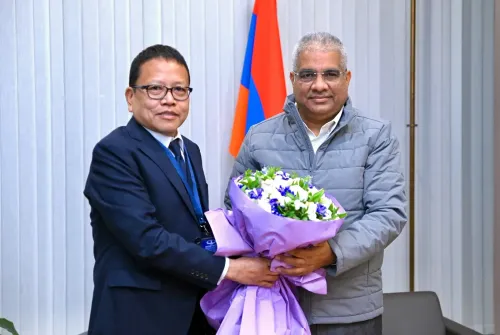
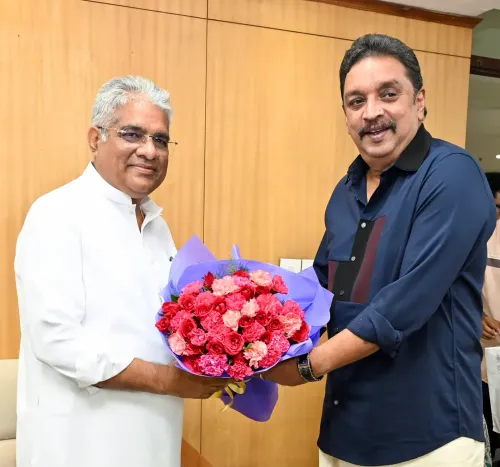
Yadav meets CBD chief Schomaker at COP17 high-level segment
Synopsis
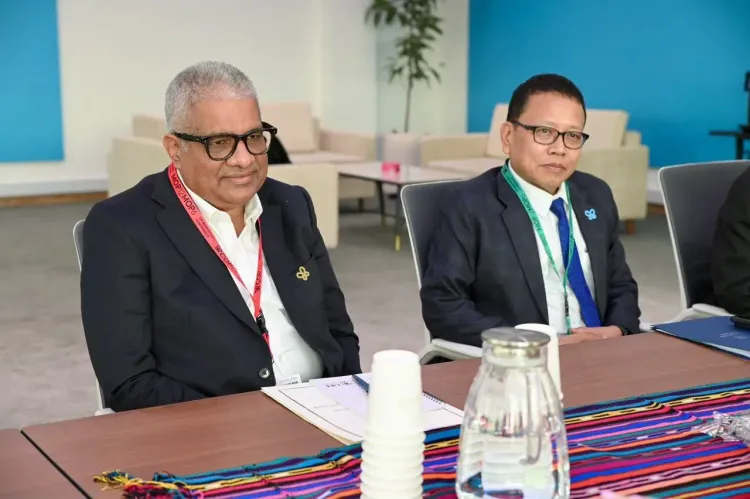
Union Environment Minister Bhupender Yadav met CBD Executive Secretary Astrid Schomaker at the COP17 high-level segment, discussing digital sequence information benefit-sharing and resource mobilisation under the Kunming-Montreal Biodiversity Framework — India's twin priorities in global biodiversity diplomacy.
Key Takeaways
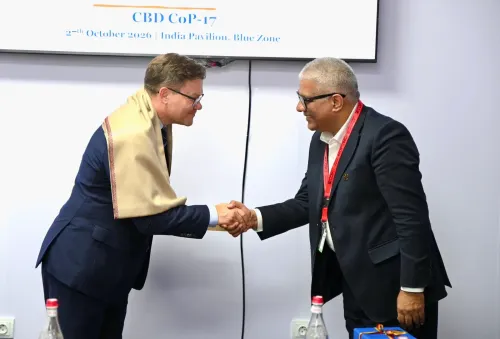
Bhupender Yadav met CBD Executive Secretary Astrid Schomaker at the high-level segment of CBD COP17 on October 27, 2026 .
Talks focused on two core issues: digital sequence information (DSI) benefit-sharing and resource mobilisation commitments under the Kunming-Montreal framework.
India has been a CBD party since 1994 and hosted COP11 in Hyderabad in 2012 , giving it significant institutional weight in negotiations.
The Kunming-Montreal Global Biodiversity Framework , adopted in December 2022, targets mobilising at least $200 billion per year for biodiversity by 2030.
India consistently argues that benefits from genetic data in global databases must flow back to biodiversity-rich developing nations — the same equity principle that governs physical genetic resources.
With the 2030 deadline approaching, COP17 is a critical accountability moment for turning the framework's 23 targets into concrete action.
Two of the world's most consequential biodiversity negotiations — who owns the data encoded in DNA, and who pays for nature's survival — landed on the same table when Union Environment Minister Bhupender Yadav met CBD Executive Secretary Astrid Schomaker on the sidelines of the high-level segment of CBD COP17 on Tuesday, October 27, 2026.
Yadav described the bilateral as focused on 'key agendas related to ongoing negotiations related to digital sequence information, and resource mobilisation,' reaffirming India's commitment to the Kunming-Montreal Global Biodiversity Framework and its 'continuous support to the Convention.'
What DSI and resource mobilisation actually mean for India
Digital sequence information — the genetic data extracted from plants, animals, and microorganisms and stored in global databases — has become the sharpest fault-line in biodiversity diplomacy. Biotech firms in developed countries can use that data to develop drugs, crops, and cosmetics without the country of origin seeing a rupee of benefit. India, one of the world's 17 mega-diverse nations, has consistently argued that the same equity logic that governs physical genetic resources must extend to their digital blueprints. Resource mobilisation is the second flashpoint. The Kunming-Montreal framework, adopted at CBD COP15 in Montreal in December 2022, commits parties to mobilising at least $200 billion per year for biodiversity by 2030, including a $30 billion annual flow from developed to developing countries. Progress on translating those headline numbers into binding finance mechanisms has been slow — a frustration India has voiced in every multilateral environmental forum from the CBD to climate talks.India's long arc at the Convention
India's engagement with the CBD runs deep. The country ratified the convention in 1994, enacted the Biological Diversity Act in 2002, and hosted CBD COP11 in Hyderabad in 2012 — a presidency that produced the Hyderabad Declaration and anchored early mechanisms for implementing the Nagoya Protocol on access and benefit-sharing. That institutional memory gives India unusual credibility when it argues that the Convention's original promise — equitable sharing of benefits from biological resources — remains unfinished business. Schomaker, who leads the CBD Secretariat through one of its most technically complex implementation phases, is navigating pressure from biodiversity-rich developing nations demanding faster finance flows and binding DSI mechanisms, while developed-country parties push for flexibility. A direct conversation with India's minister, at the high-level segment no less, signals that both sides recognise the political will required to move these negotiations forward.The COP17 stakes for the 2030 deadline
With 2030 — the target year for the Kunming-Montreal framework's 23 biodiversity goals, including the landmark 30x30 pledge to protect thirty percent of land and ocean — now just four years away, COP17 is effectively a mid-term accountability moment. The decisions made here on DSI and finance architecture will determine whether the framework's ambitions survive the implementation gap or quietly collapse under it. India's message at the Yadav-Schomaker meeting was consistent with its broader posture in multilateral environmental diplomacy: conservation targets and equity commitments are inseparable, and the developed world's finance obligations are not optional fine print. Four years to 2030, and the hardest deals are still being cut.Point of View
Not just protocol — India is using every tier of engagement to press its twin demands of DSI benefit-sharing and binding finance flows. This fits a deliberate pattern: India has consistently linked biodiversity ambition to equity obligations, mirroring its approach in climate finance negotiations. The 2030 deadline for the Kunming-Montreal framework is close enough that COP17 decisions on DSI and resource mobilisation will effectively define whether the framework succeeds or becomes another aspirational document. India's willingness to anchor these conversations at the ministerial level suggests it sees this moment as a genuine window for institutional leverage.
NationPress
27 Oct 2026
Frequently Asked Questions
What is digital sequence information in biodiversity talks?
Digital sequence information (DSI) refers to genetic data derived from biological samples — such as DNA sequences — that is stored in global databases. Developing countries like India argue that commercial use of this data should generate benefit-sharing payments to the nations of origin, just as physical genetic resources do under the Nagoya Protocol.
What is the Kunming-Montreal Global Biodiversity Framework?
The Kunming-Montreal Global Biodiversity Framework is a landmark agreement adopted at CBD COP15 in December 2022, setting 23 targets for 2030, including protecting 30 percent of land and ocean and mobilising at least $200 billion annually for biodiversity.
What is India's position on biodiversity resource mobilisation?
India consistently argues that developed countries must meet their finance commitments under the Kunming-Montreal framework, including the $30 billion annual transfer to developing nations, and that these obligations are non-negotiable for effective biodiversity conservation.
Who is Astrid Schomaker?
Astrid Schomaker is the Executive Secretary of the Convention on Biological Diversity, leading the CBD Secretariat through the implementation phase of the Kunming-Montreal framework.