Bhupender Yadav arrives in Yerevan for CBD COP17

Synopsis
Union Environment Minister Bhupender Yadav has arrived in Yerevan, Armenia for the high-level segment of CBD COP17, where he will present India's biodiversity conservation record and progress under the Kunming–Montreal Global Biodiversity Framework to a global audience of nearly 200 signatory nations.
Key Takeaways
Union Environment Minister Bhupender Yadav arrived in Yerevan, Armenia on 27 October 2026 for CBD COP17 's high-level segment.
India will present its biodiversity conservation achievements and progress under the Kunming–Montreal Global Biodiversity Framework adopted at COP15 in December 2022 .
Yadav highlighted ABS (Access and Benefit-Sharing) implementation as a key area where India's experience offers lessons for other nations.
The Kunming–Montreal Framework targets protection of 30 per cent of land and ocean by 2030 , replacing the earlier Aichi Targets.
India, one of the world's 17 mega-diverse countries , is expected to participate in bilateral meetings on the margins of COP17 alongside the plenary sessions.
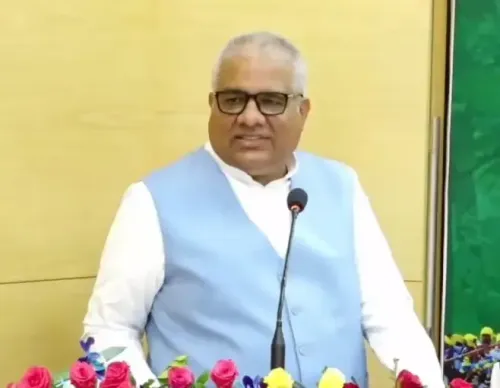
India's biodiversity agenda landed on an international stage on Tuesday, 27 October 2026, as Union Environment Minister Bhupender Yadav touched down in Yerevan, Armenia to take part in the high-level segment of the 17th Conference of Parties to the Convention on Biological Diversity (COP17-CBD) — one of the most consequential multilateral forums for the planet's natural heritage.
Yadav confirmed his arrival on X, outlining that over the coming days he will 'present India's views, efforts and achievements in conserving its rich natural biodiversity across different bilateral and multilateral forums.' The minister directly credited Prime Minister Narendra Modi's leadership for what he described as 'significant progress' in meeting targets under the Kunming–Montreal Global Biodiversity Framework, and said India's experience offers lessons for strengthening Access and Benefit-Sharing (ABS) implementation across diverse national contexts.
What COP17-CBD is — and why Yerevan matters
The Convention on Biological Diversity is the central multilateral treaty governing how nations conserve ecosystems, sustainably use biological resources, and share the benefits arising from genetic resources. COP17 is the seventeenth gathering of its nearly 200 signatory parties — a forum where national targets are reviewed, new commitments are tested, and the distance between promise and delivery is measured in hard data.
At stake in Yerevan is the implementation progress of the Kunming–Montreal Global Biodiversity Framework, adopted at COP15 in Montreal in December 2022. That landmark agreement replaced the earlier Aichi Targets and set ambitious 2030 goals for halting and reversing biodiversity loss — including the headline '30x30' target to protect 30 per cent of land and ocean by the decade's end.
India's ABS positioning at the global table
Access and Benefit-Sharing — the mechanism by which countries ensure that the commercial and scientific value derived from their genetic resources flows back to local communities and source nations — has been a particular focus for India in CBD negotiations. As one of the world's 17 mega-diverse countries, India has long argued for robust ABS rules that protect the rights of indigenous and local knowledge holders.
Yadav's framing on X — positioning India's domestic track record as a model for 'diverse national contexts' — signals that New Delhi intends to use the Yerevan high-level segment not just to report compliance, but to actively shape the normative conversation around how developing nations implement the Framework on their own terms. Bilateral meetings on the margins of COP17 are expected to add further diplomatic texture to India's presence.
India's domestic conservation record that Yadav will carry to the podium
India's conservation narrative heading into COP17 rests on a set of domestic achievements the Modi government has highlighted consistently in multilateral settings: expanding the area under protected forests, growing tiger and elephant populations, and progress on the National Biodiversity Action Plan aligned with Kunming–Montreal targets. These metrics, along with India's traditional-knowledge documentation efforts, form the core of the case Yadav is expected to make in Yerevan's high-level sessions.
India also brings the credibility of a country that formally ratified the Nagoya Protocol on ABS — and has built domestic legislative architecture around it — giving its voice on ABS implementation an authority that many developing-country blocs look to for direction.
When the minister walks into the Yerevan negotiating halls, he carries not just a national report card but a strategic argument: that the Kunming–Montreal Framework can only succeed if its targets are translatable into local law, community practice, and political will — and that India has proof of what that looks like in action.
Point of View
Not merely a rule-following signatory. By framing domestic conservation gains as exportable lessons on ABS implementation, India is making a bid for normative leadership among mega-diverse developing nations — a space where China, Brazil, and South Africa also compete for influence. The timing, mid-implementation cycle of the Kunming–Montreal Framework, is precisely when such positioning carries maximum weight. Watch for whether India's bilateral engagements in Yerevan yield concrete co-sponsorships on ABS text or protected-area targets ahead of the Framework's 2030 review.
NationPress
27 Oct 2026
Frequently Asked Questions
What is CBD COP17 and where is it being held?
CBD COP17 is the 17th Conference of Parties to the Convention on Biological Diversity, being held in Yerevan, Armenia. It is a major multilateral forum where signatory nations review progress on global biodiversity targets, including those set under the Kunming–Montreal Global Biodiversity Framework.
Why is India's Environment Minister attending CBD COP17?
Union Environment Minister Bhupender Yadav is attending the high-level segment of CBD COP17 to present India's conservation achievements, its progress on Kunming–Montreal Framework targets, and its experience in implementing Access and Benefit-Sharing (ABS) rules — areas where India seeks to influence global policy.
What is the Kunming–Montreal Global Biodiversity Framework?
The Kunming–Montreal Global Biodiversity Framework is a landmark international agreement adopted at CBD COP15 in Montreal in December 2022. It sets 2030 goals for halting biodiversity loss — including protecting 30 per cent of land and ocean — and replaces the earlier Aichi Targets.
What is ABS (Access and Benefit-Sharing) in the context of biodiversity?
Access and Benefit-Sharing (ABS) is a mechanism under the CBD and its Nagoya Protocol that ensures countries and local communities receive a fair share of the benefits when their genetic resources or traditional knowledge are used commercially or scientifically. India is a signatory to the Nagoya Protocol and has domestic legislation implementing ABS rules.
How many countries are part of the Convention on Biological Diversity?
The Convention on Biological Diversity has nearly 200 signatory parties, making it one of the most widely ratified multilateral environmental agreements in the world.