Yadav Launches Book on Cheetah Reintroduction Diplomacy
Synopsis
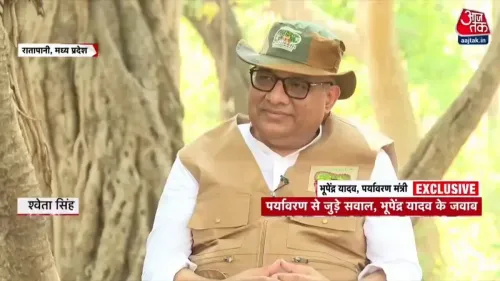
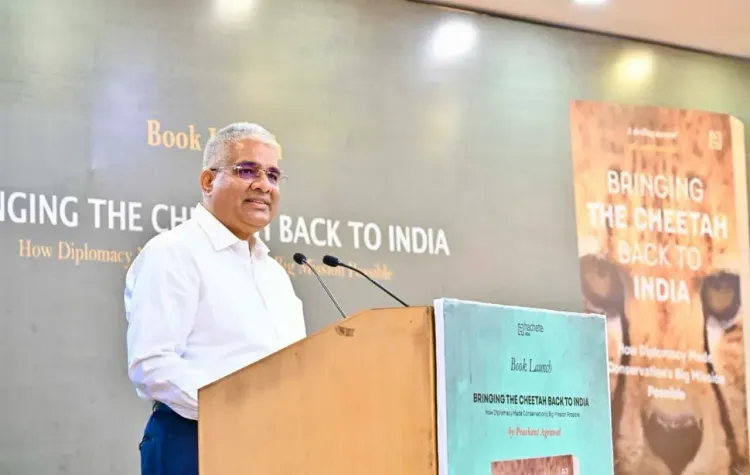
Union Environment Minister Bhupender Yadav launched diplomat Prashant Agrawal's book 'Bringing the Cheetah Back to India' on 23 May 2026, calling it essential reading on green diplomacy and a guiding resource for those advancing Project Cheetah's gains at the diplomatic level.
Key Takeaways
Union Environment Minister Bhupender Yadav launched Prashant Agrawal's book 'Bringing the Cheetah Back to India' on 23 May 2026 .
The book chronicles the diplomatic efforts behind India's cheetah reintroduction after seven decades of extinction.
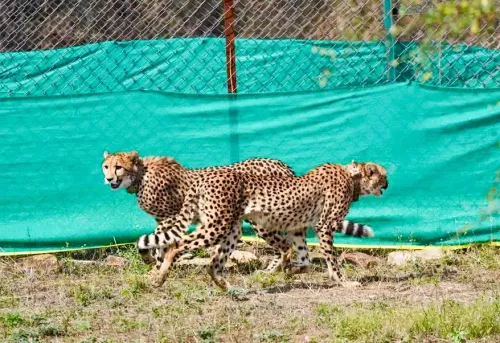
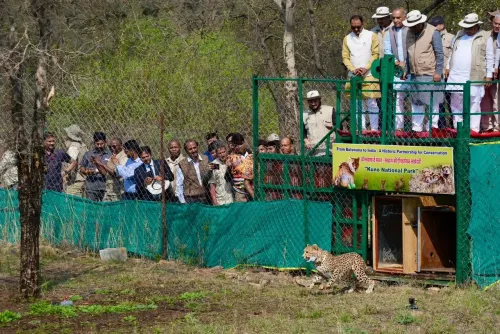
Project Cheetah began in 2022 with eight Namibian cheetahs translocated to Kuno National Park, Madhya Pradesh .
The cheetah was officially declared extinct in India in the early 1950s , with the last confirmed sighting in 1947 .
Yadav described the book as a 'guiding light' for those carrying forward the programme's diplomatic gains.
The initiative is part of India's broader environmental diplomacy with African range states under the Convention on Biological Diversity .
Union Environment Minister Bhupender Yadav on Saturday, 23 May 2026, launched 'Bringing the Cheetah Back to India', a book authored by diplomat Prashant Agrawal that chronicles the diplomatic negotiations behind India's landmark cheetah reintroduction programme.
Context
The book documents the behind-the-scenes diplomatic efforts that enabled India to reintroduce cheetahs after roughly seven decades of their extinction from the subcontinent. The cheetah was officially declared extinct in India in the early 1950s, following the last confirmed sighting in 1947. Yadav described the work as 'a very important read for those interested in green diplomacy and all those who love and care for wildlife.'
Addressing the author directly on X, the minister expressed his wishes for the book's success, adding that the account would 'serve as a guiding light for those who carry forward the gains made so far at the diplomatic level.'
Policy Backdrop
In 2022, India launched Project Cheetah, which saw eight Namibian cheetahs translocated to Kuno National Park in Madhya Pradesh — the first reintroduction of the species on Indian soil in modern history. Namibia was the primary source country under a bilateral wildlife agreement, making the initiative a flagship example of India's environmental diplomacy with African range states.
The programme sits within India's broader commitments under the Convention on Biological Diversity and national action plans for restoring threatened species. Agrawal's book, according to the minister, offers a rare public account of how those diplomatic channels were built and sustained.
Stakeholders and Impact
The reintroduction effort involves conservation biologists, diplomatic missions, and wildlife tourism operators, all of whom have a stake in the programme's long-term success. Yadav's endorsement of the book signals the government's intent to keep the diplomatic architecture of Project Cheetah visible and well-documented as the programme matures.
For researchers and policymakers, Agrawal's account is expected to offer a template for future bilateral wildlife agreements, particularly as India explores potential new source countries and additional release sites beyond Kuno National Park.
What's Next
The National Tiger Conservation Authority periodically releases status reports on cheetah survival, breeding, and habitat expansion, with the conservation community watching closely for milestones that would justify scaling the programme. The minister's remarks suggest the government views the diplomatic groundwork — now documented in Agrawal's book — as a foundation to build on rather than a chapter already closed.
As Project Cheetah moves beyond its early phase, the emphasis on institutional memory and green diplomacy points to India positioning itself as a model for large-carnivore reintroduction efforts across Asia.
Point of View
' the minister signals that India intends to replicate this diplomatic model for future wildlife agreements. The launch also serves a subtle political function: anchoring a flagship environmental programme that has faced scrutiny over cheetah mortality rates firmly in a narrative of diplomatic success. This pattern of using book launches and public commemorations to consolidate the legacy of ongoing schemes is increasingly common among senior ministers managing long-horizon projects.
NationPress
21 Oct 2026
Frequently Asked Questions
What is the book 'Bringing the Cheetah Back to India' about?
The book by diplomat Prashant Agrawal documents the diplomatic negotiations and bilateral agreements that made India's cheetah reintroduction programme possible after the species was extinct in the country for roughly seven decades.
What is Project Cheetah in India?
Project Cheetah is India's programme to reintroduce African cheetahs into the wild. It began in 2022 when eight Namibian cheetahs were translocated to Kuno National Park in Madhya Pradesh, marking the first such reintroduction in modern Indian history.
When did cheetahs go extinct in India?
Cheetahs were officially declared extinct in India in the early 1950s. The last confirmed sighting was recorded in 1947.
Where are the reintroduced cheetahs kept in India?
Kuno National Park in Madhya Pradesh was selected as the primary site for the first cheetah releases under Project Cheetah.
Who is Prashant Agrawal, the author of the cheetah book?
Prashant Agrawal is an Indian diplomat who authored 'Bringing the Cheetah Back to India,' which details the green diplomacy behind India's cheetah reintroduction effort. He was tagged by Union Environment Minister Bhupender Yadav at the book's launch.