Giriraj Singh shares Project Cheetah's return under Modi govt
Synopsis
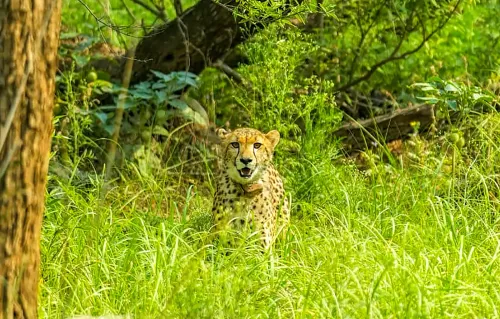
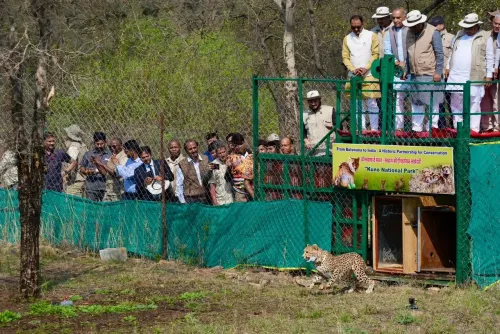
Union Textiles Minister Giriraj Singh marked World Environment Day by sharing content on Project Cheetah, the Modi government's initiative that reintroduced cheetahs to India after the species was declared extinct in 1952 during the Nehru era. Eight cheetahs arrived at Kuno National Park, Madhya Pradesh, from Namibia in 2022.
Key Takeaways
Union Textiles Minister Giriraj Singh shared Project Cheetah content on June 5, 2026 (World Environment Day) via the NaMo App.
The cheetah was declared extinct in India in 1952 , during the government of Prime Minister Jawaharlal Nehru .
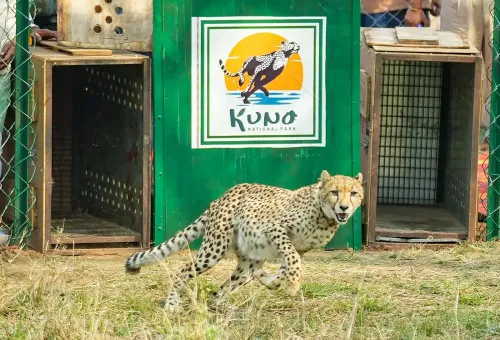
Project Cheetah was launched in 2022 with the arrival of eight cheetahs from Namibia at Kuno National Park , Madhya Pradesh.
The project is part of India's broader species recovery tradition that dates to Project Tiger in 1973 .
Population monitoring, breeding outcomes, and potential habitat expansion remain the key metrics to watch for the programme's long-term success.
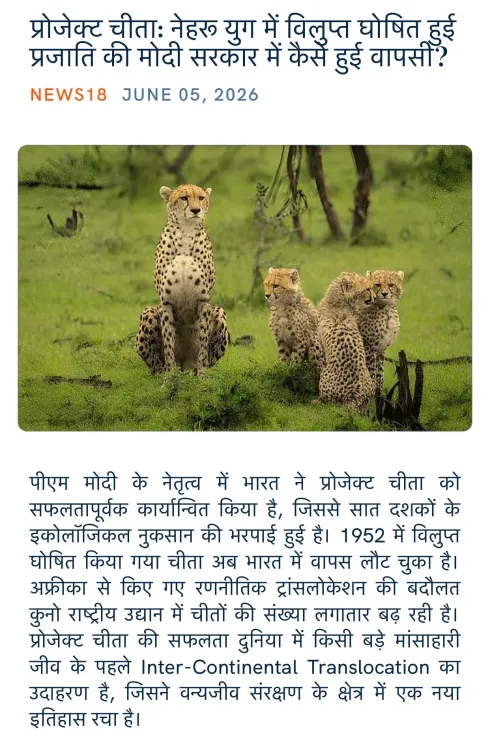
Union Textiles Minister Giriraj Singh on Friday, June 5, 2026, shared content on X highlighting Project Cheetah — the Modi government's initiative to reintroduce cheetahs to India after the species was declared extinct during the Nehru era — framing the reintroduction as a landmark conservation achievement.
Context
The post, shared via the NaMo App, poses the question of how a species declared extinct in 1952 — during the tenure of India's first Prime Minister Jawaharlal Nehru — was brought back under the Narendra Modi government. The framing draws a pointed political contrast between the two eras, positioning the reintroduction as a policy success of the current dispensation.
The cheetah had vanished from Indian forests over decades of habitat loss and hunting, with the government officially recording its extinction in 1952. For over seven decades, the animal remained absent from the subcontinent's wildlife landscape.
Policy Backdrop
Project Cheetah was formally launched in 2022 when eight cheetahs arrived at Kuno National Park in Madhya Pradesh from Namibia under a bilateral wildlife agreement. It marked the first time in recorded history that a large carnivore was translocated across continents for reintroduction purposes.
India has maintained a tradition of species recovery programmes since the 1970s, beginning with Project Tiger in 1973. Project Cheetah follows that lineage, using international sourcing to restore a top predator and rebuild ecological balance in designated protected areas. Kuno National Park was selected for its suitable grassland and scrub-forest habitat.
Stakeholders and Impact
Conservation scientists and wildlife managers have closely tracked the cheetahs' adaptation to Indian conditions since their arrival. Local communities in and around Madhya Pradesh's Kuno region have a direct stake in how the programme evolves, as expanded protected zones can affect land use and livelihoods.
For the BJP, the project carries political significance beyond ecology — it is regularly cited as evidence of the Modi government's ambition on environmental restoration, contrasted with the species' disappearance under earlier administrations. Singh's post on World Environment Day amplifies that messaging to a national audience.
What's Next
Wildlife authorities continue to monitor population health, breeding outcomes, and territorial behaviour of the cheetahs at Kuno. Any decisions on expanding the programme to additional sites or increasing the population through further imports will depend on these monitoring reports.
As India approaches international biodiversity commitments, Project Cheetah's long-term success will be measured not just by survival numbers but by whether a self-sustaining wild population can be established — a benchmark that remains a work in progress.
Point of View
Contrasting the cheetah's extinction under Nehru with its return under Modi. This is consistent with the ruling party's broader strategy of using conservation achievements to project governance competence and historical revisionism simultaneously. The choice of the NaMo App as the sharing platform underscores that the audience is the party's own digital base, not a neutral public. Whether the project's scientific outcomes ultimately match its political symbolism will be the real test of its legacy.
NationPress
21 Oct 2026
Frequently Asked Questions
What is Project Cheetah in India?
Project Cheetah is India's government programme to reintroduce cheetahs, which were declared extinct in the country in 1952. It was launched in 2022 with the arrival of eight African cheetahs from Namibia at Kuno National Park in Madhya Pradesh.
When was the cheetah declared extinct in India?
The cheetah was officially declared extinct in India in 1952, during the tenure of Prime Minister Jawaharlal Nehru.
Where were the cheetahs released in India?
The reintroduced cheetahs were released at Kuno National Park in Madhya Pradesh, which was selected for its suitable grassland and scrub-forest habitat.
Which country provided cheetahs to India?
Namibia, a southern African nation, provided eight cheetahs to India under a bilateral wildlife agreement as part of Project Cheetah's launch in 2022.
Why did Giriraj Singh post about Project Cheetah?
Union Textiles Minister Giriraj Singh shared content about Project Cheetah on June 5, 2026 — World Environment Day — highlighting the Modi government's role in reintroducing a species declared extinct during the Nehru era.