Project Cheetah 2026: Kuno, Gandhi Sagar and India's expanding cheetah map
Synopsis
India's cheetah count has reached 60 — a milestone driven by the first India-born cheetah giving birth to five cubs at Kuno on 5 October 2026. With two operational sites now running and three more landscapes in preparation across MP, Gujarat and Rajasthan, Project Cheetah is quietly becoming one of the world's most ambitious large-carnivore reintroduction experiments.
Key Takeaways
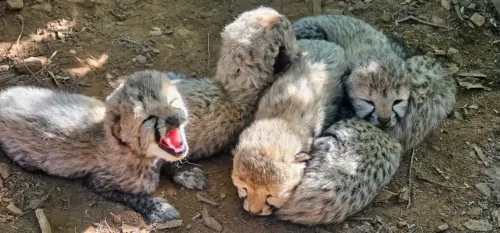
An India-born cheetah at Kuno National Park delivered five cubs on 5 October 2026 , taking India's total cheetah count to 60 .
Kuno National Park (Madhya Pradesh) and Gandhi Sagar Wildlife Sanctuary (Madhya Pradesh) are India's only two operational cheetah sites as of October 2026.
Gandhi Sagar became the second operational site in 2025 ; cheetahs Prabhas , Pavak and Dheera were relocated there from Kuno within a 64 sq km fenced natural area.
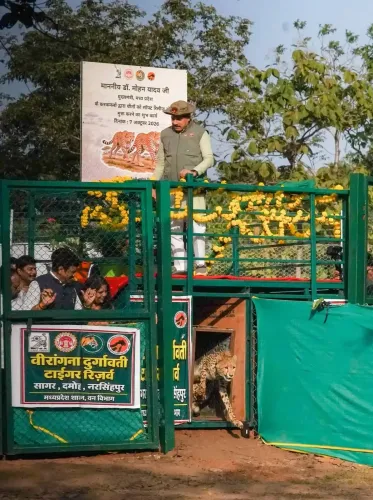
MP Chief Minister Mohan Yadav released cheetahs Vyom and Neera into Veerangana Durgavati Tiger Reserve on 7 October 2026 .
Future cheetah landscapes being prepared include Nauradehi (MP), Banni Grasslands (Gujarat) and Shahgarh (Rajasthan) — none are open for conventional cheetah safaris yet.
The programme began with 8 cheetahs from Namibia in September 2022 and 12 from South Africa in February 2023, after the species went extinct in India in 1952 .
India's Project Cheetah has crossed a milestone: a cheetah born at Kuno National Park in Madhya Pradesh gave birth to five cubs on 5 October 2026, pushing the country's total cheetah count to 60. The development marks a significant chapter in a reintroduction effort that began in September 2022, when the fastest land animal returned to India after an absence of seven decades.
How Project Cheetah Began
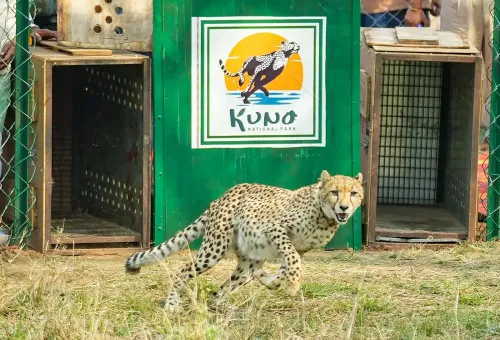
The species had been declared extinct in India in 1952. The government's reintroduction programme launched formally in September 2022, when eight cheetahs were flown in from Namibia to Kuno National Park in Sheopur district, Madhya Pradesh. In February 2023, a second batch of 12 cheetahs arrived from South Africa, expanding the founder population. The programme is overseen by the National Tiger Conservation Authority (NTCA), which has said preparations and deliberations for additional landscapes are ongoing.
On 7 October 2026, Madhya Pradesh Chief Minister Mohan Yadav released two cheetahs — Vyom (male) and Neera (female) — into the Veerangana Durgavati Tiger Reserve in Sagar district, signalling that the programme is now expanding beyond its original base.
The Two Operational Sites: Kuno and Gandhi Sagar
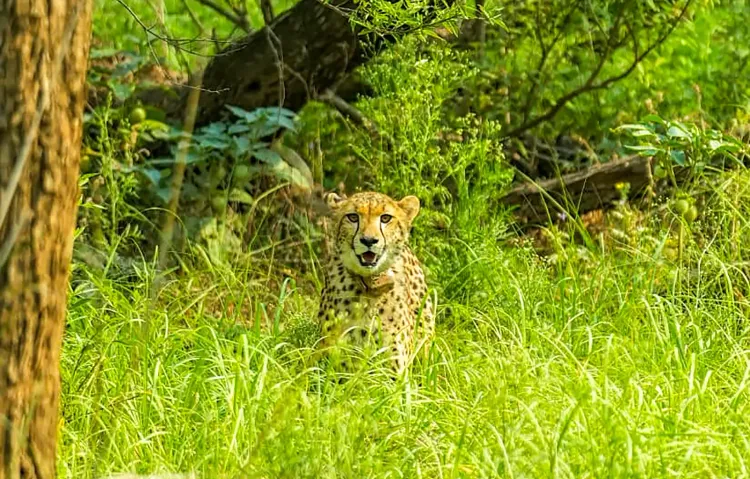
Kuno National Park remains the principal free-ranging cheetah landscape in India. Set in the northern part of Madhya Pradesh, the park features dry deciduous woodland, open grasslands, riverine stretches and gently undulating terrain. Vegetation includes kardhai, salai and khair, while chital, sambar and nilgai support the prey base. The most suitable visiting period is October to March, when temperatures are comfortable. Gwalior is the closest major city, approximately 175 km away; Bhopal is around 400–450 km by road.
The second operational site, Gandhi Sagar Wildlife Sanctuary in the Mandsaur and Neemuch region, became India's second active cheetah destination in 2025. Two male cheetahs — Prabhas and Pavak — were relocated there from Kuno, followed subsequently by a female named Dheera. A fenced natural area of approximately 64 square km was created as part of the initial establishment programme. The sanctuary's open country, hillocks, ravines and the vast backwaters of the Chambal offer a markedly different habitat from Kuno. It lies around 340–370 km from Bhopal. Visitors are advised to check the latest forest-department entry arrangements, as cheetah viewing is governed by the management programme rather than conventional mass tourism.
Landscapes Being Prepared: Nauradehi, Banni and Shahgarh
Nauradehi Wildlife Sanctuary, now part of the Veerangana Durgavati Tiger Reserve in Madhya Pradesh, is identified as a future cheetah introduction zone. Its large expanses of open woodland, grassland and undulating country make it strategically valuable for building a larger cheetah metapopulation. It is around 200–250 km from Bhopal but is not yet an established cheetah tourism destination.
In Gujarat, the Banni Grasslands of Kutch — lying between the Great Rann of Kutch and the settled parts of Kutch — have been identified as a future cheetah landscape. A conservation-breeding facility is reportedly being developed there. Bhuj serves as the practical base; the region is around 350–400 km from Gandhinagar. Winter, particularly November to February, is the most rewarding period, coinciding with the arrival of large numbers of migratory birds.
In Rajasthan, Shahgarh — located in the western part of the state near the Pakistan border — is a proposed cheetah landscape. Its vast, dry and open desert ecosystem of sandy stretches, sparse vegetation and grassland patches offers a habitat distinct from Kuno. Jaisalmer is the practical gateway; Jaipur is more than 600 km away by road. A visit today is best planned as a desert wildlife experience rather than a cheetah safari.
What Wildlife Travellers Should Know
India's cheetah conservation strategy is deliberately built around a network of landscapes. Kuno and Gandhi Sagar are the only two sites where cheetahs are actively managed and where sightings — though never guaranteed — are possible. Nauradehi, Banni and Shahgarh represent the expansion strategy and should not be visited with cheetah sightings as the primary expectation. Across all destinations, October to March is the optimal season. Early mornings and late afternoons generally offer the best chances of wildlife activity.
As the total cheetah population reaches 60 and the programme pushes into new geographies, India's restoration of this open-country predator is increasingly being watched as a global rewilding reference point.
Point of View
But the headline number can obscure a more complex picture: mortality rates in the early years were high enough to attract sustained scientific scrutiny, and a population of 60 across multiple sites is still far from self-sustaining. The expansion into Gandhi Sagar, Nauradehi, Banni and Shahgarh is ecologically sound in principle — cheetahs need large, connected open landscapes — but the pace of habitat preparation and prey-base development will ultimately determine whether this becomes a genuine metapopulation or a managed archipelago of small enclosures. India's record on large-carnivore conservation with tigers is a genuine success story; cheetahs, which require a fundamentally different and more open ecosystem, are a harder test.
NationPress
9 Oct 2026
Frequently Asked Questions
What is the current cheetah count in India?
India's total cheetah count reached 60 as of early October 2026, after an India-born cheetah at Kuno National Park in Madhya Pradesh gave birth to five cubs on 5 October 2026. The programme began with 20 cheetahs brought from Namibia and South Africa in 2022 and 2023.
Where can I see cheetahs in India right now?
The two operational cheetah destinations in India as of October 2026 are Kuno National Park in Sheopur district, Madhya Pradesh, and Gandhi Sagar Wildlife Sanctuary in the Mandsaur-Neemuch region, also in Madhya Pradesh. Cheetah sightings cannot be guaranteed and are subject to forest-department safari regulations.
What is the best time to visit Kuno National Park for cheetahs?
October to March is the most comfortable and recommended period to visit Kuno National Park. The cooler temperatures make the forest more accessible, and wildlife activity — including prey species like chital and sambar — tends to be higher during this window.
Are Banni Grasslands and Shahgarh open for cheetah safaris?
No. Both Banni Grasslands in Gujarat's Kutch district and Shahgarh in western Rajasthan are prospective future cheetah landscapes still being prepared or assessed. A conservation-breeding facility is reportedly being developed at Banni, but neither site currently offers a cheetah safari. Visitors should plan trips to these areas as general wildlife or landscape experiences.
When did India's cheetah reintroduction programme begin and why?
Project Cheetah officially began in September 2022 with the arrival of eight cheetahs from Namibia at Kuno National Park, followed by 12 more from South Africa in February 2023. The programme was launched to restore the cheetah to India after the species was declared extinct in the country in 1952, making it one of the few large-carnivore reintroduction efforts of this scale globally.