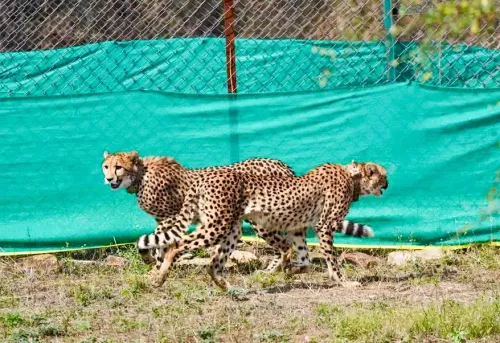
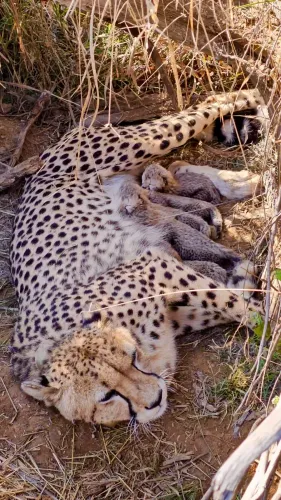
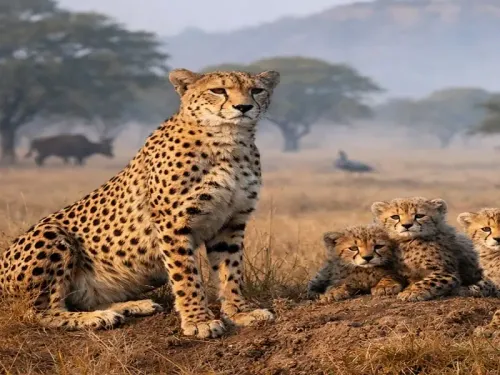
India's cheetah population hits 53, with 33 Indian-born: Bhupender Yadav
Synopsis
India's reintroduced cheetah population has crossed 53 — with 33 born on Indian soil — a milestone that would have seemed unlikely after the project's rocky early phase. With Banni grasslands in Gujarat being readied as the next habitat and the International Big Cat Alliance Summit weeks away, Project Cheetah is pivoting from survival mode to expansion.
Key Takeaways
India's cheetah population stands at 53 , of which 33 are Indian-born, as of 19 May 2025 .
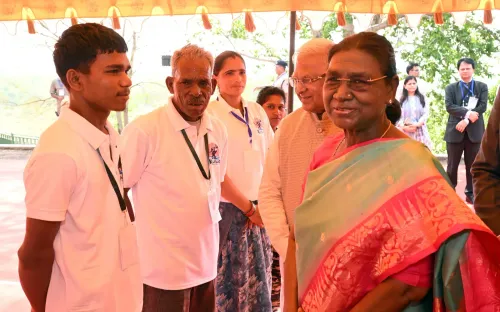
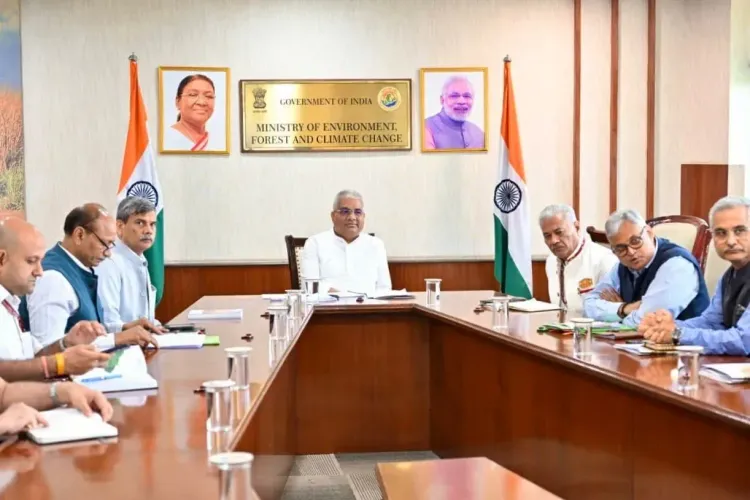
Environment Minister Bhupender Yadav chaired a high-level Project Cheetah review meeting in New Delhi.
Survival rates of introduced cheetahs and cubs are at par with, or better than, global benchmarks , according to the Ministry.
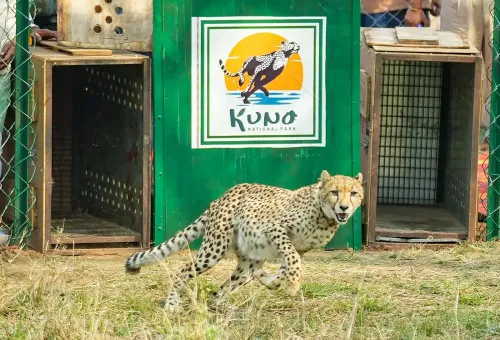
Kuno National Park is the primary site; Gandhisagar Wildlife Sanctuary serves as an additional habitat.
Expansion to Banni grasslands, Gujarat is in preparatory stage, with habitat and prey augmentation deemed satisfactory.
The founder population of 20 cheetahs (Namibia and South Africa) was supplemented by 9 from Botswana .
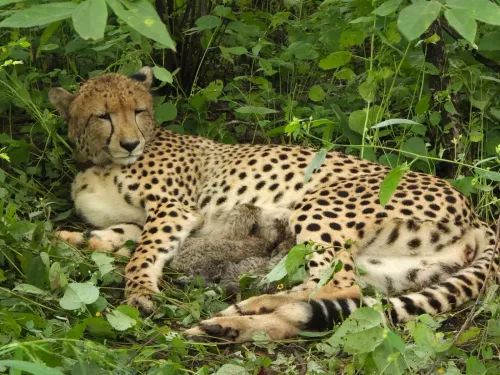
India's cheetah population has reached 53, with 33 of them born on Indian soil, Environment Minister Bhupender Yadav announced on Tuesday, 19 May, chairing a high-level review meeting of Project Cheetah in New Delhi. The milestone marks a significant moment for a reintroduction programme that began with just 20 translocated cheetahs from Namibia and South Africa in 2022.
Survival Rates Match Global Benchmarks
Yadav stated that survival rates of both introduced individuals and cubs have been 'in line with, and in certain cases, better than, global benchmarks.' He attributed this to 'scientific management and monitoring protocols' — a notable finding given the early setbacks the project faced with cheetah deaths in its first two years.
The implementation strategy, he said, adopts a landscape-based approach designed for long-term sustainability rather than isolated site management.
Kuno and Gandhisagar: The Twin Pillars
Kuno National Park in Madhya Pradesh remains the primary establishment site for the population. Gandhisagar Wildlife Sanctuary, also in Madhya Pradesh, has been developed as an additional habitat to support further expansion. According to the Minister, both sites are embedded within a larger, interconnected landscape across central India designed to facilitate natural dispersal and genetic exchange among the animals.
Expansion to Gujarat's Banni Grasslands Under Way
Preparatory work is underway to extend the project to new areas, including the Banni grasslands in Gujarat. Yadav said habitat readiness and prey augmentation measures at Banni have reached 'satisfactory levels,' signalling that a formal expansion could follow in the near term.
The founder population of 20 cheetahs from Namibia and South Africa was subsequently supplemented by 9 additional cheetahs from Botswana, bringing the total introduced stock to 29 before natural births began contributing to growth.
Review Timed Ahead of Big Cat Alliance Summit
The review meeting was attended by senior officials of the Ministry of Environment, Forest and Climate Change (MoEFCC), project experts, and senior field officers. In a post on X, Yadav noted the meeting was held 'with the first International Big Cat Alliance Summit 2026 just weeks away' — framing Project Cheetah as a centrepiece of India's global conservation diplomacy.
Yadav described the project as 'a globally significant conservation initiative' and said it is 'well-positioned for long-term success,' adding that it is expected to contribute to 'restoration of open natural ecosystems' across India. With the Banni expansion on the horizon and the Big Cat Alliance Summit approaching, the project is entering what officials describe as its most consequential phase yet.
Point of View
But the headline number needs context: cheetahs remain confined to managed reserves, and the project's long-term test is whether animals can sustain themselves across a connected landscape without intensive intervention. The pivot to Banni grasslands is strategically sound — open scrubland is closer to the cheetah's native range than Kuno's forested terrain — but prey base and human-wildlife conflict management will determine whether expansion succeeds where the primary site has struggled. Timing the review ahead of the Big Cat Alliance Summit also carries a diplomatic subtext: India is positioning Project Cheetah as a model for global rewilding, and the numbers need to hold up to international scrutiny.
NationPress
3 Oct 2026
Frequently Asked Questions
What is the current cheetah population in India?
As of 19 May 2025, India's cheetah population stands at 53, of which 33 are Indian-born. The population has grown from a founder group of 29 translocated cheetahs brought from Namibia, South Africa, and Botswana.
What is Project Cheetah?
Project Cheetah is India's initiative to reintroduce cheetahs, which had gone extinct in the country, by translocating them from African nations. It began with 20 cheetahs from Namibia and South Africa, later supplemented by 9 from Botswana, and is managed primarily at Kuno National Park in Madhya Pradesh.
Where are cheetahs being housed in India?
Kuno National Park in Madhya Pradesh is the primary site. Gandhisagar Wildlife Sanctuary serves as an additional habitat. Preparatory work is also underway to expand to the Banni grasslands in Gujarat.
How do India's cheetah survival rates compare globally?
According to Environment Minister Bhupender Yadav, survival rates of introduced cheetahs and their cubs are in line with — and in some cases better than — global benchmarks, indicating effective scientific management and monitoring.
What is the International Big Cat Alliance Summit 2026?
The first International Big Cat Alliance Summit 2026 is an upcoming global conservation event, noted by Minister Yadav as being 'just weeks away.' The Project Cheetah review was timed ahead of the summit, positioning India's reintroduction programme as a key example of big cat conservation on the world stage.