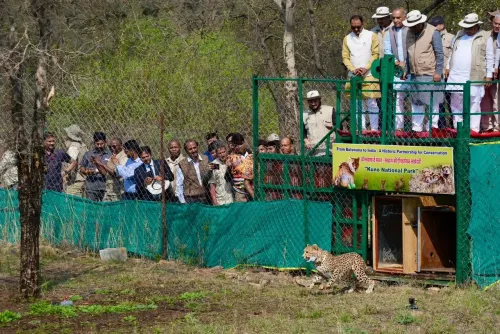
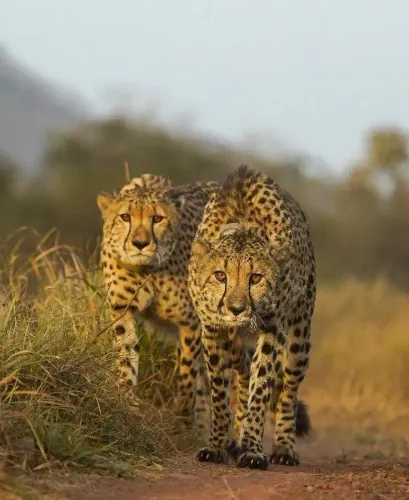
President Murmu lauds Cheetah Mitras at Kuno National Park visit
Synopsis
President Murmu's hands-on visit to Kuno National Park — where she met community volunteers and toured cheetah habitats — coincides with a landmark: India now has 53 cheetahs, with 33 born domestically. The government is already scouting Gujarat's Banni grasslands for expansion, signalling that Project Cheetah is transitioning from a reintroduction experiment to a full-scale conservation programme.
Key Takeaways
President Droupadi Murmu visited Kuno National Park on 22 June , meeting 'Cheetah Mitras' and the Sahariya tribe of Madhya Pradesh.
India's cheetah population has reached 53 , with 33 born in India — a key milestone for Project Cheetah .
Botswana donated eight cheetahs witnessed by President Murmu in November 2025 ; they arrived at Kuno in February 2026 .
Gandhisagar Wildlife Sanctuary has been prepared as an additional habitat alongside Kuno as the primary site.
Expansion to the Banni grasslands in Gujarat is underway, with habitat and prey readiness deemed satisfactory.
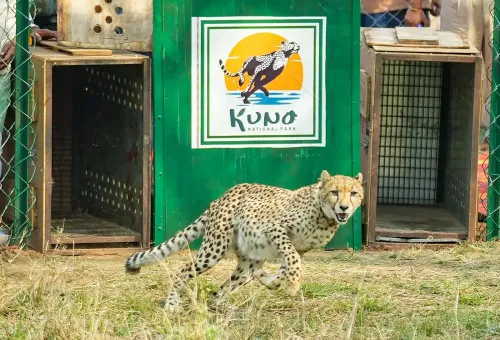
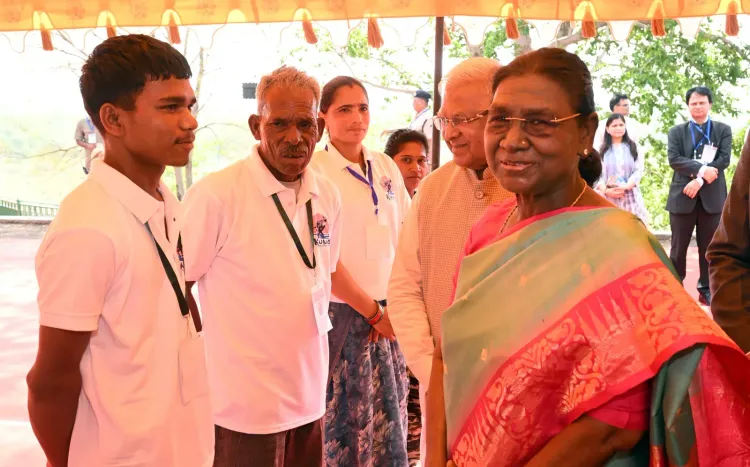
President Droupadi Murmu on Sunday, 22 June concluded her visit to Kuno National Park in Madhya Pradesh by meeting 'Cheetah Mitras' — community volunteers central to Project Cheetah — and members of the Sahariya tribe, appreciating their contributions to India's landmark wildlife reintroduction programme. The visit underscores the highest levels of political attention the project continues to attract as India's cheetah population reaches a significant milestone.
President's Visit to Kuno
During her stay, President Murmu toured the Cheetah Management Area within Kuno National Park and received a detailed briefing on the progress of Project Cheetah. She interacted personally with Cheetah Mitras — local volunteers who assist forest staff in monitoring and protecting the animals — and acknowledged their ground-level role in the project's success, according to an official statement.
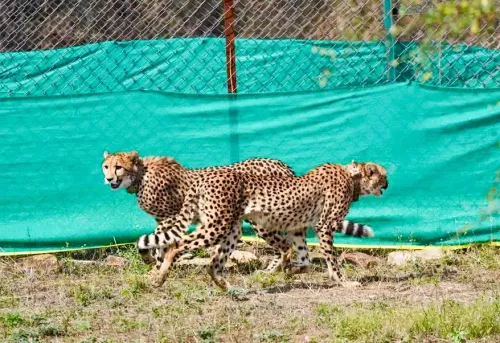
Notably, President Murmu has a direct connection with the project's expansion: during her state visit to Botswana in November 2025, she witnessed the symbolic donation of eight cheetahs by Botswana, which subsequently arrived at Kuno in February 2026.
India's Cheetah Population Hits 53
The visit comes after Minister of Environment, Forest and Climate Change Bhupender Yadav announced that India's cheetah population has reached 53, with 33 of them born on Indian soil — a figure that signals the programme's reproductive success. Chairing a review meeting of Project Cheetah, Yadav stated that survival rates of introduced individuals and cubs have been found to be "in line with, and in certain cases, better than, global benchmarks, demonstrating the effectiveness of scientific management and monitoring protocols."
The minister credited a landscape-based approach for the project's long-term sustainability, noting that Kuno National Park serves as the primary site while Gandhisagar Wildlife Sanctuary has been developed as an additional habitat to support further population expansion.
Expansion Plans and New Sites
Project Cheetah is set to extend beyond its current footprint. Preparatory work is underway at the Banni grasslands in Gujarat, where habitat readiness and prey augmentation measures have reportedly reached satisfactory levels. These sites form part of a larger, interconnected landscape across central India designed to facilitate dispersal and genetic exchange among cheetah populations.
The review meeting was attended by senior officials of the Ministry of Environment, Forest and Climate Change (MoEFCC), project experts, and senior field officers, who deliberated on the future course of action for the programme.
Significance of Project Cheetah
Project Cheetah represents India's commitment to biodiversity restoration following the cheetah's extinction in the country decades ago. The reintroduction effort — involving cheetahs sourced from Namibia and Botswana — is one of the world's most closely watched wildlife translocation programmes. With 33 India-born cheetahs now on record, conservationists are cautiously optimistic, though experts have previously flagged concerns about habitat size, prey availability, and human-wildlife conflict as the population grows. The government's next challenge will be managing a population that may soon outgrow Kuno's carrying capacity.
Point of View
But the programme's next phase will be harder than its first. Kuno National Park was always considered undersized for a self-sustaining population, and the push to Gandhisagar and the Banni grasslands is an acknowledgement of that constraint. The community-volunteer model — the Cheetah Mitras — is smart politics and smart conservation, but it works only if local livelihoods are genuinely protected as the big cats disperse. Presidential visits and ministerial review meetings signal institutional commitment; what the programme now needs is a transparent, publicly accessible monitoring framework that tracks mortality, territory, and conflict data in real time.
NationPress
21 Sept 2026
Frequently Asked Questions
What is Project Cheetah and why is it significant?
Project Cheetah is India's programme to reintroduce cheetahs, which had gone extinct in the country, by sourcing animals from Namibia and Botswana. It is one of the world's largest wildlife translocation efforts and reflects India's commitment to biodiversity restoration.
How many cheetahs does India have now?
India's cheetah population has reached 53, with 33 of them born on Indian soil, according to a statement by Environment Minister Bhupender Yadav. Survival rates have been found to be in line with or better than global benchmarks.
Who are the Cheetah Mitras?
Cheetah Mitras are community volunteers, drawn largely from local populations near Kuno National Park, who assist forest staff in monitoring and protecting cheetahs. President Murmu met and appreciated them during her visit on 22 June.
Where will Project Cheetah expand next?
The government is preparing to expand the project to the Banni grasslands in Gujarat, where habitat readiness and prey augmentation have reached satisfactory levels. Gandhisagar Wildlife Sanctuary in Madhya Pradesh has also been developed as an additional habitat.
What role did Botswana play in Project Cheetah?
Botswana donated eight cheetahs, the symbolic handover of which was witnessed by President Murmu during her state visit in November 2025. The animals arrived at Kuno National Park in February 2026.