India Welcomes Nine New Cheetahs from Botswana, Focus on Local Cub Population
Synopsis
India has bolstered its cheetah population by bringing nine new cheetahs from Botswana to Kuno National Park. Notably, six of these are females, emphasizing the program's focus on local cubs for sustainable growth. Learn more about this crucial conservation effort.
Key Takeaways
Nine new cheetahs were brought to India from Botswana.
Six of the nine cheetahs released are females, the highest in any batch.
28 India-born cubs contribute to the cheetah population at Kuno.
Local breeding is vital for the project's success.
Awareness campaigns are essential for community acceptance.
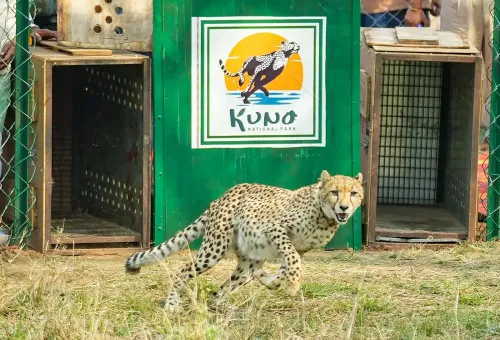
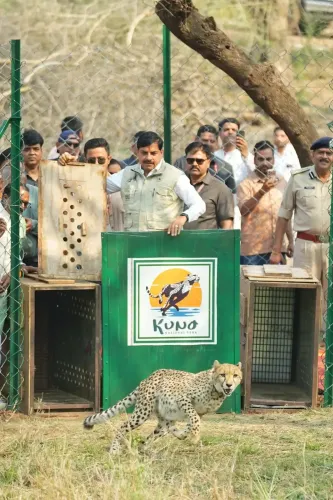
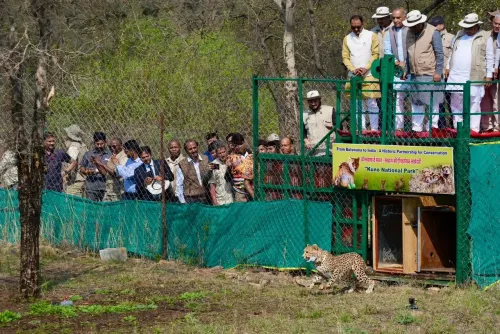
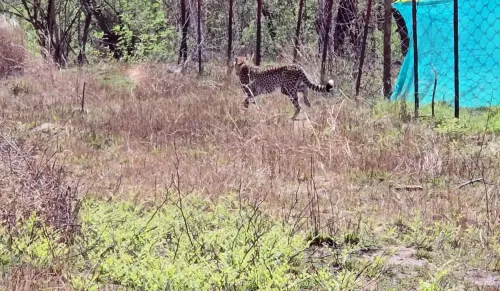
Bhopal, Feb 28 (NationPress) As part of the government's ambitious 'Project Cheetah' reintroduction initiative, India successfully imported nine additional cheetahs from Botswana, which were subsequently released into Kuno National Park located in the Sheopur district of Madhya Pradesh.
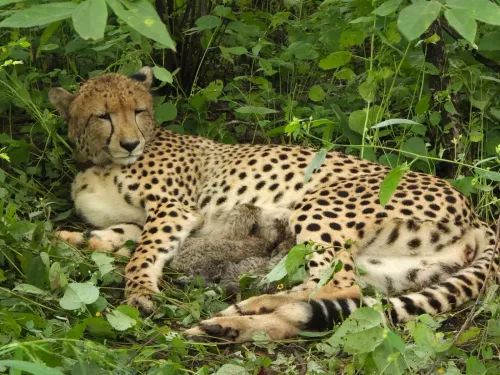
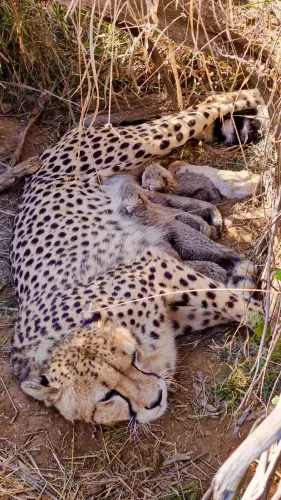
This latest addition brings the total cheetah population in Kuno to 48, which includes 28 cubs born in India. This increase highlights the significance of local breeding in ensuring the project's long-term viability.
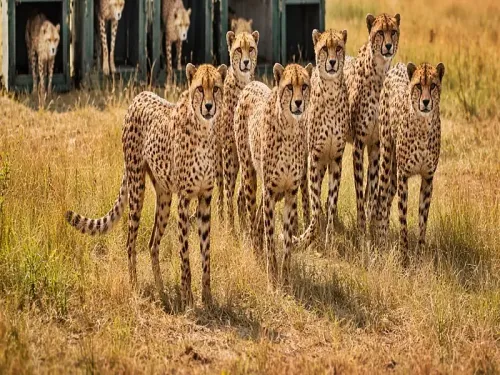
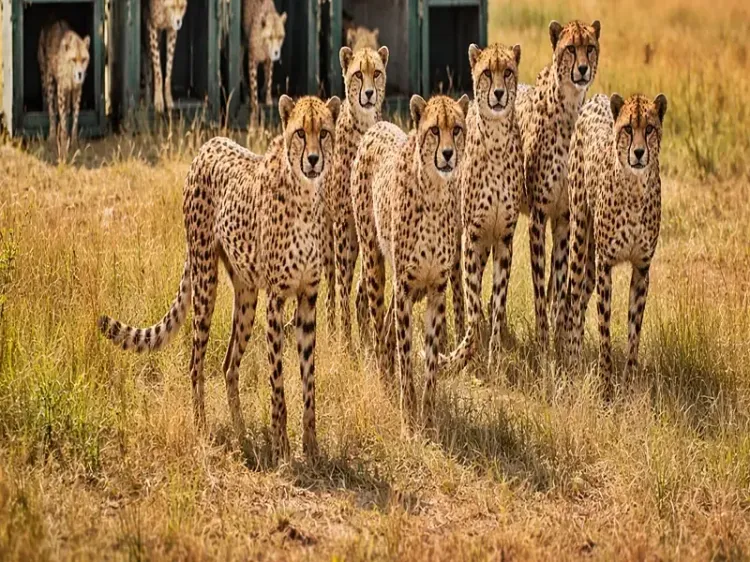
Initially, it was expected that only eight cheetahs would be included in this third batch; however, nine were transported instead. Notably, six of these nine cheetahs are females, marking the highest proportion of females in any released group to date.
The first batch, which arrived on September 17, 2022, included eight cheetahs from Namibia, comprising five females and three males. The second batch, received on February 18, 2023, brought in 12 cheetahs from South Africa, consisting of seven males and five females.
In total, 29 cheetahs have now been brought to India over three batches—16 of which are females and 13 are males.
Officials emphasized that the increasing number of India-born cubs is vital for the success of the program, as these cheetahs are adapting well to their surroundings. Some of the mature cheetahs are anticipated to be relocated to Nauradehi Wildlife Sanctuary, which will serve as the third habitat for this species in Madhya Pradesh, alongside Kuno National Park and Gandhi Sagar Wildlife Sanctuary.
Alok Kumar, the former Principal Chief Conservator of Forests (PCCF) and Head of the Forest Force in Madhya Pradesh, shared with IANS that the project is progressing positively.
He stated that the survival of cubs born in India is essential for reaching the goals of Project Cheetah. “We hold great expectations for these Indian-born cubs, as they are growing in their natural habitat, unlike those brought in from abroad who must adjust to a new environment,” he explained.
Kumar also pointed out that cheetahs need a robust prey base and are typically less aggressive than other large cats. “Cheetahs tend to evade conflict, whereas tigers are territorial apex predators. Thus, local community awareness and acceptance are crucial for the project's success,” he mentioned.
He suggested that continued awareness campaigns in the villages surrounding Kuno and other prospective habitats are necessary to educate residents about cheetah behavior.
Chief Minister Mohan Yadav welcomed the new arrivals, asserting that Madhya Pradesh is diligently fulfilling its responsibilities under Project Cheetah. He emphasized that this initiative aims to establish a viable cheetah population in India and restore ecological equilibrium.
Frequently Asked Questions
What is Project Cheetah?
Project Cheetah is an initiative by the Indian government aimed at reintroducing cheetahs into the wild and establishing a sustainable population in India.
How many cheetahs were brought from Botswana?
Nine cheetahs were brought from Botswana in the latest batch, increasing the total number of cheetahs at Kuno National Park.
Why is local breeding important for cheetahs?
Local breeding is essential as India-born cubs adapt better to their environment, increasing their chances of survival compared to imported cheetahs.
Where will some of the cheetahs be relocated?
Some mature cheetahs are expected to be moved to Nauradehi Wildlife Sanctuary, creating a third habitat for the species in Madhya Pradesh.
What role do local communities play in the success of Project Cheetah?
Local communities' awareness and acceptance are crucial for the project's success, as they help ensure a harmonious coexistence with the cheetahs.