Bhupender Yadav Credits PM Modi's Resolve for Project Cheetah
Synopsis
Union Environment Minister Bhupender Yadav on 25 May 2026 credited PM Narendra Modi's personal conviction as the cornerstone of Project Cheetah, India's landmark cheetah reintroduction programme launched at Kuno National Park in September 2022 after seven decades of local extinction.
Key Takeaways
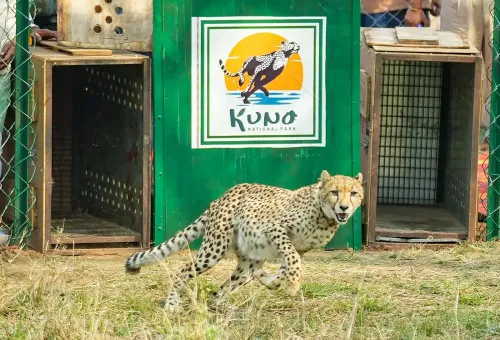
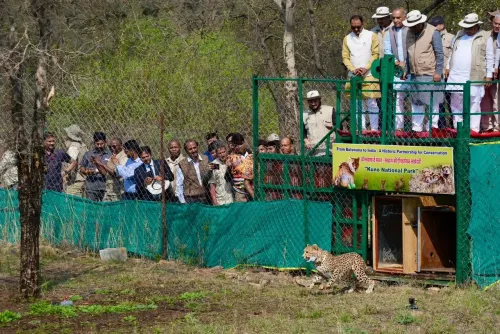
Union Environment Minister Bhupender Yadav posted on X on 25 May 2026 attributing Project Cheetah 's progress to PM Narendra Modi 's 'firm conviction.' Project Cheetah was launched on 17 September 2022 with the release of eight cheetahs from Namibia at Kuno National Park, Madhya Pradesh .
The cheetah had been extinct in India since 1947 , with formal declaration of extinction in 1952 .
The programme is guided by a 2021 Action Plan prepared by the Wildlife Institute of India and operates under bilateral agreements with Namibia and South Africa .
Monitoring by the NTCA and Wildlife Institute of India continues, with Phase-II translocation sites under consideration.
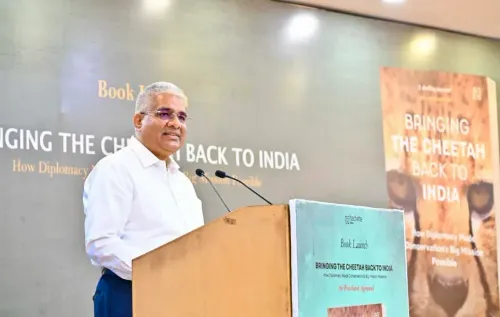
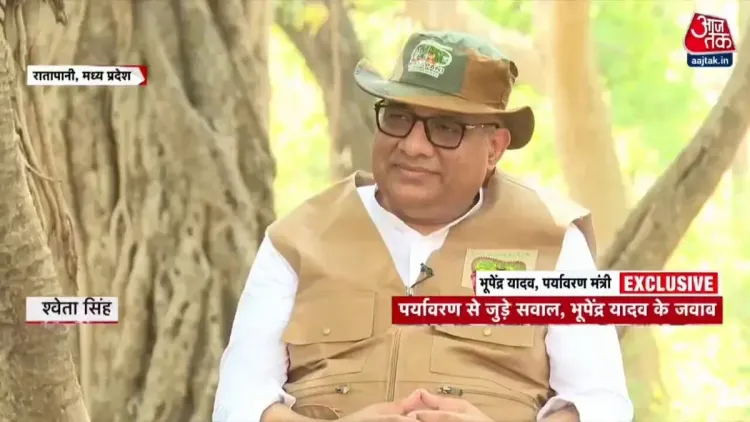
Union Environment Minister Bhupender Yadav on Monday, 25 May 2026 credited Prime Minister Narendra Modi as the driving force behind Project Cheetah, calling the initiative's progress a reflection of the Prime Minister's unwavering conviction.
Posting on X, Yadav wrote in Hindi: 'Project Cheetah ki safalta hamare Pradhanmantri Shri Narendra Modi ji ka dridh vishwas tha' — translated as, 'The success of Project Cheetah was the firm conviction of our Prime Minister Shri Narendra Modi.' The post was accompanied by a video, underscoring the Minister's intent to amplify the project's visibility ahead of what appears to be a milestone moment.
Context
Project Cheetah is India's flagship species-reintroduction programme, launched on 17 September 2022 when Prime Minister Modi personally released eight cheetahs from Namibia into Kuno National Park in Madhya Pradesh. The event marked the first intercontinental translocation of a large carnivore species in history. The cheetah had been locally extinct in India since 1947, when the last known individuals were shot in Surguja, with formal extinction declared by 1952.
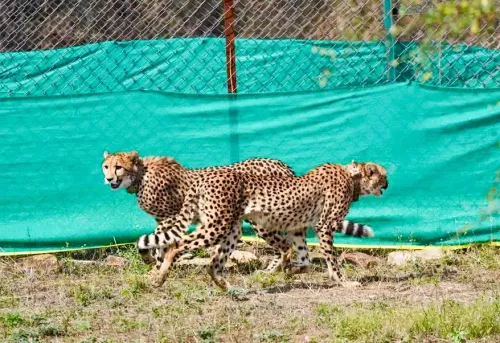
A subsequent batch of cheetahs was sourced from South Africa, expanding the founding population at Kuno. The programme is guided by an Action Plan prepared by the Wildlife Institute of India in 2021, which set out site-selection criteria, veterinary protocols, and long-term habitat management frameworks.
Policy Backdrop
Project Cheetah sits within a broader arc of India's wildlife recovery agenda, which also encompasses tiger conservation under Project Tiger — now in its fifth decade — and active vulture conservation programmes. The cheetah reintroduction draws on bilateral agreements with African range states, including Namibia and South Africa, for the supply of animals and technical expertise.
India's commitments under the Convention on Biological Diversity and CITES provide the international legal scaffolding for the project. By publicly attributing the initiative's momentum to PM Modi, Minister Yadav reinforces the government's narrative of high-level political ownership over environmental targets — a recurring theme in BJP's communication on conservation.
Stakeholders and Impact
The Madhya Pradesh forest department has been the primary on-ground implementing agency, working alongside wildlife biologists and veterinarians stationed at Kuno National Park. Communities living around the park's buffer zone have faced both the benefits of eco-tourism potential and the challenges of coexistence with a newly introduced apex predator.
The Wildlife Institute of India and the National Tiger Conservation Authority (NTCA) continue to monitor cheetah survival rates, territorial behaviour, and breeding activity. Their technical reports serve as the scientific basis for any decisions on Phase-II translocation sites.
What's Next
Attention now turns to the next formal assessment by the Wildlife Institute of India or NTCA on cheetah population health and habitat use at Kuno. Any cabinet or parliamentary update on Phase-II sites — which could extend the programme beyond Madhya Pradesh — will be closely watched by conservation groups and state governments alike.
Minister Yadav's post signals continued political salience for the project, suggesting that Project Cheetah will remain a centrepiece of the government's environment communication as India approaches international biodiversity review cycles.
Point of View
Reinforcing brand continuity ahead of review cycles. The timing, accompanied by a video, suggests the government is preparing a fresh visibility push around Project Cheetah, possibly tied to an upcoming assessment or anniversary. For the broader conservation community, the post is a reminder that high-level political sponsorship remains the project's most durable asset — and its most significant variable.
NationPress
10 Oct 2026
Frequently Asked Questions
What is Project Cheetah in India?
Project Cheetah is India's government initiative to reintroduce African cheetahs into Indian habitats after the species went locally extinct in 1947. It was formally launched on 17 September 2022 at Kuno National Park in Madhya Pradesh, when PM Modi released eight cheetahs sourced from Namibia.
Where are the cheetahs kept in India?
The primary site is Kuno National Park in Madhya Pradesh, which was selected based on habitat suitability criteria set out in the Wildlife Institute of India's 2021 Action Plan.
How many cheetahs were brought to India?
The first batch comprised eight cheetahs from Namibia, released in September 2022. A subsequent batch was sourced from South Africa, expanding the founding population at Kuno National Park.
Why did cheetahs go extinct in India?
The last confirmed cheetahs in India were shot in 1947 in Surguja, and the species was formally declared extinct in India by 1952, primarily due to hunting and habitat loss.
What did Bhupender Yadav say about Project Cheetah?
On 25 May 2026, Union Environment Minister Bhupender Yadav posted on X stating that the success of Project Cheetah was the 'firm conviction' of Prime Minister Narendra Modi, crediting the PM as the initiative's driving force.