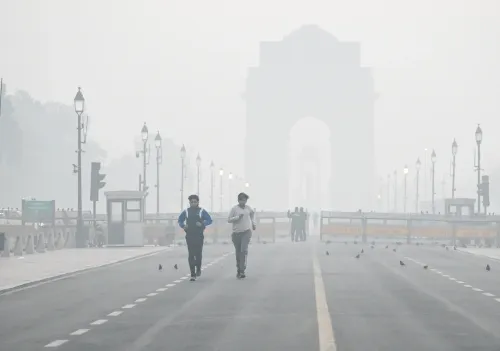
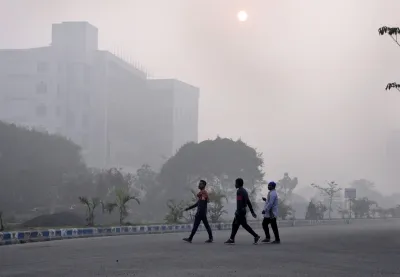
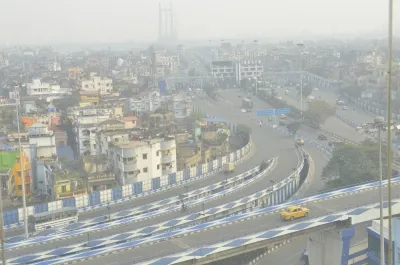
Kolkata AQI drops to 98 as Cyclone Arnab brings pre-Diwali relief

Synopsis
For once, Kolkata's pre-festival air is not a crisis — Cyclone Arnab has pushed the city's AQI to a moderate 98, far below the 200-plus levels typically seen before Kali Puja. But experts are already counting down: pollution could spike sharply after 6 November and persist through mid-March 2027, making this a reprieve, not a resolution.
Key Takeaways
Kolkata's AQI stood at 98 on 28 October 2026 , sharply lower than pre-festival norms driven by Cyclone Arnab's moisture effect.
In previous years, the city's AQI had crossed 200 by this point in the festival calendar.
Environmentalist Dr Swati Nandi Chakraborty described this year's pre-Kali Puja air quality as 'largely normal.' Green technologist Somendra Mohan Ghosh warned pollution will rise sharply after 6 November and continue through mid-March 2027 .
The West Bengal Pollution Control Board has a dedicated monitoring team on standby; firecracker use is reportedly to be restricted to 8 pm–10 pm .
Climate change-driven shifts in weather patterns — including higher cyclonic activity — are cited as a contributing factor to this year's improvement.
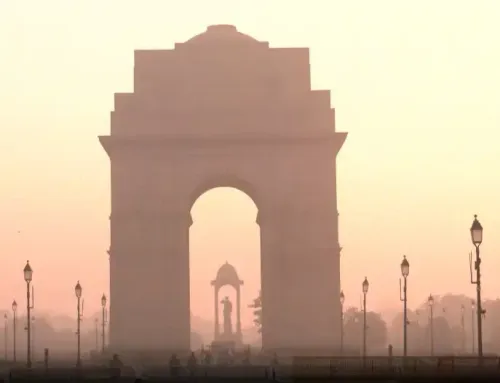
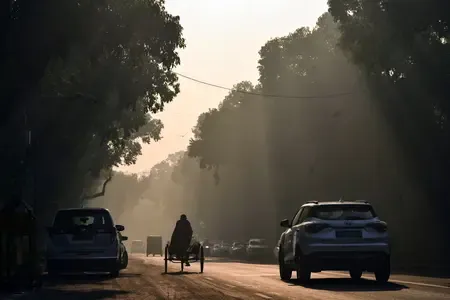
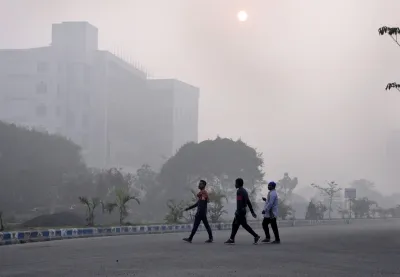
Kolkata's air quality improved significantly on Wednesday, 28 October 2026, as Cyclone Arnab pushed the city's Air Quality Index (AQI) down to 98 — a sharp fall from elevated levels recorded just a day earlier. Environmental experts, however, cautioned that the improvement is temporary, with pollution levels expected to surge once again around Kali Puja and Diwali.
How Cyclone Arnab Changed Kolkata's Air
Environmentalists attribute the cleaner air to heightened atmospheric moisture carried inland by the cyclonic system over the Bay of Bengal. The increased humidity has suppressed the concentration of airborne pollutants, producing conditions markedly different from the festival run-up in previous years.
In past years, Kolkata's AQI routinely crossed 200 by this point in the pre-festival calendar. This year's reading of 98 — comfortably in the 'moderate' band — represents a meaningful departure from that pattern, according to experts. Rainfall during Durga Puja earlier this season also helped prevent the usual acceleration in pollution levels during the festive period.
Climate Change Cited as a Contributing Factor
Beyond the immediate cyclone effect, environmentalists argue that shifting weather patterns linked to climate change are playing a longer-term role. Frequent low-pressure systems and above-average cyclonic activity have driven higher-than-usual rainfall across the region this year, providing repeated natural air-cleansing events ahead of the winter smog season.
Environmentalist Dr Swati Nandi Chakraborty said the situation before Kali Puja this year is 'largely normal' — an unusually optimistic assessment for a city that has consistently recorded dangerous air quality spikes during the festival season.
Experts Warn of Sharp Post-Festival Rebound
The cautious consensus, however, is that this relief will not last. Green technologist and environmentalist Somendra Mohan Ghosh warned that the current improvement is driven by high atmospheric moisture and is unlikely to persist once that effect dissipates.
'This is a temporary effect due to a high level of moisturisation, but this will increase sharply after November 6 and will continue till mid-March 2027,' Ghosh said. The forecast points to an extended winter pollution season that could last nearly four months if firecracker use during Kali Puja and Diwali adds to the baseline deterioration.
Authorities Prepare Monitoring and Restrictions
According to sources within the West Bengal Pollution Control Board, a dedicated team is being kept on standby to monitor air quality levels during the festival period. Authorities are also reportedly preparing to enforce restrictions on firecracker use, with bursting likely to be permitted only between 8 pm and 10 pm.
Whether those measures will be sufficient to prevent a sharp post-festival spike remains to be seen, particularly if the cyclone's moisture effect fades quickly and dry winter winds begin to dominate.
Point of View
But the story risks being misread as progress when it is really meteorological luck. Cyclone Arnab will pass; the structural drivers of winter pollution — firecrackers, crop stubble burning, vehicular load, and industrial emissions — remain unchanged. The expert forecast of a sharp spike after 6 November is the more important headline, and the two-hour firecracker window, if enforced at all, is unlikely to prevent it. Climate change contributing to air improvement is also a double-edged framing: the same warming trend that generates more cyclones also accelerates the drying and particulate-trapping conditions of north Indian winters. The relief is real but narrow, and treating it as a baseline would be a policy error.
NationPress
28 Oct 2026
Frequently Asked Questions
Why has Kolkata's AQI improved before Kali Puja and Diwali in 2026?
Kolkata's AQI dropped to 98 on 28 October 2026 primarily because of increased atmospheric moisture brought in by Cyclone Arnab over the Bay of Bengal. Environmentalists also point to climate change-driven weather pattern shifts — including above-average rainfall and more frequent cyclonic systems — as contributing factors.
What is Kolkata's AQI before Diwali 2026 compared to previous years?
In previous years, Kolkata's AQI typically crossed 200 before Kali Puja and Diwali. This year the reading stands at 98, making conditions considerably cleaner than the historical pre-festival norm, according to environmental experts.
Will the air quality improvement last through Diwali?
Experts say the improvement is temporary. Green technologist Somendra Mohan Ghosh has warned that pollution levels will rise sharply after 6 November 2026 and could remain elevated through mid-March 2027, once the moisture effect of the cyclone fades.
What restrictions are being planned for firecrackers during Kali Puja and Diwali in Kolkata?
According to sources in the West Bengal Pollution Control Board, authorities are reportedly planning to restrict firecracker bursting to a two-hour window between 8 pm and 10 pm. A dedicated monitoring team is also being kept on standby during the festival period.
What role does climate change play in Kolkata's current air quality?
Environmentalists say that climate change has increased the frequency of low-pressure systems and cyclonic activity in the Bay of Bengal region, leading to higher-than-usual rainfall this year. This has repeatedly suppressed airborne pollutants, contributing to the lower-than-expected pre-festival AQI.