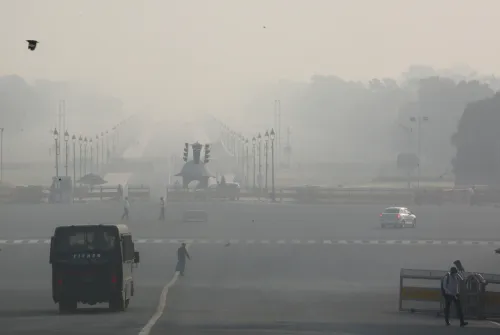
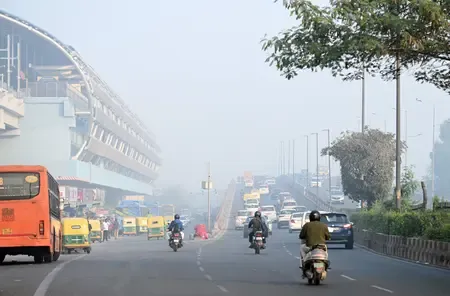
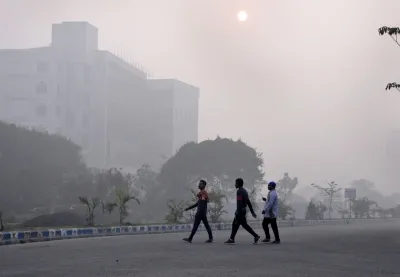
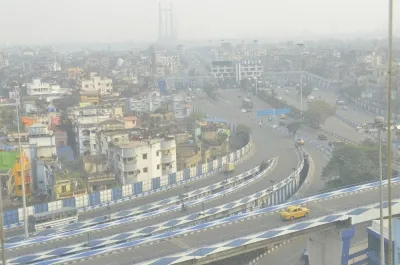
Has Kolkata Surpassed Delhi in Air Pollution Levels?
Synopsis
In an unexpected turn of events, Kolkata's air quality has deteriorated to hazardous levels, surpassing Delhi's pollution metrics. Experts urge immediate intervention as health risks rise.
Key Takeaways
Kolkata's AQI has reached hazardous levels.
Environmental experts call for immediate intervention .
Key pollution sources identified include biomass burning and construction activities .
Health risks are rising for nearby residents.
Governance and public awareness are essential for combating this crisis.
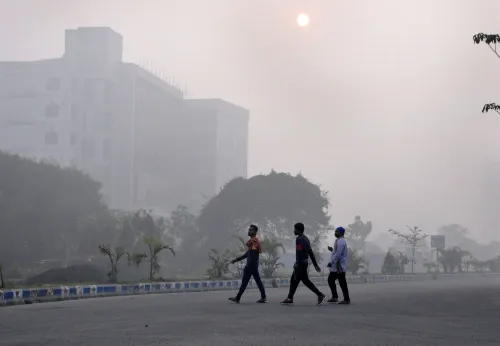
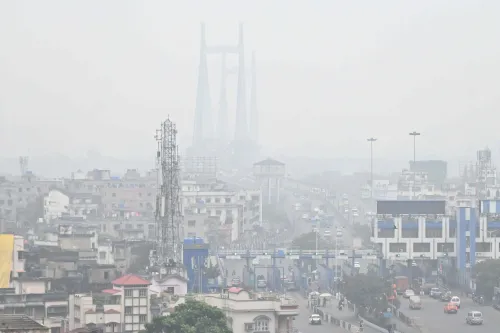
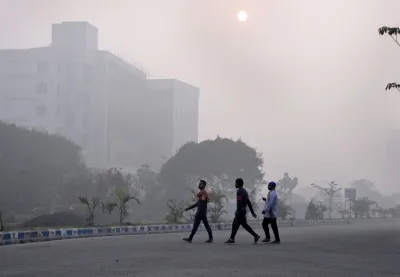
Kolkata, Dec 10 (NationPress) In an alarming twist, Kolkata has now eclipsed Delhi in terms of air pollution, with the city registering a hazardous air quality index on Tuesday night.
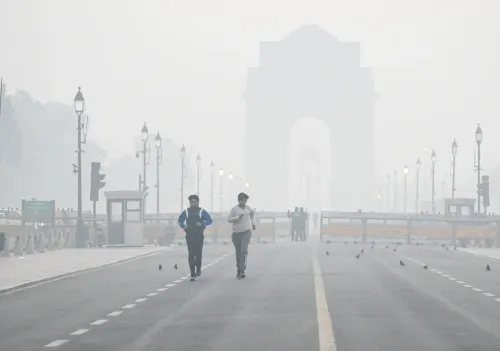
The Air Quality Index (AQI) at Victoria Memorial, situated in the city's Maidan area, reached a staggering 342—falling within the 'very poor' to 'hazardous' category—far exceeding Delhi's AQI of 299, which is categorized as 'poor.'
This unprecedented rise in AQI in central Kolkata has raised alarms among environmental specialists, particularly since Delhi is generally viewed as the primary pollution hotspot in the country.
Environmental expert Somendra Mohan Ghosh highlighted four significant pollution sources in and around the Maidan area contributing to the city's deteriorating air quality.
In an interview with IANS, Ghosh pinpointed biomass burning, ongoing underground metro projects, older vehicles exceeding 15 years on the nearby Maa flyover, and the use of coal and firewood by street food vendors around the Esplanade bus stand as major factors behind the pollution surge.
“This situation has arisen due to negligence,” Ghosh stated.
“While construction activities are ongoing near Victoria Memorial, metro authorities have failed to implement eco-friendly methods. Regular water-sprinkling should have been performed to control dust emissions. Additionally, it is the responsibility of the state government to limit old diesel vehicles on the Maa flyover. Dust emissions from these vehicles are settling over the Maidan, creating a pollution bubble,” Ghosh explained to IANS.
He further condemned the lack of enforcement against biomass burning in the Maidan and the persistent use of coal and firewood by makeshift eateries, which have worsened the air quality.
“The state government must adopt a decisive approach. This is a critical situation that requires immediate action,” Ghosh added.
“Applying water to the trees around Victoria Memorial will enable them to capture more dust during the winter, preventing it from circulating widely. Special measures are essential since elevated pollution levels pose health risks to patients at the nearby SSKM Hospital. Furthermore, Victoria Memorial is a heritage site that needs safeguarding,” he concluded.
Point of View
I recognize the critical implications of Kolkata's rising pollution levels. This situation demands immediate attention and responsible governance to protect public health and preserve our environment.
NationPress
19 Sept 2026
Frequently Asked Questions
What is the current AQI level in Kolkata?
The current AQI level in Kolkata is 342, which falls in the 'hazardous' category.
What are the main causes of air pollution in Kolkata?
The main causes include biomass burning, construction activities, older vehicles, and the use of coal and firewood by street vendors.
Why is the air quality in Kolkata concerning?
The hazardous air quality poses significant health risks to residents, especially those with pre-existing health conditions.
What actions can be taken to improve air quality?
Implementing eco-friendly construction practices, restricting old vehicles, and controlling biomass burning are crucial steps.
How does Kolkata's pollution compare to Delhi's?
Kolkata's AQI of 342 surpasses Delhi's AQI of 299, indicating worse air quality.