CM Bhupendra Patel Marks Rashtriya Ekta Diwas 2026
Synopsis
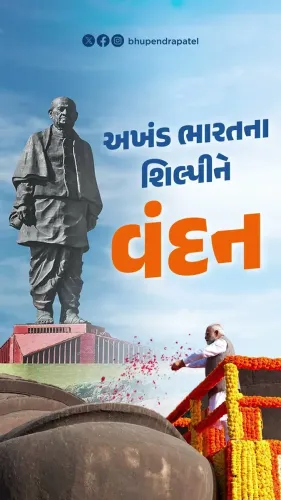
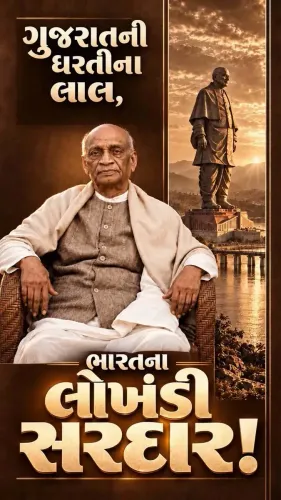
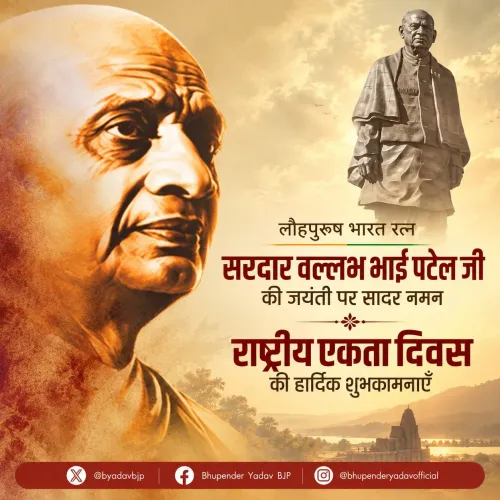
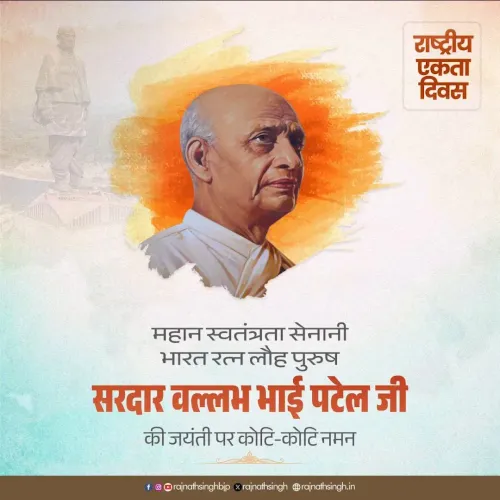
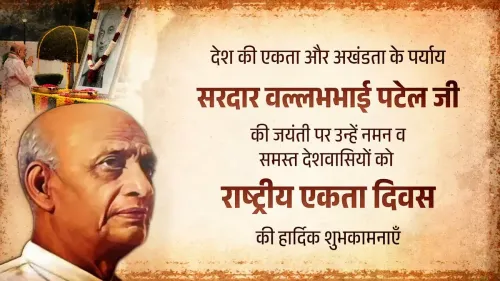
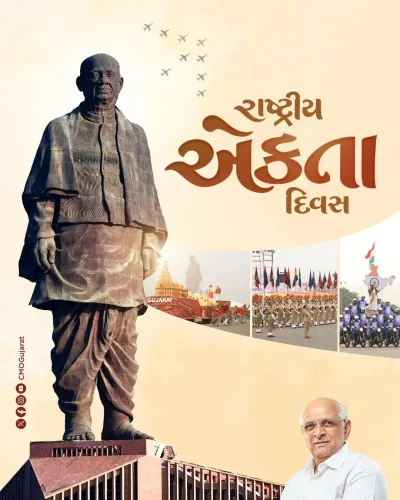
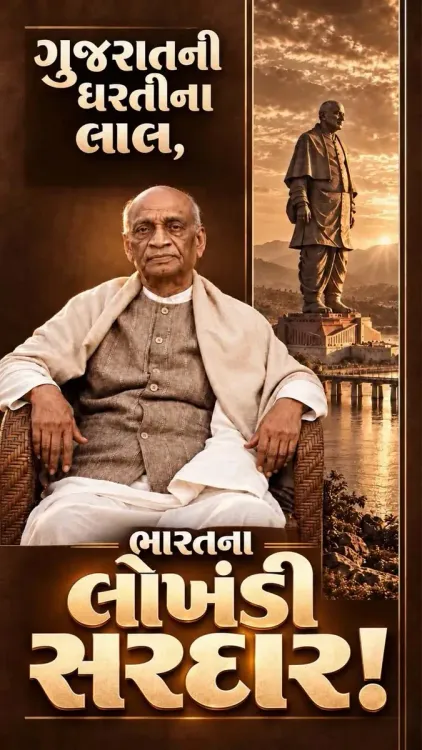
Gujarat CM Bhupendra Patel marked Rashtriya Ekta Diwas on 31 October 2026 with a Gujarati tribute to Sardar Vallabhbhai Patel, calling him the pride of India, pillar of unity, and immortal architect of one nation.
Key Takeaways
Gujarat CM Bhupendra Patel posted a tribute to Sardar Vallabhbhai Patel on 31 October 2026 for Rashtriya Ekta Diwas.
He called Sardar Patel the 'pride of India, pillar of unity, son of Gujarat, and architect of one India.' Rashtriya Ekta Diwas was declared a national observance in 2014 to mark Sardar Patel's birth anniversary every 31 October .
Sardar Patel integrated more than 500 princely states into the Indian Union after independence in 1947 .
Gujarat holds a special connection to this observance as Sardar Patel's home state, with the region's leadership consistently anchoring identity to his legacy.
On the birth anniversary of the man who stitched a fractured subcontinent into one nation, Gujarat Chief Minister Bhupendra Patel paid tribute to Sardar Vallabhbhai Patel on Rashtriya Ekta Diwas, 31 October 2026 — honouring the Iron Man with words that carry particular weight when they come from Gujarat, the land that gave him to India.
In his post on X, CM Patel wrote in Gujarati: 'Bharatnu gaurav, ekatano aadhar, Gujaratna lal, ek Bharatna shilpkar — amar raheshe aa naam. Jai Sardar, Jai Sardar.' ('Pride of India, pillar of unity, son of Gujarat, architect of one India — this name shall remain immortal. Jai Sardar, Jai Sardar.')
The man behind Rashtriya Ekta Diwas
Sardar Vallabhbhai Patel, India's first Deputy Prime Minister and Home Minister, achieved one of modern history's most extraordinary feats of political statecraft — persuading or pressuring more than 500 princely states to accede to the Indian Union after independence in 1947. Without him, the map of India might look very different today. It is that achievement — not just symbolism — that Rashtriya Ekta Diwas is designed to keep alive.
The observance itself was formalised in 2014, when the Government of India declared 31 October as Rashtriya Ekta Diwas — National Unity Day — to institutionalise the memory of Patel's integrationist legacy at the national level. Every year since, the day has been marked by Run for Unity events, government ceremonies, and tributes from leaders across the political spectrum.
Gujarat's particular pride in the Iron Man
Gujarat occupies a singular emotional position in this observance. Sardar Patel was born in Nadiad, Gujarat, and his identity as a 'lal' — a beloved son — of the state runs deep in the region's political culture. Gujarat's leadership has consistently used these annual tributes to underscore both regional pride and a broader national integrationist message, with the two themes reinforcing each other year after year.
The phrase CM Patel chose — 'ek Bharatna shilpkar', architect of one India — is pointed. It frames Sardar Patel not merely as a historical figure but as the original author of the idea that India's diversity must be held together by political will and institutional strength. That framing has endured across successive governments and shows no sign of dimming.
As long as India observes 31 October, the name Sardar Patel will command a salute — and Gujarat will insist it remembers where he came from.
Point of View
Invoking Sardar Patel serves a dual purpose: it anchors regional pride to a pan-Indian legacy and positions the state as the moral custodian of national unity. CM Bhupendra Patel's phrasing — 'architect of one India' — reinforces continuity with the broader BJP framing of Patel as an under-celebrated founding father whose legacy the party has sought to institutionalise since 2014. The durability of this message, repeated annually without fatigue, suggests Sardar Patel's integration story retains strong resonance well beyond any single election cycle.
NationPress
31 Oct 2026
Frequently Asked Questions
What is Rashtriya Ekta Diwas and when is it observed?
Rashtriya Ekta Diwas, or National Unity Day, is observed every year on 31 October to mark the birth anniversary of Sardar Vallabhbhai Patel. The Government of India declared this observance in 2014 .
Why is Sardar Vallabhbhai Patel called the Iron Man of India?
Sardar Patel earned the title 'Iron Man of India' for his decisive role in integrating more than 500 princely states into the Indian Union after independence in 1947 , a feat of political statecraft with few parallels in modern history.
What did Gujarat CM Bhupendra Patel say on Rashtriya Ekta Diwas 2026?
CM Bhupendra Patel posted a tribute in Gujarati calling Sardar Vallabhbhai Patel the 'pride of India, pillar of unity, son of Gujarat, and architect of one India,' declaring his name immortal.
What is Gujarat's connection to Sardar Vallabhbhai Patel?
Sardar Vallabhbhai Patel was born in Nadiad, Gujarat , making Gujarat his home state. The region's political leadership has long held a special pride in his legacy and uses Rashtriya Ekta Diwas to reinforce that connection.
How many princely states did Sardar Patel integrate into India?
Sardar Patel, as India's first Home Minister, oversaw the accession of more than 500 princely states to the Indian Union following independence in 1947 .