Bhupender Yadav Pays Tribute to Sardar Patel on National Unity Day
Synopsis
Union Environment Minister Bhupender Yadav honoured Sardar Vallabhbhai Patel on his birth anniversary, calling him the unparalleled symbol of national unity, as India observes Rashtriya Ekta Diwas on 31 October 2026 with nationwide pledge ceremonies and events at the Statue of Unity.
Key Takeaways
Union Environment Minister Bhupender Yadav posted a tribute to Sardar Vallabhbhai Patel on his birth anniversary, 31 October 2026.
Yadav described Patel as the 'unparalleled symbol of India's unity, integrity and national integration' and praised his 'firm willpower and foresight.' Sardar Patel was India's first Deputy Prime Minister and Home Minister , credited with integrating over 560 princely states into the Union of India after 1947.
The Government of India officially declared 31 October as Rashtriya Ekta Diwas in 2014 to honour Patel's legacy of national unification.
National Unity Day is marked annually with pledge-taking ceremonies, unity runs, and events at the Statue of Unity in Gujarat.
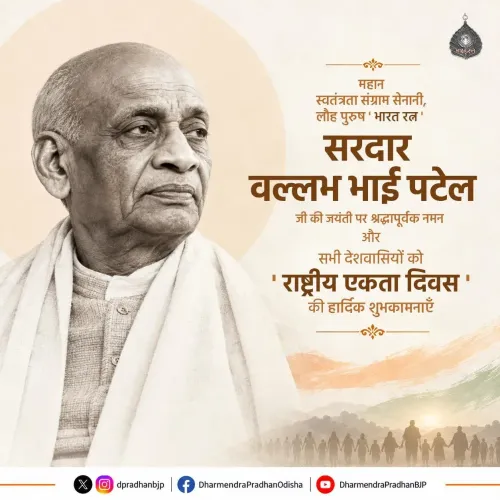
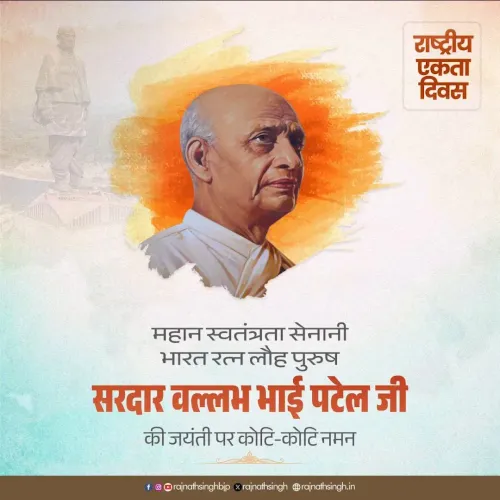
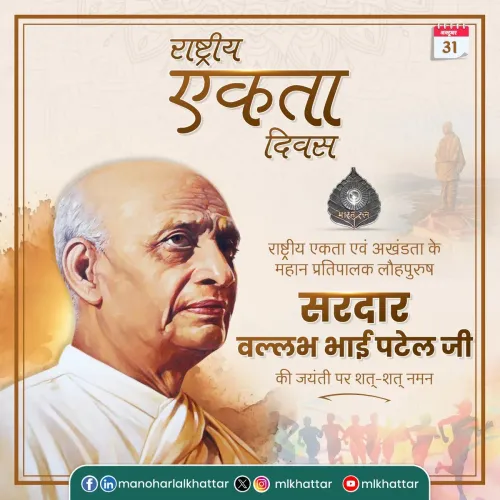
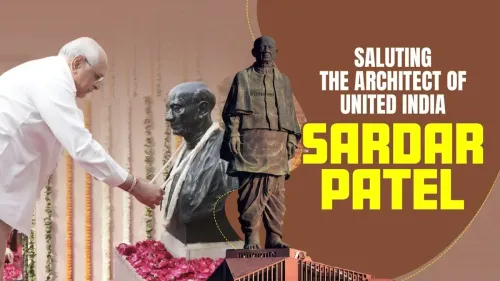
On the birth anniversary of the man who stitched a fractured subcontinent into one sovereign nation, Union Environment Minister Bhupender Yadav offered a heartfelt tribute to Sardar Vallabhbhai Patel on Saturday, 31 October 2026, marking Rashtriya Ekta Diwas — National Unity Day.
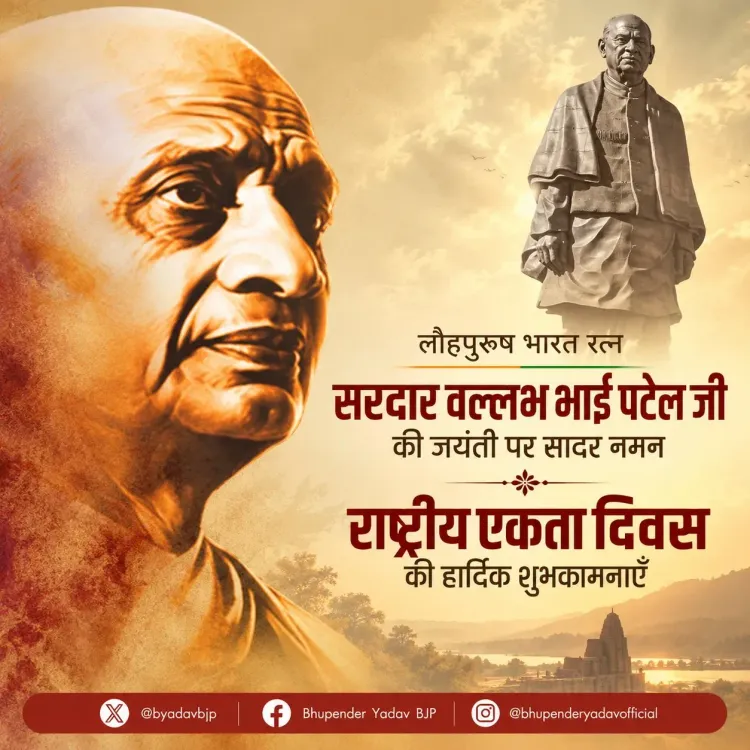
Writing in Hindi, Yadav saluted Patel as the 'loh purush' — the Iron Man — describing him as the 'unparalleled symbol of India's unity, integrity and national integration.' He added that Patel's 'firm willpower, foresight and dedication to the nation will continue to inspire us all.' The post concluded with warm wishes for Rashtriya Ekta Diwas.
The man who merged 560 princely states
Sardar Vallabhbhai Patel served as India's first Deputy Prime Minister and Home Minister after independence in 1947. In arguably the most consequential act of post-colonial statecraft on the subcontinent, he oversaw the integration of more than 560 princely states into the Union of India — a feat completed in a matter of months through a combination of persuasion, diplomatic pressure and, when necessary, decisive action.
The scale of that achievement is easy to understate. Without it, the map of modern India would look unrecognisable. Patel's insistence on a unified republic over a loose confederation of kingdoms laid the administrative and territorial foundation on which everything since has been built.
How 31 October became a day of national resolve
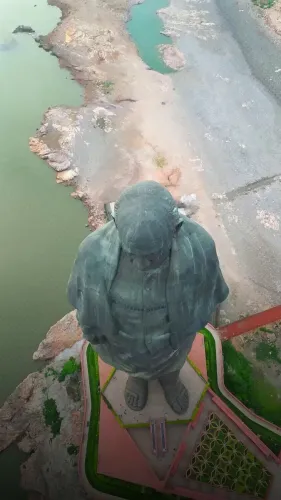
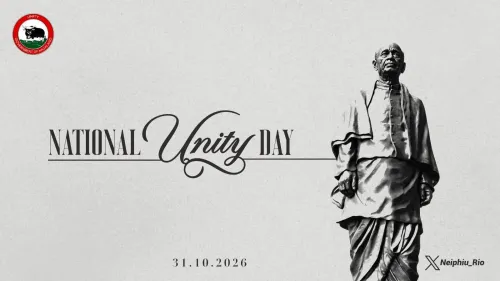
In 2014, the Government of India officially designated 31 October as Rashtriya Ekta Diwas to institutionalise public remembrance of Patel's role in unifying the country. Each year the day is marked by pledge-taking ceremonies, unity runs, and flagship events at the Statue of Unity in Gujarat — the world's tallest statue, built in Patel's honour on the banks of the Narmada.
Senior leaders across government and the BJP mark the occasion consistently, a pattern that reflects how central Patel's legacy has become to the party's vision of muscular, integrated nationhood.
One hundred and fifty-one years on, the Iron Man's prescription — unity as a non-negotiable national project, not a sentiment — still reads as the sharpest political advice India ever received.
Point of View
High-visibility commemoration of Sardar Patel on Rashtriya Ekta Diwas is part of a deliberate political and cultural project: reclaiming a Congress-era icon as the intellectual ancestor of a strong, unitary Indian state. By foregrounding Patel's integration of princely states, the party frames national unity as an active, muscular achievement rather than a passive inheritance. For Bhupender Yadav, a senior minister with a national profile, the tribute also reinforces the government's self-image as custodian of Patel's unfinished legacy. The consistency of the messaging year after year signals that this is doctrine, not just seasonal ritual.
NationPress
31 Oct 2026
Frequently Asked Questions
Why is 31 October celebrated as Rashtriya Ekta Diwas?
31 October is observed as Rashtriya Ekta Diwas (National Unity Day) because it marks the birth anniversary of Sardar Vallabhbhai Patel , India's first Deputy Prime Minister, who unified over 560 princely states into the Indian Union after independence. The Government of India officially declared the day in 2014.
Who was Sardar Vallabhbhai Patel and what did he do?
Sardar Vallabhbhai Patel was India's first Deputy Prime Minister and Home Minister after independence in 1947. He is credited with the integration of more than 560 princely states into the Union of India, a feat that defined the territorial shape of modern India.
What is the Statue of Unity and where is it?
The Statue of Unity is a towering monument dedicated to Sardar Vallabhbhai Patel , located on the banks of the Narmada river in Gujarat. It is the world's tallest statue and serves as the centrepiece of National Unity Day celebrations every year.
What did Bhupender Yadav say about Sardar Patel on National Unity Day 2026?
Union Environment Minister Bhupender Yadav called Patel the 'unparalleled symbol of India's unity, integrity and national integration,' praising his 'firm willpower, foresight and dedication to the nation' and extending warm wishes for Rashtriya Ekta Diwas.
How is National Unity Day observed across India?
Rashtriya Ekta Diwas is marked nationwide through pledge-taking ceremonies, unity runs, and official programmes. The flagship events are held at the Statue of Unity in Gujarat, and senior leaders across government offer tributes to Sardar Patel's memory.