Trump Says Israel and Iran Seeking Immediate Ceasefire
Synopsis
President Donald Trump, through the White House on June 8, 2026, announced that both Israel and Iran are seeking an immediate ceasefire, with final peace negotiations described as actively proceeding — a statement that, if borne out, would mark a historic shift in Middle East geopolitics.
Key Takeaways
President Trump stated on June 8, 2026 that both Israel and Iran are seeking an immediate ceasefire.
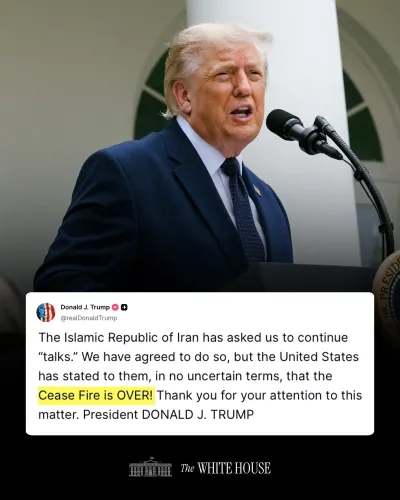
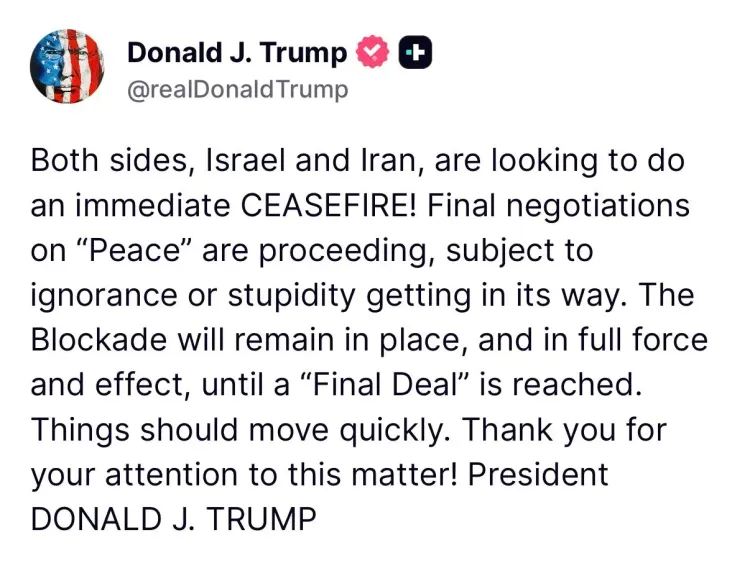
Trump described 'final negotiations on peace' as actively under way, with the caveat that they could be derailed by 'ignorance or stupidity.' The statement was posted via the official White House account on X , carrying the weight of an executive communication.
The announcement follows a long history of US-Iran hostility, including the 2018 US withdrawal from the JCPOA nuclear deal.
No formal State Department readout or third-party confirmation of active talks has been cited alongside the post.
For India , any genuine de-escalation would ease energy market pressure and reduce regional risk to the large Indian diaspora in the Gulf.
The White House on Monday, June 8, 2026, posted a statement attributed to President Donald J. Trump asserting that both Israel and Iran are seeking an immediate ceasefire, with final negotiations on a peace agreement described as actively under way.
Context
In the post, President Trump stated: 'Both sides, Israel and Iran, are looking to do an immediate CEASEFIRE! Final negotiations on 'Peace' are proceeding, subject to ignorance or stupidity getting in its way.' The statement positions the Trump administration as the driving force behind a potential breakthrough between two longstanding adversaries in the Middle East.
The announcement was made via the official White House account on X, a platform Trump has consistently used to project diplomatic momentum and signal policy direction to both domestic and international audiences.
Policy Backdrop
The US-Iran relationship has been defined by deep antagonism since at least 2018, when the first Trump administration withdrew from the Joint Comprehensive Plan of Action (JCPOA) — the multilateral nuclear deal — and reimposed sweeping economic sanctions on Tehran. Iran's nuclear programme and its support for regional proxy forces have remained the central fault lines in Washington's approach to Tehran.
On the Israel side, the 2020 Abraham Accords, brokered during Trump's first term, normalised diplomatic and economic ties between Israel and the UAE, Bahrain, Morocco, and Sudan — but did not include Iran, which remains outside any such framework. Any direct Israel-Iran ceasefire or peace negotiation would represent a fundamentally different and far more consequential diplomatic undertaking.
Trump's public messaging follows a recognisable pattern from his first term: using high-profile announcements to claim diplomatic momentum, often ahead of formal frameworks being in place, as a way to generate pressure and signal intent.
Stakeholders and Impact
The Israeli security establishment and government would be central players in any such process, given the direct military and strategic stakes involved. For Iran, any ceasefire framework would intersect with its nuclear programme, its regional influence through proxy networks, and the ongoing weight of US sanctions.
For India, the development carries significant implications. India imports energy from the region, maintains longstanding ties with both Iran and Israel, and has consistently advocated for dialogue and de-escalation in the Middle East. A genuine reduction in hostilities would ease energy market volatility and reduce risk to the Indian diaspora across the Gulf.
Global energy markets, which remain sensitive to Middle East security conditions, would likely react to any credible ceasefire signal. The US Congress and allied governments in Europe and the Gulf are also key stakeholders whose buy-in would shape whether any framework holds.
What's Next
Observers will watch closely for any follow-on readouts from the White House or the US State Department confirming the existence of formal talks, the identity of mediators, and any proposed timeline. Congressional reaction in Washington and responses from Tel Aviv and Tehran will be critical tests of whether the president's statement reflects an advanced diplomatic process or an aspirational signal.
Trump's caveat — 'subject to ignorance or stupidity getting in its way' — leaves deliberate ambiguity, a rhetorical device that allows the administration to claim credit for progress while pre-assigning blame for any breakdown. The coming days will determine whether this announcement translates into a verifiable diplomatic framework.
Point of View
Assign pre-emptive blame for failure to unnamed spoilers, and keep adversaries off-balance. The framing — 'subject to ignorance or stupidity' — is as much a domestic political tool as a diplomatic signal, insulating the administration from accountability if talks collapse. Whether this reflects a genuine back-channel breakthrough or an aspirational pressure tactic will only become clear once formal mediators, frameworks, and timelines are disclosed by credible official sources on all sides.
NationPress
19 Sept 2026
Frequently Asked Questions
What did Trump say about Israel and Iran ceasefire?
President Trump stated on June 8, 2026, that both Israel and Iran are looking to do an immediate ceasefire and that final peace negotiations are proceeding, warning only that 'ignorance or stupidity' could derail them.
Is there a ceasefire between Israel and Iran in 2026?
President Trump has publicly claimed that both sides are seeking an immediate ceasefire and that negotiations are under way, but no independent confirmation or formal State Department readout has been cited alongside the announcement.
What is the history of US relations with Iran under Trump?
In 2018, the first Trump administration withdrew from the JCPOA nuclear deal and reimposed broad sanctions on Iran, significantly escalating tensions that have persisted since.
How does an Israel-Iran ceasefire affect India?
India, which imports energy from the Middle East and has a large diaspora in the Gulf, would benefit from reduced regional tensions through lower energy market volatility and improved security for Indian nationals in the region.
What are the Abraham Accords and are they related to this ceasefire?
The Abraham Accords, brokered by the first Trump administration in 2020, normalised ties between Israel and several Arab states but did not include Iran; a direct Israel-Iran ceasefire would be a separate and far more significant development.