Jaishankar Meets Bulgaria's PM Radev, Pushes India-EU Ties
Synopsis
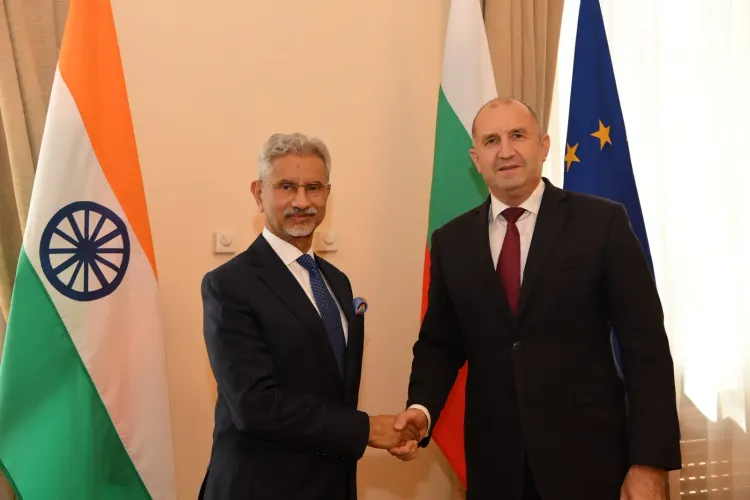
EAM Dr. S. Jaishankar met Bulgaria's President Rumen Radev in Sofia on 10 June 2026, conveying PM Modi's greetings and pushing for deeper India-Bulgaria cooperation in pharma, semiconductors, AI, defence, and mobility under the India-EU Strategic Partnership framework.
Key Takeaways
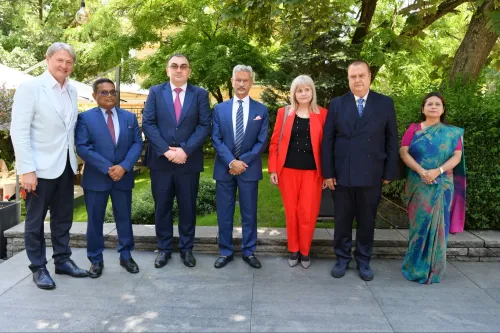
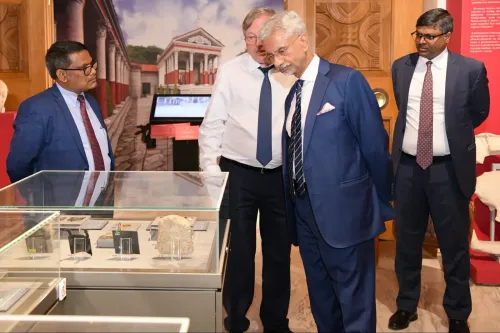
Jaishankar met Bulgarian President Rumen Radev in Sofia on 10 June 2026 .
He conveyed the greetings of Prime Minister Narendra Modi to the government and people of Bulgaria .
Discussions covered trade, pharma, semiconductors, AI, space, defence, mobility, tourism , and the creative entertainment industry .
The meeting was framed around leveraging the India-EU Strategic Partnership to de-risk and diversify supply chains.
India and Bulgaria have maintained diplomatic relations since 1954 .
Regional and global issues of mutual interest were also exchanged during the bilateral talks.
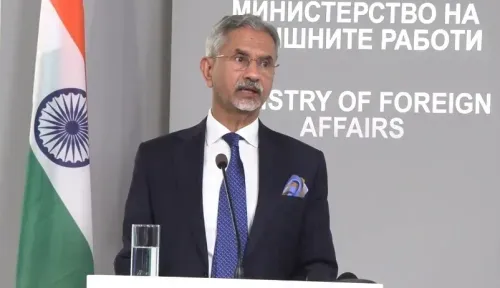
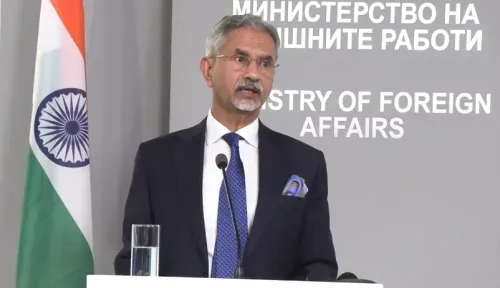
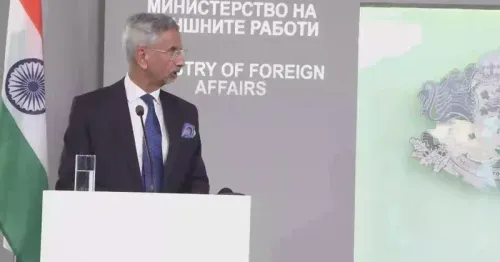
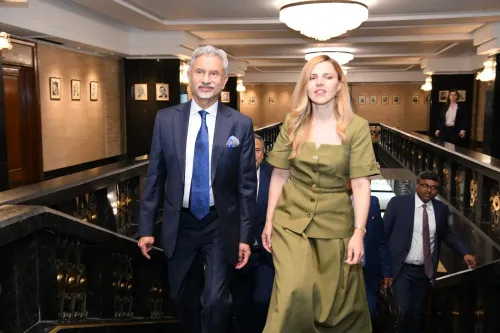
Union External Affairs Minister Dr. S. Jaishankar met Bulgarian President Rumen Radev in Sofia, Bulgaria, on Wednesday, 10 June 2026, conveying the greetings of Prime Minister Narendra Modi to the government and people of Bulgaria and underscoring the growing importance of the India-Bulgaria relationship within the broader India-EU Strategic Partnership framework.
Context
In his post on X, Dr. Jaishankar described the meeting as an opportunity to highlight 'our robust bilateral ties' and 'recent opportunities created by the strengthening India-EU Strategic Partnership.' He also stressed 'the imperative for closer India-Bulgaria cooperation to de-risk and diversify in an increasingly volatile world.' The visit places Bulgaria firmly within India's active diplomatic outreach to European Union member states at a time of heightened global supply-chain uncertainty.
The two sides discussed deepening collaboration across a wide range of sectors: trade and investment, pharma, semiconductors, AI, space, defence, mobility, tourism, and the creative entertainment industry. Regional and global issues of mutual interest were also on the agenda.
Policy Backdrop
India and Bulgaria established diplomatic relations in 1954, building a foundation of political and economic engagement that has endured across decades and changing geopolitical orders. The India-EU Strategic Partnership, launched in 2004, has been progressively deepened through summits and sectoral dialogues, providing an institutional architecture that individual member-state relationships — including the India-Bulgaria one — can now leverage.
New Delhi has in recent years pursued a deliberate policy of multi-alignment and supply-chain diversification, engaging Eastern European EU members alongside Western European capitals to reduce concentration risks in critical technologies and pharmaceuticals. The sectors flagged in Wednesday's meeting — semiconductors, pharma, defence, and AI — sit at the very heart of that de-risking agenda.
Stakeholders and Impact
Indian pharmaceutical exporters stand to benefit from any regulatory facilitation or market-access discussions that may follow the ministerial-level signal. Similarly, semiconductor and defence manufacturers on both sides could explore co-production or supply arrangements that align with India's push to diversify away from single-source dependencies. The mention of mobility and tourism suggests potential movement on visa facilitation or air-connectivity agreements, while the reference to the creative entertainment industry is an unusually specific addition that points to growing interest in co-productions and cultural exchange.
For Bulgaria, deeper engagement with India — one of the world's fastest-growing major economies — offers export opportunities and access to a large consumer market, while reinforcing Sofia's profile as an active player in EU-India relations.
What's Next
The diplomatic community will watch for follow-up bilateral mechanisms — including possible working groups on defence, mobility, or semiconductors — that could translate Wednesday's discussions into concrete frameworks. The outcomes of the next India-EU summit on trade, technology, and connectivity will also shape how much of the bilateral momentum generated in Sofia finds expression in broader EU-India deliverables. Dr. Jaishankar's visit signals that India's European engagement is no longer confined to its largest partners, and that smaller EU member states are increasingly seen as strategic nodes in a diversified foreign-policy architecture.
Point of View
Paris, and London to actively cultivate Eastern EU members as strategic partners. By anchoring the bilateral conversation in de-risking and supply-chain diversification — and naming sectors like semiconductors, AI, and defence — New Delhi is embedding Bulgaria within a broader geo-economic logic rather than treating it as a peripheral relationship. The explicit invocation of the India-EU Strategic Partnership as a force-multiplier suggests India is increasingly using bloc-level frameworks to give bilateral engagements institutional heft. This pattern, consistent across Jaishankar's European travels, reflects a foreign-policy doctrine that prizes redundancy and resilience over concentrated dependencies.
NationPress
24 Oct 2026
Frequently Asked Questions
Why did Jaishankar visit Bulgaria in June 2026?
EAM Dr. S. Jaishankar visited Bulgaria on 10 June 2026 to meet President Rumen Radev, convey PM Modi's greetings, and discuss deepening bilateral cooperation in trade, pharma, semiconductors, defence, and other sectors under the India-EU Strategic Partnership framework.
What sectors did India and Bulgaria discuss during Jaishankar's visit?
The two sides discussed collaboration in trade and investment, pharmaceuticals, semiconductors, artificial intelligence, space, defence, mobility, tourism, and the creative entertainment industry, alongside regional and global issues.
What is the India-EU Strategic Partnership?
The India-EU Strategic Partnership was launched in 2004 and has been progressively strengthened through summits and sectoral dialogues; it provides the overarching framework within which India engages individual EU member states such as Bulgaria.
How old are India-Bulgaria diplomatic relations?
India and Bulgaria established diplomatic relations in 1954, giving the bilateral relationship over seven decades of history across political and economic domains.
What does 'de-risk and diversify' mean in the context of India's foreign policy?
'De-risk and diversify' refers to India's strategy of reducing over-dependence on any single country or region for critical goods — such as semiconductors and pharmaceuticals — by building supply-chain partnerships with multiple countries, including EU member states like Bulgaria.