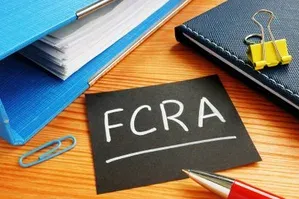
FCRA amendments: US lawmaker's remarks expose foreign influence India seeks to curb
Synopsis
A European Times report has turned a US congressman's criticism of India's FCRA amendments on its head — arguing that Riley Moore's public interference in India's domestic legislation is itself the clearest proof that New Delhi needs exactly the kind of foreign-funding oversight the bill proposes. With India hosting over 3.5 million NGOs — more than half the G20 total — the report frames regulation not as a political choice but a national security necessity.
Key Takeaways
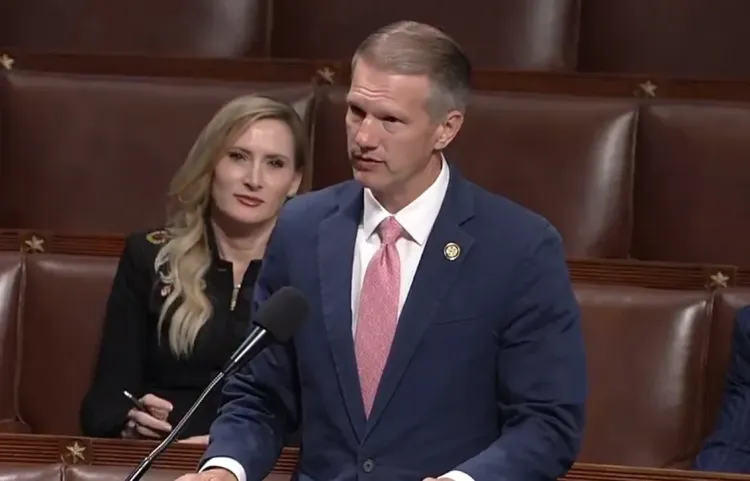
A European Times report has called US Congressman Riley Moore's criticism of India's FCRA amendments 'propaganda.' Moore argued the amendments could give the Indian government greater control over churches and Christian organisations and harm India-US relations .
The report says his intervention itself validates India's rationale — that external influence over domestic institutions is 'neither hypothetical nor obsolete.' India's regulatory approach mirrors frameworks in the US (FARA) , EU , Australia , and the UK .
India hosts an estimated 3.3 million to 3.7 million NGOs — more than half of all NGOs across G20 nations.
The Indian Parliament is set to debate the FCRA amendments again; the outcome remains pending.
A report by the European Times has dismissed US Republican Congressman Riley Moore's criticism of India's proposed Foreign Contribution Regulation Act (FCRA) amendments as little more than propaganda, arguing that his public intervention ironically validates the very concerns the legislation is designed to address. Moore had contended that the amendments could give the Indian government greater control over churches and Christian organisations, and could strain India-US relations.
Why the Intervention Backfires
According to the report, when a sitting lawmaker from another country publicly weighs in on legislation governing foreign funding within India, it reinforces New Delhi's position that external influence over domestic institutions is 'neither hypothetical nor obsolete.' Critics who frame the FCRA amendments as an assault on civil society or a retreat from democratic norms, the report argued, sidestep a more fundamental question: whether India should be denied the sovereign right to regulate foreign influence when virtually every major democracy is moving in the same direction.
A Global Trend, Not an Indian Exception
The report placed India's regulatory approach within a broader international context. The European Union is developing instruments to counter foreign interference, particularly from actors such as Russia and China. Australia operates a Foreign Influence Transparency Scheme. The United States itself has enforced the Foreign Agents Registration Act (FARA) for decades. The United Kingdom has introduced its own Foreign Influence Registration Scheme.
The core principle across all these frameworks, the report noted, is consistent: foreign funding must not be permitted to shape a country's political, social, or institutional landscape without adequate transparency and oversight. The Indian government has maintained that its proposed amendments align with these international best practices rather than constituting an exceptional or discriminatory regime.
India's NGO Scale Makes Oversight a Security Imperative
The report highlighted the sheer magnitude of India's civil society sector as a key factor. With an estimated 3.3 million to 3.7 million non-governmental organisations, India hosts by far the largest NGO ecosystem in the world — accounting for more than half of all NGOs across G20 nations. By comparison, Italy has approximately 360,000 third-sector organisations.
'India therefore administers by far the largest NGO ecosystem on the planet. Regulating foreign funding in an environment of this magnitude is not merely a bureaucratic exercise or a political choice; it is a matter of national security,' the report stated.
What Happens Next
The Indian Parliament is preparing to debate the FCRA amendments again. The report's findings are likely to feature in that debate as India seeks to counter the narrative that the legislation targets religious minorities. Whether the government proceeds with the amendments as drafted — or incorporates modifications in response to domestic civil society concerns — remains to be seen.
Point of View
And mainstream coverage tends to miss, is the scale asymmetry: India's NGO sector dwarfs every other G20 member's combined, making light-touch regulation a structural impossibility, not a political preference. The more pointed question — whether the amendments as drafted are sufficiently precise to avoid chilling legitimate civil society work — is one that deserves scrutiny independent of foreign commentary.
NationPress
23 Sept 2026
Frequently Asked Questions
What are the proposed FCRA amendments in India?
The proposed amendments to India's Foreign Contribution Regulation Act (FCRA) would expand government oversight over foreign funding received by NGOs, churches, and other organisations operating in India. The Indian government has maintained the changes align with international best practices on foreign-influence regulation.
What did US Congressman Riley Moore say about the FCRA?
US Republican Congressman Riley Moore criticised the proposed FCRA amendments, arguing they could give the Indian government greater control over churches and Christian organisations and could negatively affect India-US relations. A European Times report characterised his remarks as propaganda.
Why does the European Times report say Moore's criticism backfires?
The report argues that a foreign lawmaker publicly intervening in India's domestic legislation is itself evidence that external influence over Indian institutions is real — which is precisely the concern the FCRA is designed to address. The intervention, according to the report, strengthens rather than weakens New Delhi's case.
How does India's FCRA compare with similar laws in other countries?
The report notes that the US enforces the Foreign Agents Registration Act (FARA), Australia has its Foreign Influence Transparency Scheme, the UK has introduced its own Foreign Influence Registration Scheme, and the EU is developing counter-interference instruments. India's approach is consistent with this global trend.
How large is India's NGO sector compared to other G20 nations?
India hosts an estimated 3.3 million to 3.7 million NGOs — more than half of all NGOs across G20 nations. By comparison, Italy has approximately 360,000 third-sector organisations, according to the European Times report.