Italy-South Korea trade: ITA commissioner sees K-food as gateway to wine exports
Synopsis
Italy's new trade commissioner in Seoul is betting on K-food's global moment to sell South Koreans on Italian wine — a cultural arbitrage play backed by a US$6.66 billion trade relationship and the world's only ITA lifestyle showroom outside Taipei. The pitch: if Koreans love their food globally, they might just fall for Italian wine locally.
Key Takeaways
Raimondo Lucariello began a four-year term as commissioner at the Italian Trade Agency (ITA) Seoul office as the agency marks its 100th anniversary .
Lucariello identified the wine sector as Italy's primary focus in South Korea, with tailored wine-tasting classes planned for Korean consumers.
Italy exported US$6.66 billion worth of goods to South Korea in 2025 , led by luxury goods, fashion, food, and industrial machinery.
High Street Italia in southern Seoul is the only ITA promotional showroom of its kind globally, aside from a smaller facility in Taipei opened two months ago.
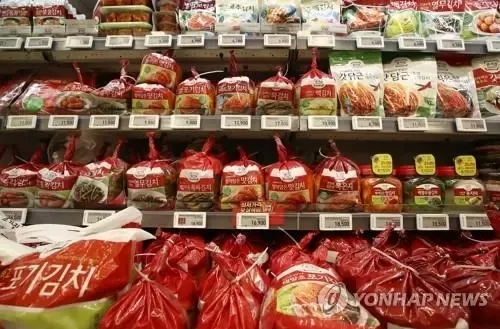
Lucariello cited K-food and Korean cultural exports as a gateway for broader Italy-South Korea trade synergies across complementary industrial sectors.
The new commissioner at the Seoul office of the Italian Trade Agency (ITA), Raimondo Lucariello, has said that the global popularity of Korean food — K-food — could serve as a springboard for deepening trade ties between South Korea and Italy, with particular emphasis on the wine sector. His remarks came as the ITA marks the 100th anniversary of its founding.
Wine at the Centre of Italy's Korea Strategy
'We plan to focus more on the wine sector, which is such an important part of Italian culture,' Lucariello said in a recent interview. The agency intends to roll out more wine-tasting classes tailored specifically to South Korean consumers, whom Lucariello described as 'great drinkers of soju' — a nod to the country's deep-rooted drinking culture and its openness to discovering new alcoholic beverages.
Lucariello also acknowledged the runaway global success of Korean cinema and music, saying Italy has 'much to learn' from South Korea's model of exporting cultural content internationally. The convergence of K-culture's global reach and Italian culinary prestige, he suggested, creates a natural entry point for bilateral brand-building.
High Street Italia: A Unique Global Outpost in Seoul
High Street Italia, the ITA's permanent Made in Italy promotional showroom and lifestyle complex located in southern Seoul, sits at the heart of this strategy. It is the only showroom of its kind operated by the ITA anywhere in the world, with the exception of a smaller facility in Taipei that opened just two months ago.
Lucariello, who has begun a four-year term as commissioner, said the Seoul showroom holds particular personal significance — he had advocated for its establishment while serving as a public official in Italy. 'In the long run, I clearly want to expand exports across all sectors,' he added.
Trade Numbers and Complementary Strengths
Italy exported US$6.66 billion worth of goods to South Korea in 2025, with trade traditionally concentrated in luxury goods, fashion, food, and industrial machinery. South Korea, by contrast, holds global strengths in semiconductors, batteries, and advanced manufacturing.
Lucariello argued that the two economies are well-positioned to generate fresh business opportunities by leveraging these complementary industrial profiles. He pointed to potential synergies across sectors as a basis for a more diversified and resilient bilateral trade relationship.
ITA's Global Mission and Korea's Role
The ITA is a public agency mandated to support Italian companies in expanding overseas and promoting Italian products abroad. The Seoul office, according to Lucariello, plays a disproportionately significant role in that global network — a reflection of South Korea's rising importance as a consumer market and a gateway to broader East Asian commerce.
As both countries explore deeper economic linkages, the trajectory of Italy-South Korea trade in the coming years will depend on how effectively cultural bridges — from K-food to Italian wine — can translate into sustained commercial partnerships.
Point of View
But the real test is whether a lifestyle showroom and wine-tasting classes can move the needle on a US$6.66 billion trade relationship that is already heavily skewed toward luxury and machinery. South Korea's semiconductor and battery strengths offer Italy a far larger prize if industrial partnerships deepen, yet the commissioner's framing stays conspicuously anchored in food and culture. The wine-first strategy may generate brand warmth, but without a parallel push on the industrial side, Italy risks leaving the higher-value half of the complementarity equation untapped.
NationPress
7 Nov 2026
Frequently Asked Questions
Who is Raimondo Lucariello and what is his role?
Raimondo Lucariello is the newly appointed commissioner at the Seoul office of the Italian Trade Agency (ITA), serving a four-year term. He had previously advocated for the establishment of the Seoul showroom while working as a public official in Italy.
What is Italy's trade strategy with South Korea?
Italy's strategy centres on leveraging K-food's global popularity to introduce South Korean consumers to Italian wine and lifestyle products, while also exploring synergies between Italy's strengths in luxury goods and machinery and South Korea's leadership in semiconductors and batteries. The ITA's High Street Italia showroom in Seoul serves as the flagship for this effort.
How much does Italy export to South Korea?
Italy exported US$6.66 billion worth of goods to South Korea in 2025. Exports are traditionally concentrated in luxury goods, fashion, food, and industrial machinery.
What is High Street Italia in Seoul?
High Street Italia is the ITA's permanent Made in Italy promotional showroom and lifestyle complex located in southern Seoul. It is the only facility of its kind operated by the ITA worldwide, with the sole exception of a smaller showroom in Taipei that opened two months ago.
Why does the ITA see K-food as important for Italian trade?
The ITA believes K-food's global popularity has made South Korean culinary culture a worldwide reference point, creating an opening for Italian food and wine products to enter the conversation. Commissioner Lucariello argues that Korean consumers' enthusiasm for food and drink — including their strong soju culture — makes them a receptive audience for Italian wine education and tastings.