Stalin meets Christian leaders backing DMK's FCRA Bill opposition
Synopsis
Senior Christian leaders visited DMK president M. K. Stalin at his residence on August 8, 2026, expressing gratitude for the party's active opposition to the FCRA Amendment Bill — a move that signals growing minority-community pressure against the proposed legislation.
Key Takeaways
Several Christian religious dignitaries visited DMK president M.
Stalin at his residence on August 8, 2026 .
The leaders expressed appreciation for the DMK's efforts to oppose the FCRA Amendment Bill in Parliament.
The Foreign Contribution (Regulation) Act governs foreign funding to Indian NGOs; the 2020 amendment already tightened controls significantly.
Christian institutions — which operate a large share of India's faith-linked schools and hospitals — are among the groups most affected by FCRA restrictions.
The in-person visit signals organised minority-community support for the DMK's legislative stance ahead of further parliamentary proceedings on the Bill.
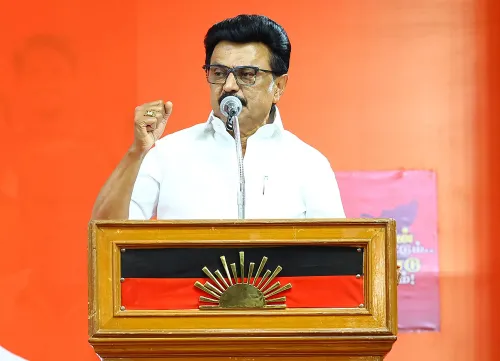
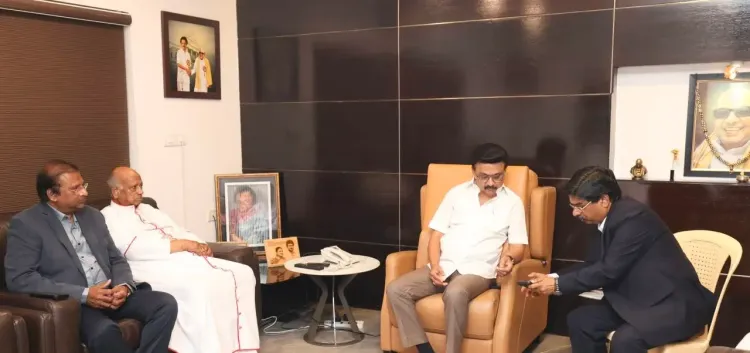
Christian religious leaders arrived at DMK president M. K. Stalin's residence on Saturday, August 8, 2026, to personally thank him — a signal that the party's stand against the FCRA Amendment Bill is drawing active support from minority community leaders across Tamil Nadu.
Stalin posted that 'several Christian dignitaries called on me at my residence today and expressed their appreciation for the efforts being undertaken by the DMK in opposing the #FCRA Amendment Bill.' In Tamil, he added: கிறித்துவ சமயப் பெரியோர்கள் பலர் இன்று எனது இல்லத்தில் என்னைச் சந்தித்து — 'many Christian religious elders met me at my home today' — making clear this was a formal, in-person expression of solidarity, not a routine courtesy call.
Why the FCRA Amendment Bill has civil society on edge
The Foreign Contribution (Regulation) Act governs how Indian organisations receive money from abroad. The 2020 amendment to the Act tightened those controls significantly — restricting sub-grants between NGOs, mandating that foreign funds be received only through a designated State Bank of India branch in New Delhi, and cutting the permissible administrative overhead on such funds. Critics argued the changes throttled the operational capacity of thousands of civil society groups, many of them faith-based organisations running schools, hospitals, and relief programmes.
Christian institutions — which run an outsized share of India's mission-linked educational and healthcare infrastructure — have been among the most vocal in flagging the law's impact. Any further amendment to the FCRA that tightens those rules further would land hardest on precisely the communities whose leaders visited Stalin today.
DMK's minority-outreach record and what this meeting signals
The DMK's Dravidian ideological roots place it firmly in the camp of secular, social-justice politics — and the party has a consistent record of raising minority-community concerns in Parliament and in public. Opposition to FCRA restrictions fits squarely within that arc: the party frames such legislation as an instrument of regulatory overreach that disproportionately burdens civil society groups serving marginalised communities.
That senior Christian leaders chose to travel to Stalin's home — rather than issue a statement — underlines the weight they attach to the DMK's legislative efforts. It also positions the party as the organised political voice for faith-based NGOs watching the Bill's parliamentary trajectory closely.
With parliamentary proceedings on the FCRA Amendment Bill still unfolding, the pressure from community leaders — now publicly acknowledged — adds another layer of political cost to any government move to push the legislation through without meaningful consultation.
Point of View
And opposition parties like the DMK are using minority-outreach optics to sharpen that contrast. For the DMK, which governs Tamil Nadu but operates in opposition at the Centre, such moments of visible community solidarity are also coalition-building exercises ahead of any future federal realignment. The broader pattern — faith-based institutions increasingly aligning with regional opposition parties on regulatory issues — is one worth watching as Parliament takes up the Bill.
NationPress
23 Sept 2026
Frequently Asked Questions
What is the FCRA Amendment Bill that DMK is opposing?
The FCRA Amendment Bill refers to proposed changes to the Foreign Contribution (Regulation) Act, which regulates how Indian organisations receive foreign funds. The DMK has opposed such amendments, arguing they impose excessive restrictions on civil society groups, including faith-based institutions.
Why are Christian organisations concerned about the FCRA Amendment Bill?
Christian institutions run a significant number of schools, hospitals, and social welfare organisations in India that rely partly on foreign contributions. Tighter FCRA rules restrict their ability to receive and deploy such funds, directly affecting their operational capacity.
What did M. K. Stalin say about the meeting with Christian leaders?
Stalin posted on X that 'several Christian dignitaries called on me at my residence today and expressed their appreciation for the efforts being undertaken by the DMK in opposing the FCRA Amendment Bill.'
What changes did the 2020 FCRA Amendment introduce?
The 2020 amendment tightened foreign funding rules for NGOs by restricting sub-grants between organisations, requiring funds to be received only through a designated bank branch in New Delhi, and capping the share of foreign funds that could be used for administrative expenses.
What is the DMK's position on minority community issues?
The DMK, rooted in Dravidian ideology and social justice politics, has consistently raised minority-community concerns in Parliament and opposed legislation it views as disproportionately burdening civil society and minority groups.