CM Fadnavis pays tribute to Bankim Chandra on Vande Mataram's 151st year
Synopsis
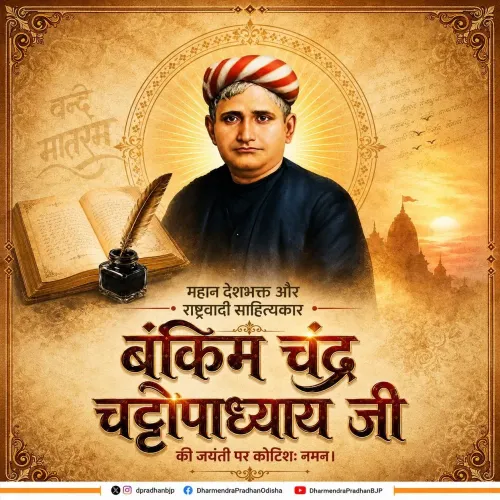
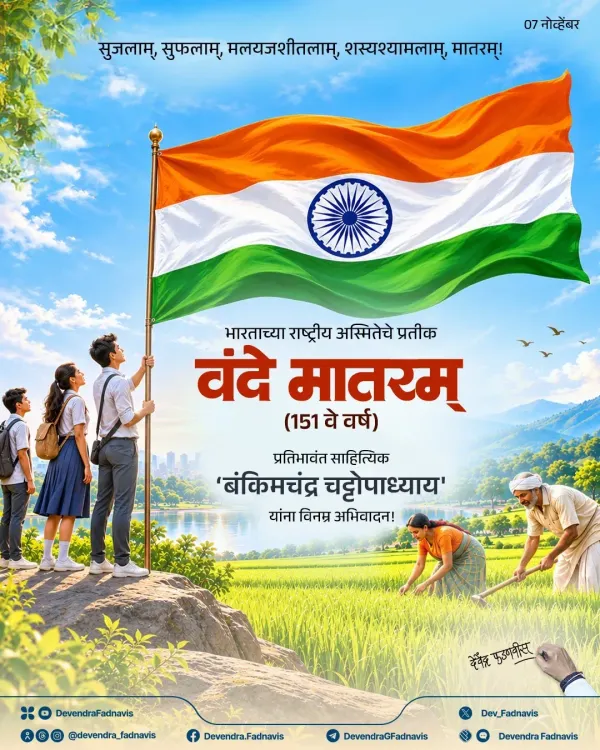
Maharashtra CM Devendra Fadnavis marked the 151st anniversary of Vande Mataram on 7 November 2026, paying tribute to its composer Bankim Chandra Chattopadhyay and calling the national song an enduring symbol of India's identity and freedom struggle.
Key Takeaways
Maharashtra CM Devendra Fadnavis posted a tribute on 7 November 2026 marking the 151st anniversary of Vande Mataram.
Bankim Chandra Chattopadhyay composed Vande Mataram, which became a defining anthem of India's independence movement.
Vande Mataram was officially adopted as India's national song on 24 January 1950 by the Constituent Assembly.
Fadnavis posted in both English and Marathi , describing the song as 'the symbol of India's national identity.' The tribute reflects a broader BJP practice of marking anniversaries of pre-independence nationalist cultural icons.
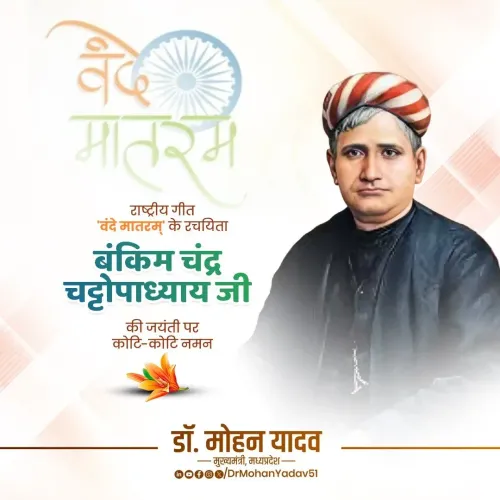
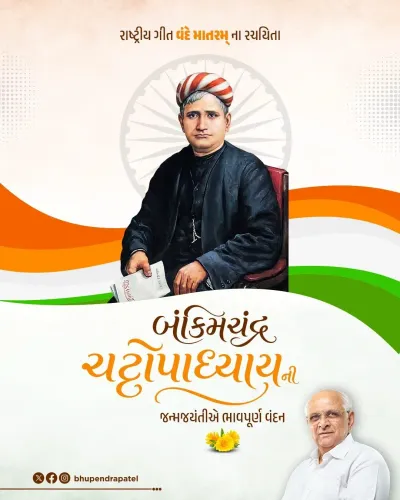
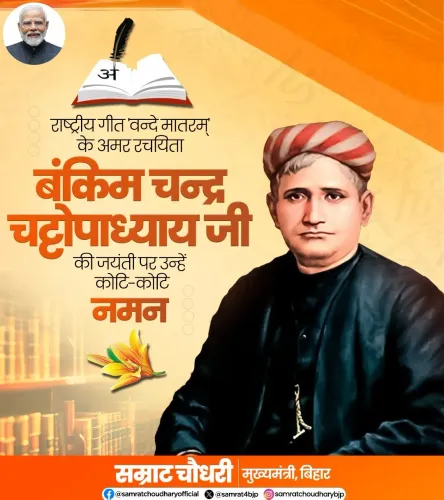
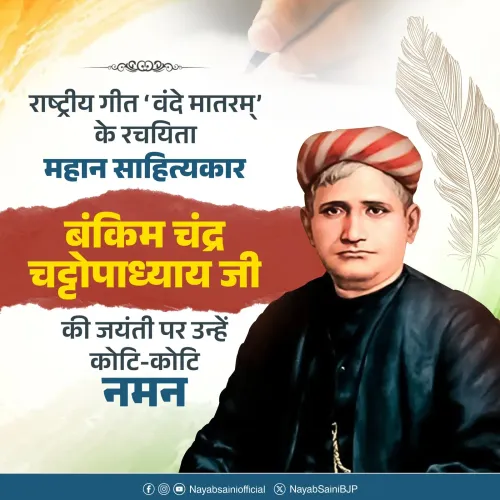
A song born from a poet's pen in 1875 still makes a nation stand — and Maharashtra Chief Minister Devendra Fadnavis marked the 151st anniversary of Vande Mataram on Saturday, 7 November 2026, with a heartfelt tribute to its composer, the legendary Bengali litterateur Bankim Chandra Chattopadhyay.
Posting in both English and Marathi, Fadnavis called Vande Mataram 'the symbol of India's national identity' — भारताच्या राष्ट्रीय अस्मितेचे प्रतीक — and described how the song 'ignited the flame of revolution during India's freedom struggle.' He extended warm greetings to all citizens of the country on the occasion.
The song that became a battle cry
Bankim Chandra Chattopadhyay, one of the foremost Bengali novelists and poets of the 19th century, composed Vande Mataram — meaning 'I bow to thee, Mother' — as a poem that would eventually travel far beyond the printed page. Set against the backdrop of colonial India, the song became a rallying cry for freedom fighters, chanted at protests and marches as British rule tightened its grip across the subcontinent. Its power lay not in polemic but in devotion — an invocation of the motherland so vivid it felt like a summons.
The Constituent Assembly of India formally adopted Vande Mataram as India's national song on 24 January 1950, just days before the Constitution came into force. It stands alongside Jana Gana Mana as one of the two great musical pillars of the republic.
Why BJP leaders return to this anniversary
Fadnavis's tribute fits a consistent pattern among leaders of the Bharatiya Janata Party — marking anniversaries of pre-independence nationalist icons as a way of connecting contemporary governance to a deeper cultural heritage. For a party that traces ideological roots to the idea of civilisational pride, Vande Mataram carries particular resonance. The dual-language format of the post — English for national reach, Marathi for Maharashtra's 125 million Marathi speakers — reflects standard political communication in the state.
One hundred and fifty-one years on, a poem composed in a colonial Bengal still moves a country of 1.4 billion. That, Fadnavis's post quietly argues, is what an immortal song looks like.
Point of View
A balance the party works hard to maintain in a linguistically sensitive state. At 151 years, Vande Mataram sits outside routine round-number commemorations, suggesting the tribute is more about keeping the symbol in public discourse than about the number itself. For the CM, it is a cost-free, high-resonance gesture that plays well across ideological lines.
NationPress
7 Nov 2026
Frequently Asked Questions
Who wrote Vande Mataram?
Bankim Chandra Chattopadhyay , the celebrated 19th-century Bengali novelist and poet, composed Vande Mataram. It was later adopted as India's national song.
When was Vande Mataram composed?
According to CM Fadnavis's post, Vande Mataram was composed on 7 November 1875 , making 2026 its 151st anniversary .
What is the difference between India's national anthem and national song?
India has both a national anthem — Jana Gana Mana, written by Rabindranath Tagore — and a national song , Vande Mataram by Bankim Chandra Chattopadhyay, adopted by the Constituent Assembly on 24 January 1950 .
Why is Vande Mataram important to India's freedom struggle?
Vande Mataram became a rallying cry for Indian freedom fighters during the colonial period, chanted at protests and nationalist gatherings. Its devotional invocation of the motherland made it one of the most emotionally powerful symbols of the independence movement.
What did CM Devendra Fadnavis say about Vande Mataram?
CM Fadnavis called Vande Mataram 'the symbol of India's national identity' and said it 'ignited the flame of revolution during India's freedom struggle,' posting his tribute in both English and Marathi on 7 November 2026 .