FCRA Bill referred to JPC: BJD MP Sasmit Patra welcomes move, seeks minority dialogue

Synopsis
BJD MP Sasmit Patra broke from his own party's position to personally push for a JPC referral of the FCRA Amendment Bill 2026 — and the government relented. With Christian and minority groups alarmed about rushed passage, the JPC route now offers a rare window for structured stakeholder consultation before one of Parliament's more contentious foreign-funding laws is rewritten.
Key Takeaways
The Lok Sabha accepted the referral of the FCRA Amendment Bill, 2026 to a Joint Parliamentary Committee (JPC) on 12 August , amid Opposition protests.
BJD MP Sasmit Patra welcomed the move, calling the JPC an 'appropriate forum' for detailed scrutiny and minority community consultation.
Patra clarified his support is his personal stand and does not reflect the official position of the Biju Janata Dal (BJD) .
The Christian community and other minority groups had raised concerns about the Bill being passed hastily without adequate consultation.
The JPC's timeline and terms of reference have not yet been announced; stakeholder consultations are expected as part of the process.
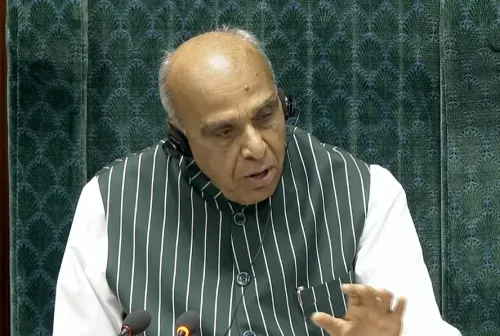
Biju Janata Dal (BJD) Member of Parliament Sasmit Patra on Wednesday, 12 August welcomed the Central government's decision to refer the Foreign Contribution (Regulation) Amendment Bill, 2026, to a Joint Parliamentary Committee (JPC), calling the panel an 'appropriate forum' for detailed legislative scrutiny and broader consultation with Christian and other minority communities. The Lok Sabha accepted the referral amid significant uproar and protests from Opposition members.
What Prompted the Referral
The government's move to send the FCRA Amendment Bill, 2026, to a JPC came amid mounting concerns from minority groups about the speed at which the legislation was being pushed through Parliament. Patra said he had been demanding a JPC examination for several days, including raising the issue on the floor of the House two days earlier.
'The Christian community and minority communities had expressed concerns about the rushing through and passing of the FCRA Bill, and therefore, there has been a consistent demand for a Joint Parliamentary Committee,' Patra said.
Patra's Personal Stand vs BJD's Official Position
Notably, Patra was explicit that his support for the JPC referral was his personal position and did not represent the official stance of the Biju Janata Dal (BJD). 'Though this has not been the stand of my party, the BJD, this has been my personal stand,' he told reporters.
Patra, who identifies with the Christian community, said his efforts over the preceding days were driven by a desire to ensure that the apprehensions of minority communities received proper legislative consideration. 'I believe that with the Joint Parliamentary Committee now entrusted with the responsibility of going into the examination of the legislative scrutiny of the FCRA Bill, the emotions and the apprehensions of the Christian community will be looked after,' he said.
Key Concerns Around the FCRA Bill
Several provisions of the proposed legislation have drawn scrutiny from civil society organisations, churches, and minority rights groups, who argue that tighter foreign funding regulations could curtail the operations of faith-based and community welfare organisations. Critics argue that without adequate consultation, such amendments risk disproportionately affecting minority-run institutions that rely on overseas contributions for charitable and educational work.
Patra said the JPC process would allow lawmakers adequate time to understand the Bill's provisions rather than passing it 'in the din or in a rush,' as he put it. He welcomed the referral on the grounds that it would facilitate a more considered and inclusive legislative process.
What Happens Next
The Joint Parliamentary Committee is now expected to begin a detailed examination of the FCRA Amendment Bill, 2026, which will include consultations with stakeholders, including representatives of minority communities. The timeline for the JPC's report has not yet been announced. The Bill's fate in Parliament will depend on the committee's findings and recommendations.
Point of View
While procedurally routine, is also a tactical retreat: passing contentious foreign-funding legislation amid House disruptions would have handed the Opposition a ready-made narrative. The JPC route buys time but does not resolve the fundamental tension between tighter foreign-funding controls and the operational realities of minority-run civil society organisations. Whether the committee's consultation process is substantive or merely procedural will determine if minority community concerns are genuinely addressed or simply deferred.
NationPress
27 Sept 2026
Frequently Asked Questions
What is the FCRA Amendment Bill 2026?
The Foreign Contribution (Regulation) Amendment Bill, 2026 is proposed legislation that seeks to amend existing rules governing foreign funding received by Indian organisations. It has drawn concern from minority and civil society groups who fear tighter regulations could restrict the functioning of faith-based and charitable institutions.
Why was the FCRA Bill referred to a Joint Parliamentary Committee?
The Lok Sabha accepted the referral on 12 August amid Opposition protests and mounting pressure from minority communities who argued the Bill was being rushed through without adequate consultation. BJD MP Sasmit Patra had been publicly demanding the JPC referral for several days before the government agreed.
What is Sasmit Patra's position on the FCRA Bill?
Patra welcomed the JPC referral and has consistently called for greater consultation with Christian and other minority communities before the Bill proceeds. He clarified this is his personal stance and not the official position of his party, the Biju Janata Dal (BJD).
What concerns have minority communities raised about the FCRA Bill?
Christian and other minority communities have expressed concern that the Bill could be passed hastily without sufficient dialogue, potentially affecting minority-run organisations that depend on foreign contributions for charitable, educational, and welfare activities.
What happens next with the FCRA Amendment Bill 2026?
The Joint Parliamentary Committee will now conduct a detailed examination of the Bill, including stakeholder consultations. The JPC's timeline and the scope of its consultations have not yet been formally announced; the Bill's progress in Parliament will depend on the committee's eventual report.