FCRA Bill 2026: India rebuts 'myths' on foreign funding curbs in US pushback
Synopsis
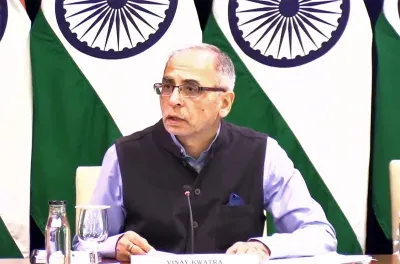
India's top diplomat in Washington has gone on the offensive over the FCRA Amendment Bill 2026, posting a detailed myth-busting thread on X to counter claims that the law targets civil society or specific religions. With foreign inflows to registered NGOs nearly doubling since 2010-11 — reaching $2.67 billion in 2024-25 — the government's case rests on transparency, not restriction.
Key Takeaways
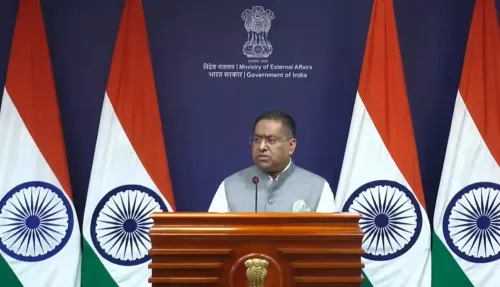
Ambassador Vinay Mohan Kwatra issued a 'Myth vs.
Reality' rebuttal on X on 10 August defending the FCRA Amendment Bill, 2026 .
Foreign contributions to FCRA-registered organisations rose from $1.2 billion in 2010-11 to $2.67 billion in 2024-25 , according to the ambassador.
India has over three million NGOs, but only 14,450 hold FCRA registration.
The 2026 bill adds a designated authority to safeguard assets and a restoration mechanism for organisations that regain registration.
Kwatra cited foreign-influence laws in the US , Australia , Canada , and the UK to argue India is not an international outlier.
The act applies uniformly across all religions and ideologies, Kwatra said, rejecting communal targeting allegations.
India's Ambassador to the United States, Vinay Mohan Kwatra, on 10 August issued a point-by-point rebuttal of what he described as widespread misunderstandings about the proposed Foreign Contribution (Regulation) Amendment Bill, 2026, asserting that the legislation tightens oversight of foreign financial flows without restricting lawful civil society activity. The clarification, delivered through a series of posts on X, comes as the bill faces scrutiny from international commentators and sections of Indian civil society.
What the Ambassador Said
Kwatra dismissed claims that the FCRA Amendment Bill, 2026 was designed to cut off foreign aid to non-governmental organisations. 'The fact is that the law does not forbid Indians from receiving foreign donations or shut down law abiding civil society,' he said. He framed the regulation of foreign financial flows as a sovereign measure rooted in national security — one that democracies worldwide routinely exercise.
He cited the US Foreign Agents Registration Act of 1938, the Foreign Account Tax Compliance Act of 2010, Australia's 2018 foreign influence legislation, Canada's 2024 framework, and the UK's scheme that took effect in July 2025, arguing India was not an international outlier. The European Union is also reportedly considering comparable legislation.
Key Facts on FCRA Registration and Foreign Inflows
India enacted its first FCRA in 1976, replaced it with a modern framework in 2010, and strengthened it through amendments in 2016, 2018, and 2020. Kwatra described the 2026 bill as the next step in that continuum — 'more transparency, better governance, clearer rules.'
Notably, foreign contributions received by FCRA-registered organisations have risen from roughly $1.2 billion in 2010-11 to $2.67 billion in 2024-25, according to the ambassador. India has more than three million NGOs, but only 14,450 hold FCRA registration — meaning the overwhelming majority of civil society organisations operate entirely outside the law's ambit.
'FCRA does not stop anyone from accepting foreign charity, research grants or humanitarian aid,' Kwatra said. 'It asks three things — register, receive the money through laid down process, report what you did with it.'
Asset Seizure Concerns Addressed
Kwatra also pushed back against fears that the amendment would lead to asset seizures affecting NGOs, religious charities, places of worship, hospitals, and schools. He clarified that when an organisation's FCRA registration is cancelled or surrendered, foreign contributions and assets created from them already vest in a state government authority — a provision in force since 2010, not introduced by the new bill.
What the 2026 bill adds, he said, is a designated authority to safeguard those assets and a restoration mechanism: if an organisation regains its registration, all assets and unused funds are returned in full. For places of worship specifically, property linked to an association whose registration has been cancelled would be transferred to another FCRA-registered association of the same faith to ensure continuity of worship.
Rejection of Communal Targeting Allegations
Addressing allegations that the law targets a specific religion or community, Kwatra was unequivocal. 'Nothing could be farther from it,' he said. 'The Act applies uniformly to all organisations regardless of religion, community or ideology.' Faith-based welfare activities, religious education, maintenance of places of worship, and charitable work by organisations of every faith would remain eligible for foreign funding under the proposed framework, he added.
What Happens Next
The Foreign Contribution (Regulation) Amendment Bill, 2026 is yet to complete its legislative passage. The ambassador's intervention signals that New Delhi is actively managing the international narrative around the bill, particularly in Washington, where scrutiny of India's civil society regulations has grown. How the bill is received domestically — and whether further amendments are introduced — will determine its final shape.
Point of View
But it sidesteps a key distinction: those regimes primarily target political lobbying, whereas FCRA's ambit covers humanitarian, religious, and development organisations. The doubling of foreign inflows since 2010 is a genuine counterpoint to restriction narratives, but the government has yet to address concerns about discretionary cancellation powers that critics argue remain in the bill. The real test of intent will be whether the 'way back' restoration mechanism is codified with clear timelines and judicial oversight — or left to administrative discretion.
NationPress
24 Sept 2026
Frequently Asked Questions
What is the FCRA Amendment Bill 2026?
The Foreign Contribution (Regulation) Amendment Bill, 2026 is a proposed Indian law that seeks to strengthen oversight of foreign funding received by NGOs, religious organisations, and other civil society bodies. It builds on earlier FCRA frameworks from 2010 and amendments in 2016, 2018, and 2020, adding a designated authority to manage assets of organisations whose registration is cancelled and a mechanism to restore those assets if registration is regained.
Why is India's ambassador addressing concerns about the FCRA bill in Washington?
Ambassador Vinay Mohan Kwatra issued the rebuttal on 10 August because the bill has drawn criticism from international commentators and civil society groups who claim it could restrict foreign aid to Indian NGOs. New Delhi is managing the international narrative ahead of the bill's legislative passage, particularly in Washington where scrutiny of India's civil society regulations has grown.
Will the FCRA bill lead to asset seizures by the government?
According to Ambassador Kwatra, asset vesting in a state government authority when an organisation's registration is cancelled has been in force since 2010 — it is not a new provision. What the 2026 bill adds is a designated safeguarding authority and a full restoration of assets and unused funds if the organisation regains its FCRA registration.
Does the FCRA Amendment Bill target a specific religion or community?
No, according to the ambassador. Kwatra stated the act applies uniformly to all organisations regardless of religion, community, or ideology. Faith-based welfare, religious education, and charitable work by organisations of every faith remain eligible for foreign funding under the proposed framework.
How does India's FCRA compare with foreign-influence laws in other countries?
Ambassador Kwatra cited the US Foreign Agents Registration Act of 1938, the Foreign Account Tax Compliance Act of 2010, Australia's 2018 legislation, Canada's 2024 framework, and the UK's scheme that took effect in July 2025 as comparable measures. He argued that regulating foreign financial flows in public and political spaces is a standard feature of modern democratic governance, not an Indian exception.