Nadda hails Roshibina Devi's Silver at Asian Games 2026
Synopsis
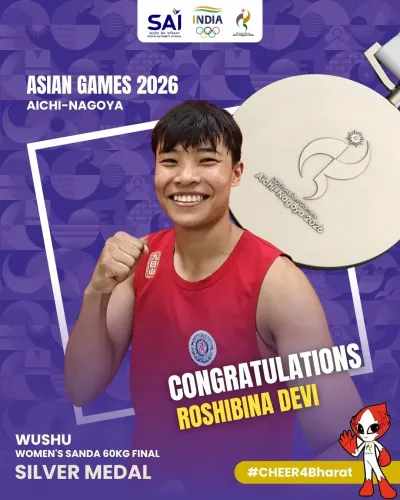
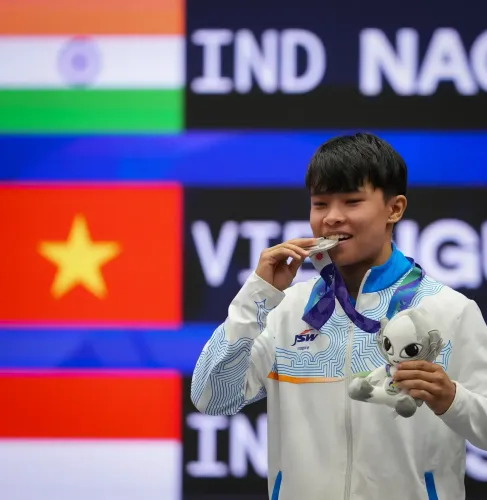
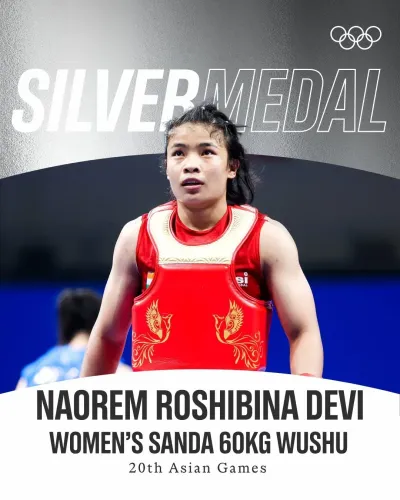
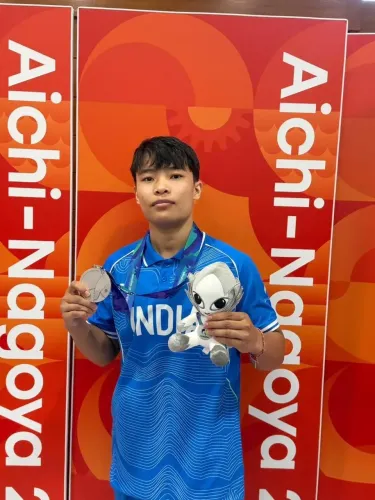
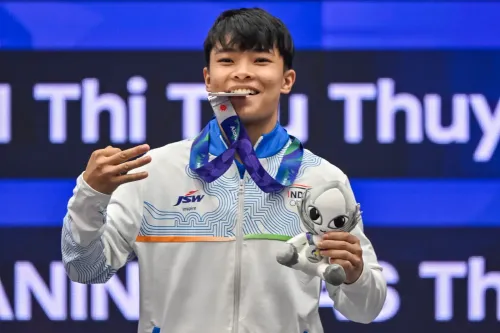
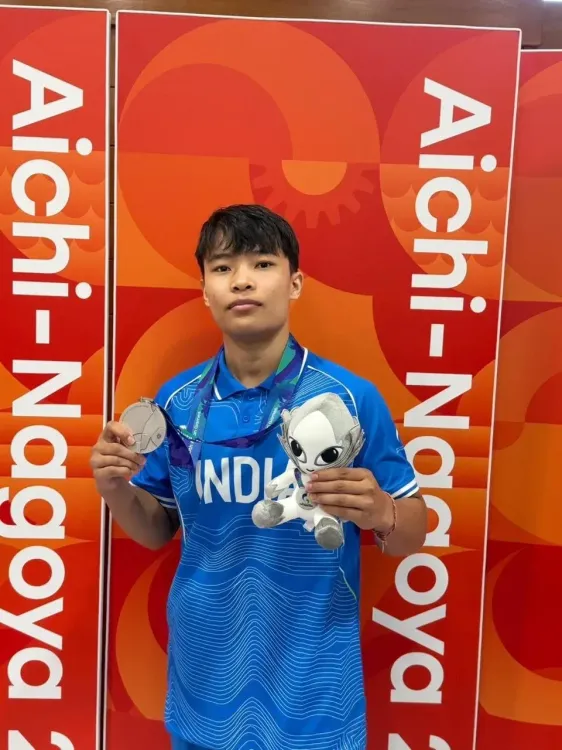
Union Health Minister J. P. Nadda praised Naorem Roshibina Devi after she claimed Silver in the Women's Sanda 60kg event at Asian Games 2026, achieving a podium finish at three consecutive Asian Games — a rare mark of consistency in Indian wushu.
Key Takeaways
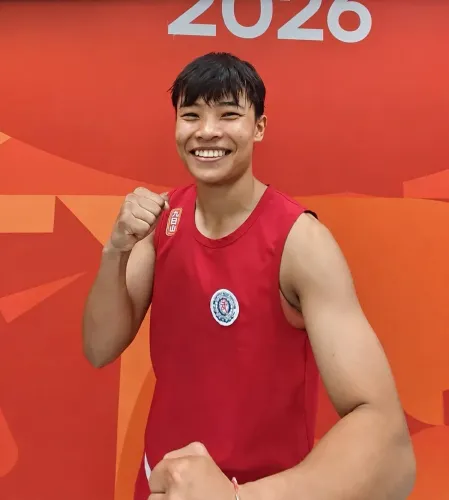
Naorem Roshibina Devi won Silver in the Women's Sanda 60kg event at Asian Games 2026 .
The medal is her third podium finish at three consecutive Asian Games , marking exceptional career consistency.
Union Health Minister J.
Nadda publicly congratulated her on September 24, 2026 via X.
Roshibina competes in Sanda , the full-contact combat discipline of wushu — distinct from the routines-based Taolu format.
She is among a group of high-performing athletes from Manipur who have delivered medals in combat sports at continental level.
Three consecutive Asian Games, three medals. Naorem Roshibina Devi has done it again — this time claiming Silver in the Women's Sanda 60kg event at the Asian Games 2026, cementing her place as one of Indian wushu's most enduring competitors. Union Health Minister J. P. Nadda was among the first to congratulate her, taking to X on Thursday, September 24, 2026 to celebrate the feat.
A hat-trick of Asian Games medals
Consistency at multi-sport continental championships is rare in any discipline — in wushu's bruising Sanda format, it is rarer still. Roshibina's silver at Asian Games 2026 completes a streak of podium finishes across three successive editions of the Games, a run that speaks to both her physical longevity and her ability to remain competitive against Asia's best. Nadda's post called her achievement a reflection of 'remarkable consistency, courage and determination.'
Wushu's Sanda discipline is a full-contact combat sport combining punches, kicks, and throws — a world removed from the choreographed routines of Taolu. Reaching the podium once in such a format is an achievement; returning to it edition after edition requires a level of dedication that few athletes sustain.
Manipur's quiet medal factory
Roshibina hails from Manipur, the northeastern state that has long punched above its weight in combat and contact sports on the national and international stage. Her rise through Indian wushu mirrors a broader pattern from the region — athletes forged in modest infrastructure who break through onto continental podiums through sheer competitive will. Her continued success also adds to India's growing visibility in wushu, a sport that rarely commands prime-time attention but quietly delivers medals at Asian Games editions.
What the silver means for India's Asian Games 2026 tally
Every medal counts in a multi-discipline event as vast as the Asian Games, and Roshibina's silver adds meaningful weight to India's overall haul at Asian Games 2026. Senior government figures issuing public tributes — as Nadda has here — form part of a deliberate national recognition culture that has grown sharper in recent years, signalling to athletes that their results register at the highest levels. Whether that recognition translates into deeper institutional support for wushu programmes will be the question worth watching as the Games conclude.
For now, though, the moment belongs to Roshibina. Three Games. Three medals. India's wushu flag kept firmly aloft.
Point of View
Her streak makes a quiet but pointed argument for structured long-term funding of combat sports disciplines that consistently deliver continental medals without the infrastructure budgets of flagship sports. Nadda's public congratulation, issued at a ministerial level, reflects the current government's calculated use of social media recognition as a soft substitute for deeper sports policy announcements. The real test will be whether this visibility converts into programme investment for wushu at the national level.
NationPress
24 Sept 2026
Frequently Asked Questions
Who is Naorem Roshibina Devi?
Naorem Roshibina Devi is an Indian wushu athlete from Manipur who competes in the Sanda discipline. She is a multiple Asian Games medallist, having reached the podium at three consecutive editions of the Games.
What medal did Roshibina Devi win at Asian Games 2026?
She won the Silver Medal in the Women's Sanda 60kg event at the Asian Games 2026.
What is Sanda in wushu?
Sanda is the full-contact combat discipline within the sport of wushu. It combines punches, kicks, and throws in a competitive fighting format, as opposed to Taolu which involves choreographed routines.
Why did JP Nadda congratulate Roshibina Devi?
Union Health Minister J. P. Nadda congratulated Roshibina Devi on X after she secured the Silver Medal at Asian Games 2026, citing her three consecutive Asian Games medals as evidence of remarkable consistency and determination.
How many Asian Games medals has Roshibina Devi won?
According to J. P. Nadda's post, Roshibina Devi has won medals at three consecutive Asian Games editions, making her one of India's most consistent performers in wushu at the continental level.