Gadkari hails Roshibina Devi's Asian Games 2026 Wushu silver
Synopsis
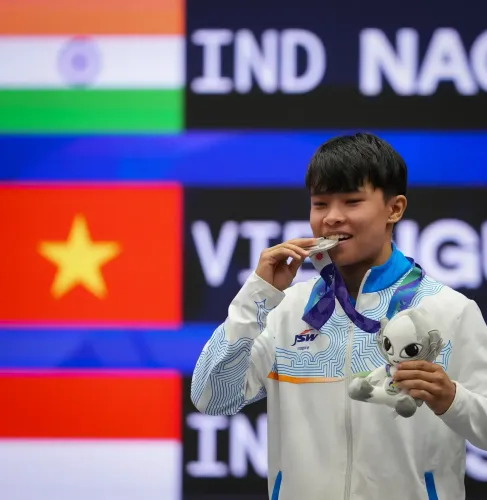
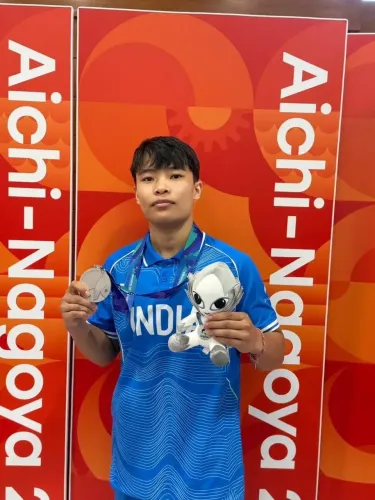
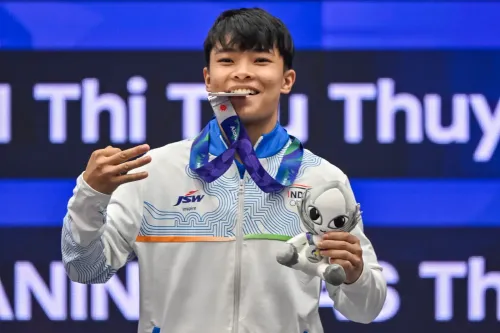
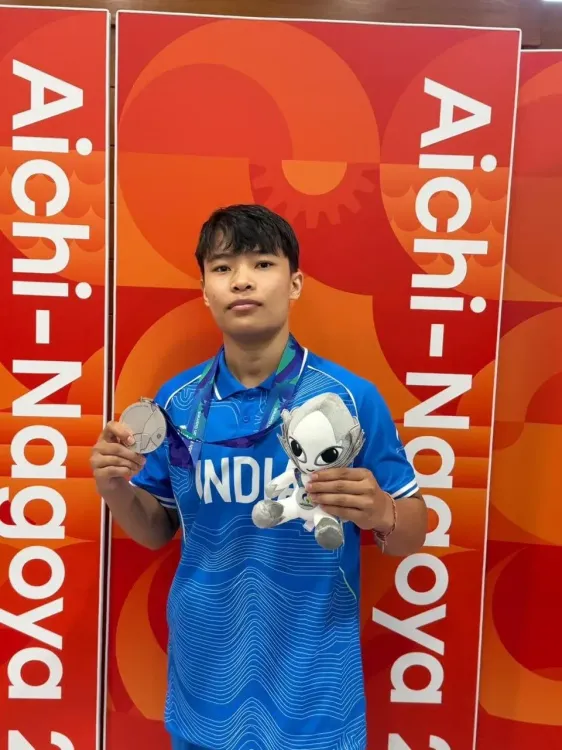
Union Minister Nitin Gadkari has congratulated Wushu athlete Naorem Roshibina Devi on her silver medal in the Women's 60kg Sanda event at Asian Games 2026, praising her as the first Indian to win medals at three consecutive Asian Games.
Key Takeaways
Naorem Roshibina Devi won the Silver Medal in the Women's 60kg Sanda event at the Asian Games 2026 .
She is now the first Indian Wushu athlete to win medals at three consecutive Asian Games .
Union Minister Nitin Gadkari praised her 'remarkable consistency, resilience and fighting spirit' in a post on 24 September 2026 .
Wushu has been part of the Asian Games programme since the 1990 Beijing Games , giving India over three decades to build competitive depth.
Roshibina Devi's achievement highlights India's growing medal footprint in non-traditional combat sports at continental multi-sport events.
A fighter from Manipur has just etched her name into Asian Games history — and Union Road Transport and Highways Minister Nitin Gadkari was among the first to mark the moment. On Thursday, 24 September 2026, Gadkari took to X to congratulate Naorem Roshibina Devi on winning the Silver Medal in the Women's 60kg Sanda event at the Asian Games 2026, saluting her as the first Indian Wushu athlete to stand on the podium at three consecutive editions of the Games.
Three Games, three medals — a record that stands alone
The numbers tell their own story. Roshibina Devi has now competed across three consecutive Asian Games cycles and returned with a medal each time — a feat no Indian Wushu practitioner had managed before her. Gadkari's post called her achievement 'historic', crediting her 'remarkable consistency, resilience and fighting spirit' as an inspiration to aspiring athletes across the country.
Wushu's Sanda discipline — a full-contact combat sport combining strikes, throws and takedowns — demands both explosive power and tactical composure across bouts. Winning at the Asian Games level repeatedly, in the same weight category, underscores a rare combination of physical peak and mental durability.
Wushu's long road into India's medal picture
Wushu has been on the Asian Games programme since its debut at the 1990 Beijing Games, giving Indian athletes over three decades to build competitive depth in a discipline that sits far outside cricket's long shadow. That journey has been slow and largely unheralded — which is exactly what makes Roshibina Devi's consistency so striking. India's gradual rise in non-traditional combat sports reflects targeted federation support and athlete-level perseverance more than any sweeping infrastructure overhaul.
Her silver at Asian Games 2026 adds another data point to a broader pattern: individual Indian athletes, often from smaller states with deep martial-arts traditions, are quietly expanding the country's podium footprint at continental events. Manipur, in particular, has produced a disproportionate share of India's combat-sports talent — a regional pipeline that national programmes are increasingly leaning on.
What comes next for Indian Wushu
Eyes will now turn to how India fares in remaining Wushu events at the 2026 Asian Games and whether the sport can build on this moment toward broader recognition. Wushu's potential inclusion in future Olympic programmes remains an open question — but each high-profile podium finish keeps that conversation alive. For Roshibina Devi, the silver is both a crowning achievement and, given her track record, possibly not her last word on the continental stage.
Three Games. Three medals. A precedent that now belongs to her alone.
Point of View
Sustained podium finishes build the case for greater institutional support and keep alive the sport's long-running bid for wider international recognition. The Manipur pipeline remains one of India's most under-discussed combat-sports assets, and moments like this help shine a national spotlight on it.
NationPress
24 Sept 2026
Frequently Asked Questions
Who is Naorem Roshibina Devi?
Naorem Roshibina Devi is an Indian Wushu athlete from Manipur who competes in the Sanda discipline. She has become the first Indian Wushu athlete to win medals at three consecutive Asian Games.
What medal did Roshibina Devi win at Asian Games 2026?
She won the Silver Medal in the Women's 60kg Sanda event at the Asian Games 2026.
What is Sanda in Wushu?
Sanda is a full-contact combat discipline within Wushu that combines striking techniques, throws and takedowns. It has been part of the Asian Games Wushu programme since the sport's debut at the 1990 Beijing Games.
Why did Nitin Gadkari post about Roshibina Devi?
Union Road Transport and Highways Minister Nitin Gadkari congratulated Roshibina Devi on X on 24 September 2026 to celebrate her historic silver medal and her record of winning medals at three consecutive Asian Games.
When did Wushu first appear at the Asian Games?
Wushu made its Asian Games debut at the 1990 Beijing edition and has been a regular feature of the continental multi-sport event since then.