India rejects US lawmaker's remarks on FCRA Bill, cites global norms
Synopsis
India's Ministry of External Affairs has sharply rebuffed US Congressman Riley Moore's criticism of the FCRA Amendment Bill, pointing out that the United States itself enforces an 87-year-old foreign-agents law — and tightened it in 2025. The response reframes India's foreign-funding rules not as a crackdown on civil society, but as part of a global democratic consensus that now includes Canada, the UK, and the EU.
Key Takeaways
MEA spokesperson Randhir Jaiswal on 7 August rejected foreign commentary on the FCRA Amendment Bill , calling it an internal matter for Parliament .
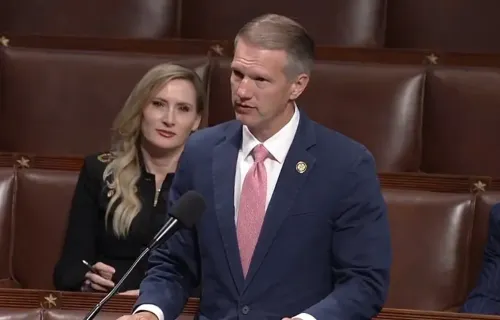
US Congressman Riley Moore had recently commented on India's proposed amendments to foreign-donation laws.
The FCRA Amendment Bill is expected to be introduced in the Lok Sabha during the ongoing Monsoon Session .
The government cited Canada's 2024 foreign-influence law, the US FARA (87 years old, strengthened in 2025 ), and the UK's Foreign Influence Registration Scheme (effective 1 July 2025 ) as comparable frameworks.
An EU Eurobarometer survey found 81% of Europeans view covert foreign interference as a serious problem.
India has maintained a foreign-contribution regulatory framework since 1976 .
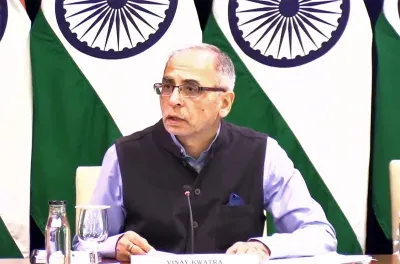
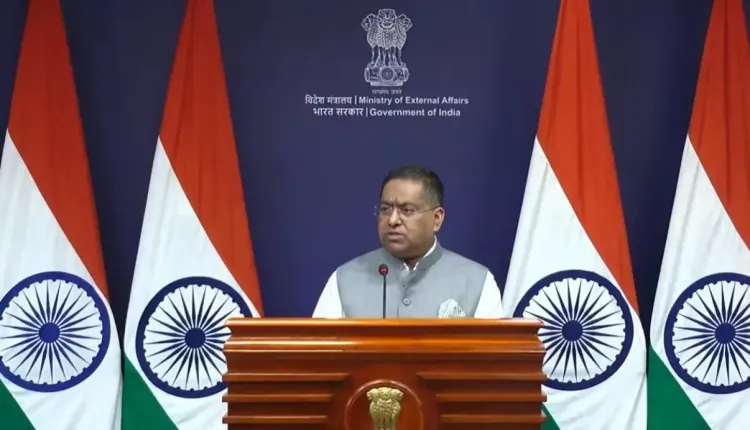
India on Friday, 7 August firmly rejected criticism from sections of the international community, including a US lawmaker, over the proposed Foreign Contribution (Regulation) Act Amendment (FCRA) Bill, asserting that legislative decisions in India are sovereign internal matters determined by Parliament. The pushback came from Ministry of External Affairs (MEA) spokesperson Randhir Jaiswal at a bi-weekly press briefing in New Delhi.
What the MEA Said
Randhir Jaiswal addressed a media query on remarks made by US Congressman Riley Moore, who had recently commented on India's proposed amendments to laws governing foreign donations. 'We have seen the comments; legislative matters concerning India are our internal affairs on which decisions are taken by the Parliament of our country. I would also like to point out that there are several nations, including the United States, which regulate the flow of foreign funds,' Jaiswal said.
The MEA's response was pointed — framing India's regulatory stance not as an outlier, but as consistent with a global democratic consensus on foreign-funding transparency.
The FCRA Bill and Its Legislative Status
The Central Government is expected to introduce the FCRA Amendment Bill in the Lok Sabha during the ongoing Monsoon Session of Parliament. The Foreign Contribution (Regulation) Act (FCRA), administered by the Ministry of Home Affairs (MHA), governs how Indian individuals, associations, NGOs, trusts, and companies may receive and utilise money, securities, or articles from foreign sources.
In functional terms, the Act does three things: it defines who may accept foreign contributions and under what conditions; it prescribes how such funds must be received, accounted for, and reported; and it restricts a narrow set of foreign-funded activities deemed to affect India's sovereignty, security, or public order.
India's Position in the Global Context
The government has consistently argued, including in an official statement dated 22 July, that the FCRA must be understood within a broader international framework. According to the government, with the rapid expansion of global financial networks and digital transactions, regulating foreign financial flows has become 'an accepted feature of modern governance in many democracies.'
The government cited several comparable frameworks: Canada's Foreign Influence Transparency and Accountability Act, enacted in 2024, explicitly acknowledges a 'growing consensus' that foreign influence registries are a necessary tool. The United States has, as recently as 2025, directed federal agencies to enforce its 87-year-old Foreign Agents Registration Act (FARA) more assertively. The United Kingdom's Foreign Influence Registration Scheme under the National Security Act 2023 came into force on 1 July 2025. The European Union has also moved in this direction, following a Eurobarometer survey in which 81 per cent of Europeans identified covert foreign interference as a serious problem.
India, the government notes, has maintained a comparable framework since 1976 — predating many of the Western laws now being cited as benchmarks.
Broader Implications
The government has stated that 'democracies increasingly require transparency where foreign money, direction or institutional relationships may affect domestic public processes, and they provide sanctions for concealment or non-compliance.' Critics of the FCRA amendments, however, have argued that the law disproportionately affects civil society organisations and legitimate charitable activities — a concern the government has dismissed, maintaining that the Act 'enables genuine international cooperation while ensuring that foreign contributions are received, utilised and accounted for in accordance with Indian law.'
With the Monsoon Session still under way, the introduction of the FCRA Amendment Bill in the Lok Sabha will be closely watched by civil society groups, foreign-funded NGOs, and diplomatic observers alike.
Point of View
Turning the critique back on its source: the United States enforces FARA more aggressively than ever, yet questions India's right to regulate foreign funds. What mainstream coverage often misses is that India's FCRA framework predates most Western equivalents by decades — the 1976 origin makes it one of the oldest such laws in any democracy. The real debate is not whether to regulate foreign funding, but where to draw the line between transparency and restriction of legitimate civil society. That question remains unanswered in the government's framing, and the FCRA Amendment Bill's precise provisions — once tabled in the Lok Sabha — will determine whether India's approach holds up to the democratic-consensus standard it is invoking.
NationPress
21 Sept 2026
Frequently Asked Questions
What is the FCRA Amendment Bill India is proposing?
The Foreign Contribution (Regulation) Act Amendment Bill proposes changes to the law that governs how Indian individuals, NGOs, trusts, and companies receive and use foreign funds. The Central Government is expected to introduce it in the Lok Sabha during the ongoing Monsoon Session of Parliament.
Why did the MEA reject US Congressman Riley Moore's remarks?
The MEA stated that legislative matters in India are internal affairs decided by Parliament, and that several nations — including the United States itself — regulate the flow of foreign funds. Spokesperson Randhir Jaiswal pointed to US FARA enforcement and Canada's 2024 foreign-influence law as comparable frameworks.
How does India's FCRA compare to foreign-funding laws in other countries?
India has maintained a foreign-contribution regulatory framework since 1976. The US has enforced its 87-year-old FARA more assertively since 2025, Canada enacted a Foreign Influence Transparency Act in 2024, and the UK's Foreign Influence Registration Scheme came into force on 1 July 2025. The EU is also moving in a similar direction.
Who administers the FCRA in India?
The Foreign Contribution (Regulation) Act is administered by the Ministry of Home Affairs (MHA). It defines who may accept foreign contributions, how funds must be accounted for and reported, and restricts activities that could affect India's sovereignty, security, or public order.
What happens next with the FCRA Amendment Bill?
The Central Government is likely to introduce the FCRA Amendment Bill in the Lok Sabha during the ongoing Monsoon Session of Parliament. Once tabled, it will be subject to debate and scrutiny by lawmakers before any amendments to the existing law take effect.