Gujarat CM Office Marks World Lion Day With Yadav's Gir Story

Synopsis
On World Lion Day 2026, Gujarat's CMO spotlighted Union Environment Minister Bhupender Yadav's account of how India rescued the Asiatic lion through Gir Forest protection, the 1965 sanctuary notification, and the 2018 Asiatic Lion Conservation Project.
Key Takeaways
World Lion Day, 10 August 2026 : Gujarat's CMO office shared Environment Minister Bhupender Yadav's piece on Asiatic lion recovery.
The Gir Wildlife Sanctuary , notified in 1965 , remains the sole wild habitat of Asiatic lions on earth.
The Asiatic Lion Conservation Project was launched in 2018 to strengthen habitat management and monitoring in Gujarat.
Gujarat's forest department holds primary on-ground responsibility, with central ministry providing policy and funding support.
The Maldhari community living inside the sanctuary is a key stakeholder in the conservation model.
The next scheduled Asiatic lion census will be the key indicator of whether the recovery trend continues.
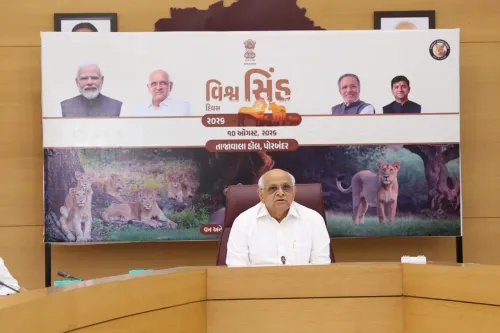
On World Lion Day, 10 August 2026, the Chief Minister's Office of Gujarat amplified a piece by Union Environment Minister Bhupender Yadav tracing how India pulled the Asiatic lion back from the edge of extinction — a story rooted almost entirely in one forest and decades of stubborn political will.
One Forest, One Species, One Chance
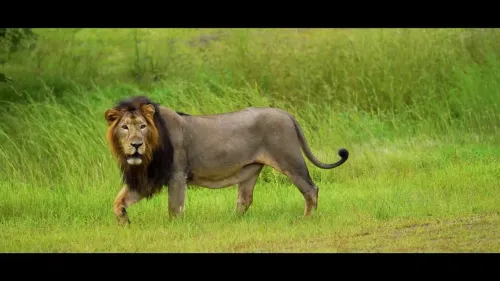
The Asiatic lion exists in the wild in exactly one place on earth: Gir Forest, Gujarat. That geographical concentration is both the conservation triumph and the lingering vulnerability. The Gir Wildlife Sanctuary, notified in 1965, was the legal cornerstone that gave the remnant lion population breathing room when numbers had crashed to dangerously low levels. What followed was a multi-decade effort combining strict habitat protection, community engagement with the pastoral Maldhari community living inside the sanctuary, and periodic population censuses to track recovery.
The Ministry of Environment, Forest and Climate Change formalised the next phase with the Asiatic Lion Conservation Project, launched in 2018, channelling central policy support and funding to Gujarat's on-ground forest teams. The model mirrors the architecture of Project Tiger — species-specific focus, protected-area backbone, and a clear accountability chain between state and centre.
Why Gujarat's Role Is Central
Unlike tiger conservation, which spans multiple states, Asiatic lion recovery has always had a single state custodian: Gujarat. The Gujarat forest department holds primary operational responsibility — patrolling, anti-poaching, veterinary response, and habitat management — while the central ministry provides legislative muscle and financial support. That clarity of ownership is widely credited as a factor in the programme's consistency across successive governments.
The broader pattern India has pursued — strict protection paired with gradual habitat expansion to reduce the risk of a single-site catastrophe — is now the subject of ongoing debate. Any formal notification of new lion-bearing areas or a translocation decision would mark the next chapter in a story that began more than sixty years ago in a patch of dry deciduous forest on Gujarat's Saurashtra peninsula.
On the day the world pauses to count lions, India's count — however it stands at the next census — will be the most-watched number in big-cat conservation.
Point of View
Which governs both Gujarat and the centre, the lion's recovery is a rare environmental achievement that cuts across ideological lines and plays well in international conservation circles. The next census and any translocation decision will test whether that partnership holds or fractures under competing state interests.
NationPress
11 Aug 2026
Frequently Asked Questions
Where do Asiatic lions live in the wild?
Asiatic lions exist in the wild exclusively in Gir Forest, Gujarat , making it the world's only habitat for the subspecies outside captivity.
What is the Asiatic Lion Conservation Project?
The Asiatic Lion Conservation Project was launched in 2018 by India's Ministry of Environment, Forest and Climate Change to strengthen habitat management, monitoring, and protection of lions in Gujarat's Gir landscape.
When was Gir Wildlife Sanctuary notified?
The Gir Wildlife Sanctuary was officially notified in 1965 , providing the foundational legal protection that helped the Asiatic lion population begin its recovery.
Who is Bhupender Yadav and what did he write about lions?
Bhupender Yadav is India's Union Minister of Environment, Forest and Climate Change. On World Lion Day 2026 , he authored a piece tracing how India's conservation policies brought the Asiatic lion back from critically low numbers.
What is World Lion Day?
World Lion Day is observed every year on 10 August to raise global awareness about lion conservation challenges and celebrate recovery successes like India's Asiatic lion programme.