Asiatic Lion population hits 891: Bhupender Yadav marks World Lion Day 2026
Synopsis
India's Asiatic Lion count has climbed from 523 to 891 in a decade — a near-70% recovery that Environment Minister Bhupender Yadav celebrated on World Lion Day 2026. Backed by Project Lion and an expanded range of 35,000 sq. km., the achievement is one of the world's rare big-cat success stories. The next test: whether India moves fast enough to establish a second wild population before a single-site disaster can undo it all.
Key Takeaways
India's Asiatic Lion population grew from 523 in 2015 to 891 in 2025 , a rise of nearly 70% over a decade.
Union Minister Bhupender Yadav credited forest officials, conservationists, and local communities for the recovery on World Lion Day 2026 .
Project Lion , launched by PM Narendra Modi on 15 August 2020 , underpins the conservation effort with a landscape-level, holistic approach.
The Asiatic Lion's territorial range has expanded from 30,000 sq. km. in 2020 to nearly 35,000 sq. km.
The species remains confined to the Gir Forest region in Gujarat , making a second wild population a key unresolved conservation challenge.
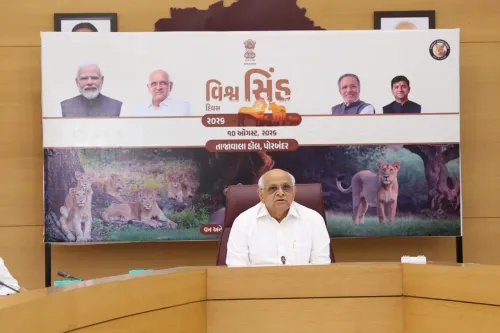
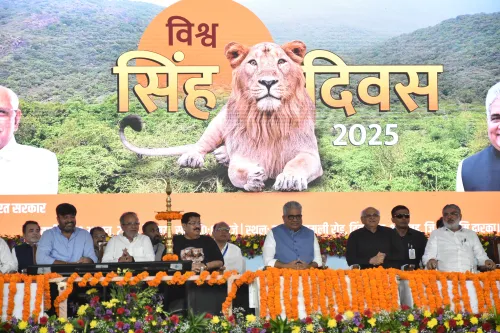
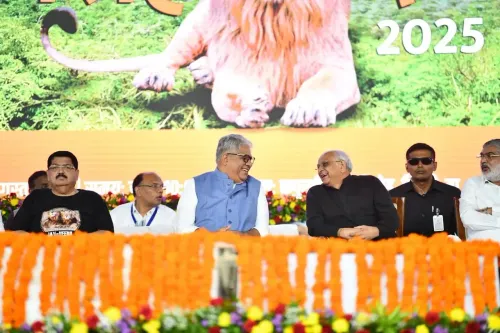
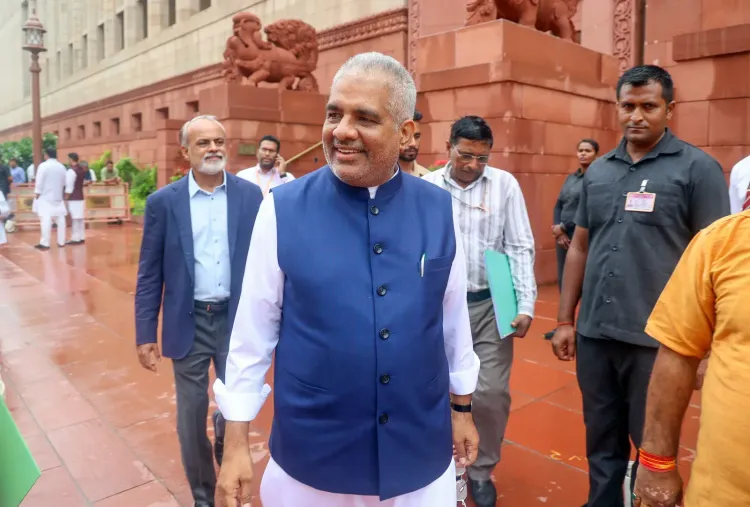
On World Lion Day 2026, Union Minister for Environment, Forest and Climate Change Bhupender Yadav highlighted India's growing success in Asiatic Lion conservation, noting that the population has risen from 523 in 2015 to 891 in 2025 — a near 70% increase over a decade. The minister credited forest officials, conservationists, and local communities for the milestone.
What the Minister Said
Yadav took to social media to mark the occasion, writing: 'On World Lion Day, we celebrate India's remarkable journey in lion conservation. India's success in conserving the Asiatic Lion is a proud testament to our unwavering commitment to wildlife and biodiversity.'
He added: 'From protecting critical habitats to strengthening conservation efforts, India has demonstrated that development and nature conservation can move forward together.' The minister called on citizens to 'reaffirm our resolve to safeguard our natural heritage and ensure that the roar of the Asiatic Lion continues to resonate for generations to come.'
Project Lion and Expanding Range
The population recovery is underpinned by Project Lion, launched by Prime Minister Narendra Modi on 15 August 2020 to ensure the long-term survival of the species. Since its inception, the lion's territorial range has expanded from approximately 30,000 sq. km. in 2020 to nearly 35,000 sq. km. — a gain of roughly 5,000 sq. km. in five years.
The project operates on a landscape-level, holistic framework that covers habitat enhancement, disease monitoring, veterinary support, scientific population tracking, technology-aided interventions, biodiversity protection, benefit sharing, and community involvement.
Government's Broader Commitment
Union Minister of State Kirti Vardhan Singh also marked the day on social media, stating that by protecting critical habitats, strengthening conservation programmes, and fostering coexistence, 'India has shown the world that development and nature can thrive together.'
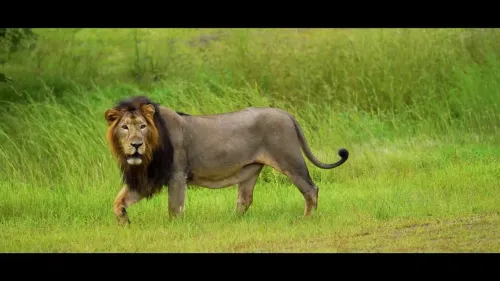
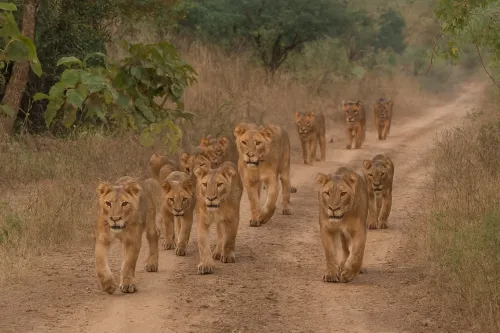
The Asiatic Lion is found exclusively in and around the Gir Forest National Park in Gujarat, making India the sole custodian of the subspecies in the wild. This geographic concentration makes sustained conservation effort critical — any disease outbreak or natural disaster in a single landscape could pose an existential threat to the population.
Why This Matters
The near-70% population increase over a decade places India among a handful of countries globally that have successfully reversed the decline of a big cat species in the wild. Notably, this growth has occurred alongside expanding human settlements at the forest periphery, making the community coexistence model central to the programme's credibility.
With the lion range now approaching 35,000 sq. km., conservationists argue the next challenge is establishing a second, geographically separate population to reduce single-site vulnerability — a proposal that has been under discussion for years. The pace of that decision will be a key test of whether India's conservation ambition matches its conservation record.
Point of View
But it also exposes India's single-point-of-failure risk: every Asiatic Lion on earth lives within one contiguous landscape in Gujarat. A disease outbreak, flood, or wildfire of sufficient scale could devastate a population that took decades to rebuild. The government's messaging on World Lion Day centres on growth numbers, but the harder question — when and where a second wild population will be established — remains unanswered. Until that decision is made and executed, India's lion conservation story is impressive but structurally fragile.
NationPress
25 Sept 2026
Frequently Asked Questions
What is the current Asiatic Lion population in India?
India's Asiatic Lion population stood at 891 in 2025 , up from 523 in 2015 , according to official figures cited by Environment Minister Bhupender Yadav on World Lion Day 2026. This represents a near 70% increase over a decade.
What is Project Lion and when was it launched?
Project Lion is India's flagship conservation programme for the Asiatic Lion, announced by Prime Minister Narendra Modi on 15 August 2020 . It takes a landscape-level approach covering habitat enhancement, disease monitoring, veterinary support, population tracking, and community involvement.
Where do Asiatic Lions live in India?
Asiatic Lions are found exclusively in and around the Gir Forest National Park in Gujarat , making India the only country in the world with a wild population of the subspecies.
How much has the Asiatic Lion's range expanded?
The lion's territorial range has grown from approximately 30,000 sq. km. in 2020 to nearly 35,000 sq. km. — an addition of roughly 5,000 sq. km. in five years, according to government data.
Why is World Lion Day significant for India in 2026?
World Lion Day 2026 marks a decade of sustained population recovery for the Asiatic Lion in India, with numbers rising from 523 to 891. It also comes six years after the launch of Project Lion, giving conservationists and officials a milestone to assess the programme's impact.