CM Sukhu Claims Historic Win on Kishau Dam Cost Deal
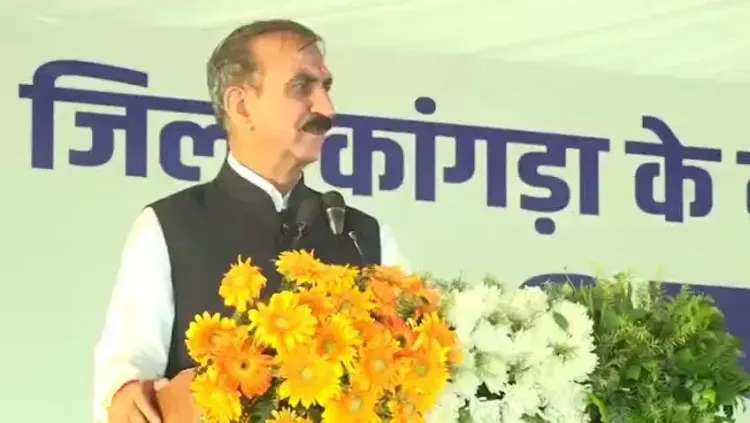
Synopsis
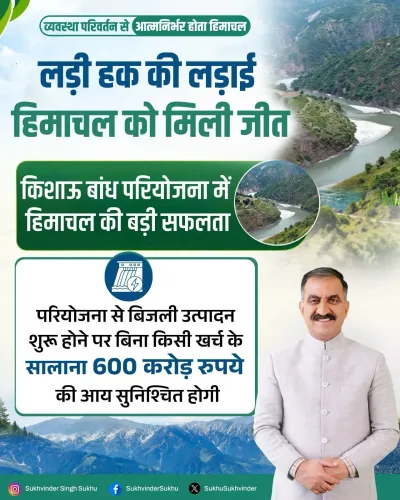
Himachal Pradesh CM Sukhvinder Singh Sukhu announced on 18 June 2026 that the state secured a revised Kishau Dam Project deal after rejecting the 2018 cost-sharing agreement, claiming ₹600 crore in revenue over five years with zero state expenditure.
Key Takeaways
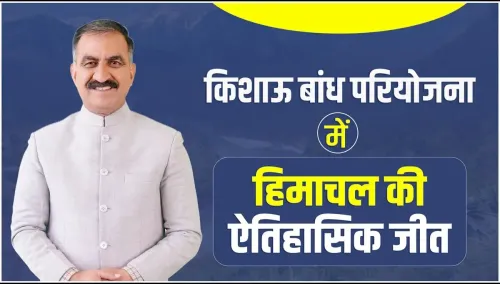
CM Sukhvinder Singh Sukhu declared a 'historic win' for Himachal Pradesh in negotiations over the Kishau Dam Project .
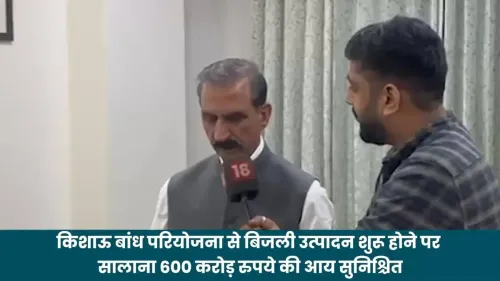
The state will reportedly earn ₹600 crore over the next five years without spending any funds on power generation.
Sukhu said he rejected the 2018 cost-sharing agreement during a central meeting in 2023 , setting the basis for the revised outcome.
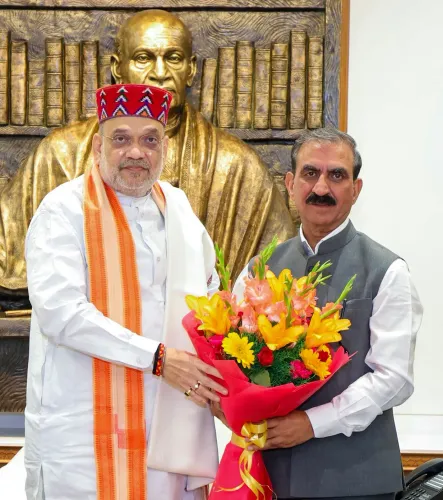
The announcement follows a recent meeting between CM Sukhu and Union Home Minister Amit Shah .
Sukhu argued that a BJP -led state government would have accepted the 2018 terms, placing a financial burden on Himachal Pradesh .
The Chief Minister pledged not to compromise on state rights and resources for as long as he remains in office.
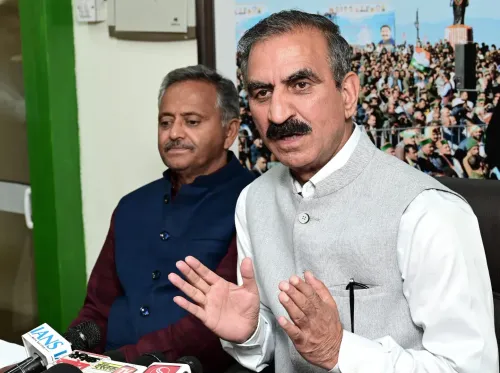
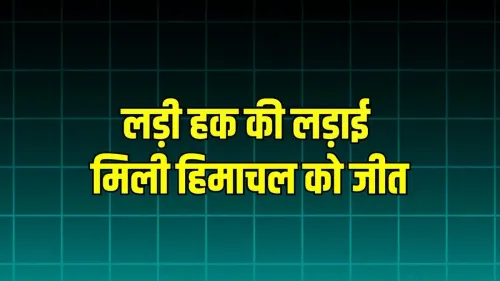
Himachal Pradesh Chief Minister Sukhvinder Singh Sukhu declared on 18 June 2026 that the state has secured a landmark financial victory in negotiations over the Kishau Dam Project, announcing that Himachal Pradesh will bear no power-generation costs and is set to earn ₹600 crore over the next five years from the project.
Context
In a detailed post on X, CM Sukhu stated that three years of meetings on the Kishau Dam Project had yielded no resolution before a recent meeting with Union Home Minister Amit Shah. He wrote: 'किशाऊ बांध परियोजना को लेकर तीन वर्षों तक केवल बैठकें होती रहीं, लेकिन कोई समाधान नहीं निकल पाया' ('For three years, only meetings were held on the Kishau Dam Project, but no solution emerged').
Sukhu said he told the Union Home Minister plainly: 'We will not bear the cost of power generation.' The Chief Minister credited this firm stance for what he described as a historic win for the state.
Policy Backdrop
The Kishau Dam Project is a multipurpose hydropower and irrigation scheme on the Yamuna river involving Himachal Pradesh and neighbouring states. An agreement reached in 2018 had included provisions requiring the state to share power-generation costs — terms that placed a significant financial burden on Himachal Pradesh.
CM Sukhu stated he formally rejected those 2018 cost-sharing terms during a meeting in 2023, setting the stage for the revised outcome now being claimed. He argued that had the Bharatiya Janata Party been in power in the state, it would have accepted the 2018 agreement and the financial burden would have fallen on Himachal Pradesh.
Himalayan states have long sought to renegotiate hydropower project terms to limit capital exposure while retaining revenue rights. Centre-state negotiations on river-valley schemes frequently turn on whether power-generation costs are absorbed by the state or passed to central utilities.
Stakeholders and Impact
According to CM Sukhu, the revised arrangement means Himachal Pradesh will earn ₹600 crore over the coming five years without spending a single rupee on the project. This represents a direct improvement to the state's fiscal position at a time when Himachal Pradesh has been managing a constrained budget.
The hydropower sector in the state stands to benefit from a clearer cost-sharing framework, and other Himalayan states watching similar negotiations may look to this outcome as a reference point. The state government has positioned the deal as a model for protecting resource rights in multi-state river-valley projects.
Sukhu closed with a direct political commitment: 'जब तक मैं मुख्यमंत्री हूँ, प्रदेश के अधिकारों और संसाधनों से कोई समझौता नहीं होने दूँगा' ('As long as I am Chief Minister, I will not allow any compromise on the rights and resources of the state').
What's Next
The immediate focus will be on the rollout of the revised revenue-sharing mechanism for the Kishau Dam Project and whether the agreed terms are formalised in a new inter-governmental document. Observers will also watch whether Himachal Pradesh pursues similar renegotiations on other pending hydropower projects in the state.
The outcome of this negotiation is likely to shape the Congress government's political narrative ahead of future state elections, with CM Sukhu framing the deal as a contrast to what he characterises as the previous BJP government's more conciliatory posture on cost-sharing.
Point of View
He is building a Congress governance narrative around fiscal assertiveness ahead of the next electoral cycle. The claim that three years of talks yielded nothing until his direct intervention with the Union Home Minister positions him as a decisive negotiator within a Congress-BJP centre-state dynamic. Whether the ₹600 crore projection holds will depend on the formalisation of revised terms, and independent scrutiny of the new agreement will be the real test of the win he is claiming. More broadly, this signals that Himalayan states are increasingly willing to publicly leverage their hydropower assets as bargaining chips in centre-state fiscal negotiations.
NationPress
19 Sept 2026
Frequently Asked Questions
What is the Kishau Dam Project?
The Kishau Dam Project is a multipurpose hydropower and irrigation scheme on the Yamuna river involving Himachal Pradesh and neighbouring states, designed to generate electricity and support irrigation.
What did CM Sukhu announce about the Kishau Dam deal?
CM Sukhvinder Singh Sukhu announced on 18 June 2026 that Himachal Pradesh has secured a revised agreement under which the state will not bear power-generation costs and will instead earn ₹600 crore over five years.
Why did Himachal Pradesh reject the 2018 Kishau Dam agreement?
The 2018 agreement required Himachal Pradesh to share the costs of power generation, which CM Sukhu said was an unfair financial burden on the state. He formally rejected those terms in 2023.
What was Amit Shah's role in the Kishau Dam talks?
Union Home Minister Amit Shah chaired a recent meeting on the Kishau Dam Project at which CM Sukhu stated that Himachal Pradesh would not bear power-generation costs, leading to the revised outcome.
How much money will Himachal Pradesh earn from the Kishau Dam Project?
According to CM Sukhu, Himachal Pradesh will earn ₹600 crore over the next five years from the Kishau Dam Project without spending any state funds on the project.