Pradhan Backs Modern Rail for Viksit Bharat Goal
Synopsis
Union Education Minister Dharmendra Pradhan posted in Odia on 17 July 2026, underscoring modern railways and improved infrastructure as cornerstones of the Viksit Bharat mission to make India a developed nation by 2047, reinforcing the central government's sustained rail investment agenda.
Key Takeaways
Union Education Minister Dharmendra Pradhan posted in Odia on 17 July 2026 , linking modern railways to the Viksit Bharat goal.
The Viksit Bharat vision targets India becoming a developed economy by 2047 , the centenary of Independence.
The National Infrastructure Pipeline , launched in 2019 , underpins the government's multi-year rail and infrastructure expansion plan.
The Amrit Bharat Station scheme announced in 2023 aims to redevelop over 1,300 railway stations nationwide.
Indian Railways is simultaneously executing dedicated freight corridors to reduce logistics costs and decongest passenger lines.
Progress on railway projects in Odisha and the next Union Budget allocation for rail modernisation are key indicators to watch.
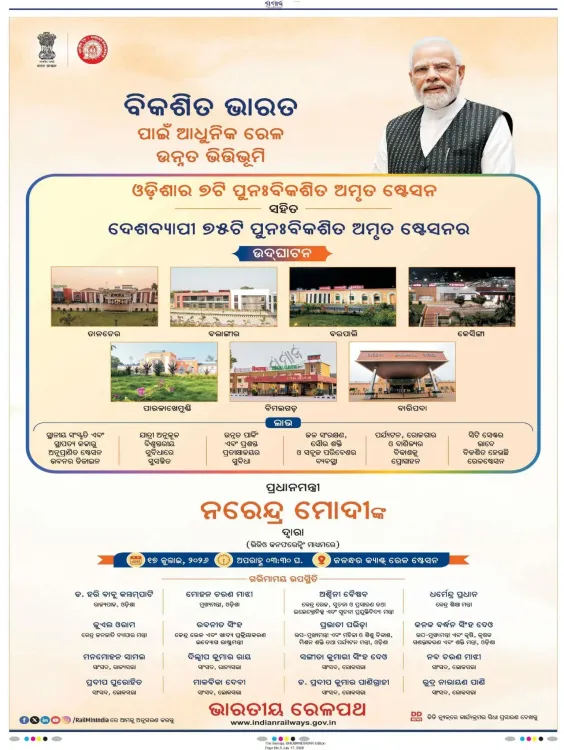
Union Education Minister Dharmendra Pradhan on Friday, 17 July 2026, shared a message in Odia emphasising the role of modern railways and upgraded infrastructure in realising the Viksit Bharat vision, posting on his official X account to highlight the connectivity agenda central to India's 2047 development target.
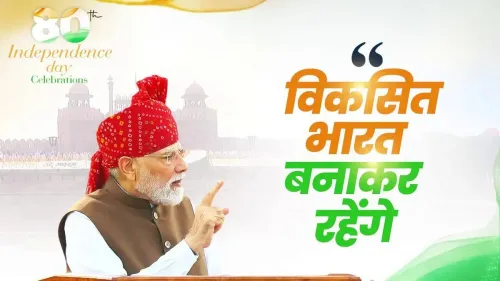
The post, written in Odia, reads: 'ବିକଶିତ ଭାରତ ପାଇଁ ଆଧୁନିକ ରେଳ ସହ ଉନ୍ନତ ଭିତ୍ତିଭୂମି' — translated as 'Modern rail and improved infrastructure for a Viksit Bharat.' The brief but pointed message, accompanied by an image, reflects a deliberate effort by the senior BJP leader to communicate national infrastructure priorities to his Odia-speaking constituency.
Context
The phrase 'Viksit Bharat' — meaning 'Developed India' — is the Narendra Modi government's overarching framework for transforming India into a developed economy by 2047, the centenary of Independence. Railway modernisation has been positioned as a foundational pillar of this vision, with the central government consistently raising capital expenditure on the sector since 2014. Regional leaders within the ruling party have made it a practice to communicate these national programmes in local languages, reinforcing the message at the grassroots level.
Policy Backdrop
The government's railway push is backed by a series of structural programmes. The National Infrastructure Pipeline, launched in 2019, laid out an ambitious multi-year roadmap to expand rail, road, and airport capacity through 2025 and beyond. More recently, the Amrit Bharat Station redevelopment scheme, announced in 2023, targets the modernisation of over 1,300 railway stations across the country, aiming to improve passenger amenities, accessibility, and urban connectivity.
Alongside station redevelopment, Indian Railways — the state-owned network — has been executing dedicated freight corridors designed to decongest passenger lines and reduce logistics costs, a key competitiveness lever for the broader economy. These investments together form the backbone of the physical infrastructure narrative that the government has tied directly to long-term growth.
Stakeholders and Impact
The beneficiaries of railway modernisation span a wide cross-section: daily rail commuters and long-distance passengers stand to gain from improved stations and faster services, while state governments — including Odisha — are stakeholders in how federal rail investment is allocated and executed on the ground. Pradhan, who represents Odisha as a senior national leader, has consistently flagged infrastructure development in the state as a priority, making his post particularly resonant for audiences in the region.
For the broader economy, upgraded freight corridors and modernised stations are expected to reduce supply-chain bottlenecks, attract industrial investment, and support the employment generation goals embedded within the Viksit Bharat framework.
What's Next
Attention will now turn to progress reports on specific railway projects in Odisha and the scale of capital allocation for rail modernisation in the next Union Budget. As the government approaches the midpoint of its 2047 development horizon, the pace of infrastructure delivery — particularly in states like Odisha that are still building out connectivity — will be a key metric by which the Viksit Bharat promise is measured. Pradhan's post signals that the political messaging around this agenda is being actively sustained at the regional level.
Point of View
Particularly for Odisha, where connectivity gaps have historically constrained economic growth. The post also sustains political momentum around railway capital expenditure at a time when delivery on the Amrit Bharat Station scheme and freight corridor timelines will increasingly be scrutinised. Ultimately, it reflects the BJP's broader strategy of keeping the 2047 horizon in public discourse as a unifying, aspirational frame for every policy domain — from education to rail.
NationPress
15 Oct 2026
Frequently Asked Questions
What did Dharmendra Pradhan say about railways?
On 17 July 2026, Dharmendra Pradhan posted in Odia stating that 'modern rail and improved infrastructure' are essential for achieving the Viksit Bharat vision of a developed India by 2047.
What is Viksit Bharat?
Viksit Bharat, meaning 'Developed India,' is the Modi government's official vision to transform India into a fully developed economy by 2047, the 100th anniversary of Independence, with infrastructure as a core pillar.
What is the Amrit Bharat Station scheme?
The Amrit Bharat Station scheme, announced in 2023, is a central government programme to redevelop more than 1,300 railway stations across India with modern amenities and improved passenger facilities.
Why does Dharmendra Pradhan post in Odia about national policies?
As a senior BJP leader from Odisha, Pradhan regularly communicates national government programmes in Odia to connect with his regional constituency and highlight the local benefits of central infrastructure investments.
What railway projects are planned for Odisha under the National Infrastructure Pipeline?
While specific project-level details for Odisha require official government updates, the National Infrastructure Pipeline launched in 2019 covers rail expansion across all states; progress on Odisha-specific allocations is expected to feature in forthcoming Union Budget announcements.