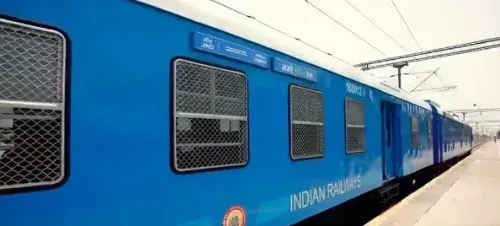
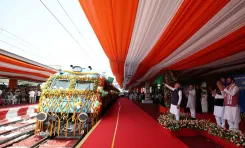
Goyal Hails India's First Hydrogen Train Flag-Off by PM Modi

Synopsis
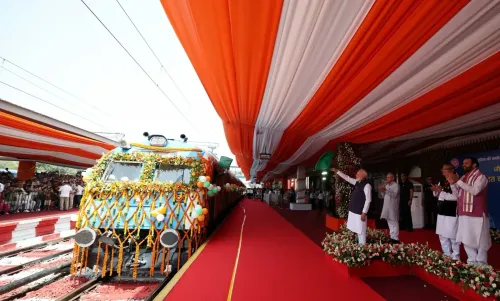
Prime Minister Modi flagged off India's first indigenous hydrogen-powered train on the Jind-Sonipat route on 17 July 2026. Commerce Minister Piyush Goyal called it a 'historic moment,' citing the train's 1,200 kW fuel-cell system and indigenous refuelling infrastructure as milestones in India's net-zero and Aatmanirbhar Bharat agenda.
Key Takeaways
PM Narendra Modi flagged off India's first indigenous hydrogen-powered train on the Jind-Sonipat route in Haryana on 17 July 2026 .
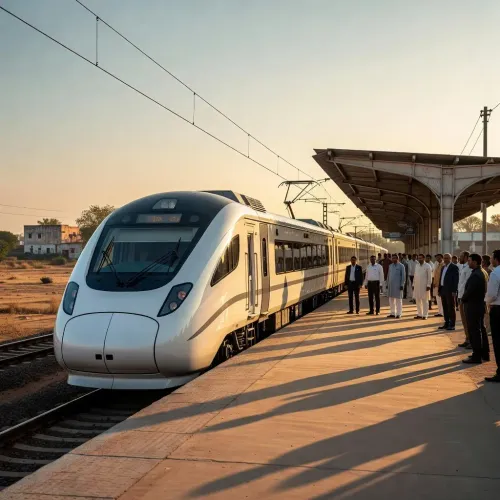
The train uses a 1,200 kW hydrogen fuel cell propulsion system and emits only water vapour, making it a zero-direct-emission vehicle.
The 10-coach train is backed by indigenous hydrogen storage and refuelling infrastructure commissioned at Jind .
The launch advances both the National Green Hydrogen Mission (2023) and the Aatmanirbhar Bharat self-reliance agenda.
India joins Germany, Japan, and South Korea as nations operating hydrogen fuel-cell rail propulsion.
Future expansion to additional routes depends on operational data from the Jind-Sonipat pilot and scale-up of green-hydrogen production clusters.
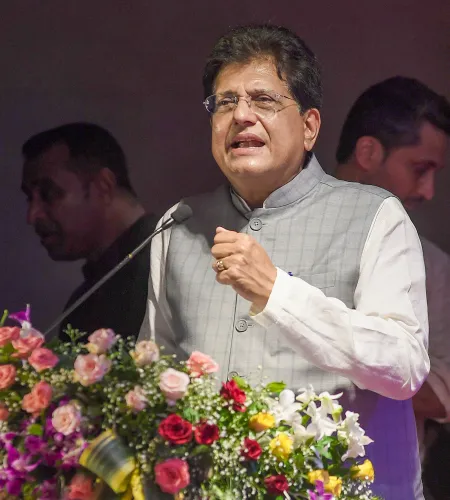
Union Commerce and Industry Minister Piyush Goyal on Friday, 17 July 2026 called the launch of India's first indigenous hydrogen-powered train a 'truly historic moment for India's green mobility future,' as Prime Minister Narendra Modi prepared to flag off the train on the Jind-Sonipat route in Haryana.
Context
Minister Goyal described the train as a '10-coach engineering marvel' powered by a 1,200 kW hydrogen fuel cell propulsion system that emits only water vapour. The flag-off on the Jind-Sonipat corridor marks the first time an indigenously developed hydrogen train has entered passenger-grade service on the Indian rail network. Indigenous hydrogen storage and refuelling infrastructure has been commissioned at Jind to support the pilot.
In his post, the Minister linked the milestone directly to Prime Minister Modi's stated vision of 'innovation-led, net-zero growth,' and said India now joins a select group of nations pioneering sustainable rail propulsion.
Policy Backdrop
Indian Railways first announced a hydrogen-for-rail programme in 2020, targeting the deployment of hydrogen trains on heritage and select mainline routes. The Union Budget 2022-23 subsequently earmarked funds for hydrogen fuel-cell train pilots and associated refuelling plants, providing the fiscal scaffolding for today's launch.
The broader policy anchor is the National Green Hydrogen Mission, a central scheme launched in 2023 that allocates resources for green hydrogen production and mobility pilots across sectors. The Jind-Sonipat pilot sits squarely within that mission's rail-mobility component, and also advances the Aatmanirbhar Bharat self-reliance agenda by relying on domestically developed propulsion and fuelling technology.
India's net-zero 2070 commitment, made at COP26, has given additional urgency to decarbonising the railways, which account for a significant share of the country's energy consumption. Hydrogen traction is seen as a viable zero-emission alternative for routes where electrification is not yet feasible.
Stakeholders and Impact
Rail commuters on the Jind-Sonipat route will be the first in India to travel on a zero-direct-emission hydrogen train. For domestic clean-energy manufacturers and component suppliers, the launch signals a potential new growth corridor as Indian Railways evaluates expansion of the technology to additional routes.
India's entry into hydrogen rail places it alongside Germany, Japan, and South Korea, which have each developed or deployed fuel-cell rail propulsion systems. Analysts note that indigenous development of the propulsion stack and refuelling infrastructure, if confirmed at scale, would reduce dependence on imported green-tech and support domestic job creation in the hydrogen value chain.
What's Next
The immediate focus will be on operational performance data from the Jind-Sonipat pilot, including reliability, refuelling turnaround times, and passenger capacity metrics. Indian Railways has previously indicated interest in extending hydrogen train operations to heritage routes, and the success of this pilot is expected to shape that timeline.
On the supply side, the commissioning of green-hydrogen production clusters under the National Green Hydrogen Mission will be critical to scaling the fuel supply chain needed for a wider fleet. Minister Goyal's public endorsement of the launch underscores the government's intent to position hydrogen rail as a flagship achievement of its clean-energy and self-reliance agenda heading into the second half of the decade.
Point of View
The National Green Hydrogen Mission, and India's COP26 net-zero 2070 pledge. By choosing an indigenous propulsion system and domestic refuelling infrastructure, the government is signalling that it intends to own the hydrogen rail value chain rather than import it. Minister Goyal's prominent public endorsement reflects the BJP's broader strategy of associating infrastructure firsts with PM Modi's personal brand ahead of electoral cycles. The real test, however, will be whether the Jind-Sonipat pilot can demonstrate the operational reliability and cost economics needed to justify a national fleet expansion.
NationPress
17 Jul 2026
Frequently Asked Questions
What is India's first hydrogen train and where does it run?
India's first indigenous hydrogen-powered train runs on the Jind-Sonipat route in Haryana. It is a 10-coach train powered by a 1,200 kW hydrogen fuel cell propulsion system that emits only water vapour.
Who flagged off India's hydrogen train?
Prime Minister Narendra Modi flagged off India's first hydrogen-powered train on 17 July 2026 , with Commerce Minister Piyush Goyal marking the occasion on social media.
What is the National Green Hydrogen Mission and how does it relate to this train?
The National Green Hydrogen Mission is a central government scheme launched in 2023 to fund green hydrogen production and mobility pilots. The Jind-Sonipat hydrogen train pilot is a key rail-mobility component of this mission.
Which countries already have hydrogen trains?
Germany, Japan, and South Korea are among the nations that have developed or deployed hydrogen fuel-cell rail propulsion. India's launch places it in this group for the first time.
What is Aatmanirbhar Bharat and why is it linked to the hydrogen train?
Aatmanirbhar Bharat is the Indian government's self-reliance initiative launched in 2019-2020 to promote indigenous manufacturing. The hydrogen train uses domestically developed propulsion and refuelling technology, directly embodying the mission's goals.