PM Modi Launches Development Projects in Jind, Haryana
Synopsis
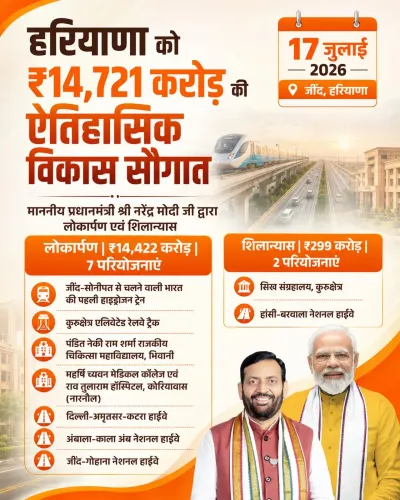
Prime Minister Narendra Modi visited Jind, Haryana on 17 July 2026 to inaugurate bundled projects covering clean mobility, connectivity, healthcare and cultural heritage. The launches are framed around the government's 'Ease of Living' agenda and continued push for accelerated state development.
Key Takeaways
PM Modi attended a project-launch event in Jind, Haryana on 17 July 2026 .
Projects span four sectors: clean mobility, connectivity, healthcare, and cultural heritage .
The launches are framed under the government's 'Ease of Living' narrative, a policy benchmark introduced in 2017 .
Clean mobility components align with the FAME scheme and central EV-promotion policies active since 2015 .
Primary beneficiaries include Haryana commuters, patients, and communities with cultural heritage sites.
Detailed project budgets and timelines are yet to be officially released by the Haryana government and central ministries.
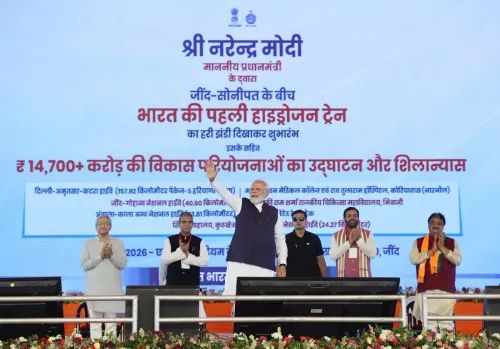
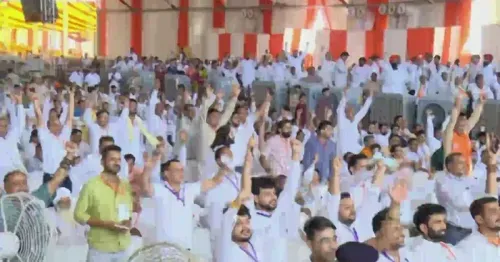
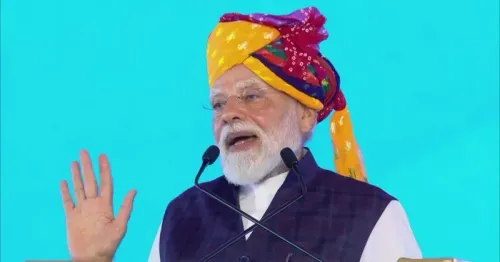
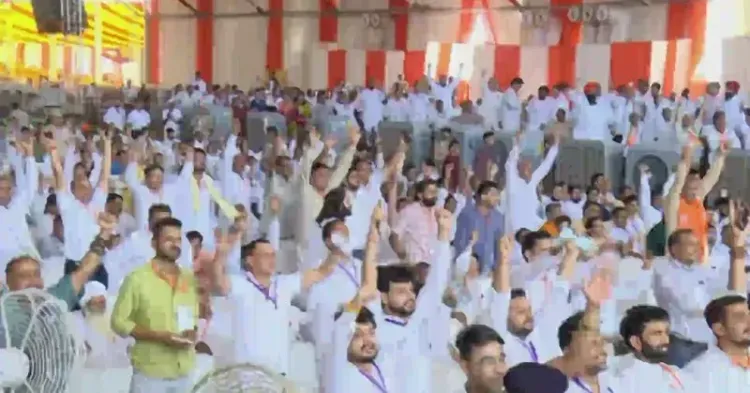
Prime Minister Narendra Modi visited Jind, Haryana, on Friday, 17 July 2026, to inaugurate a cluster of projects spanning clean mobility, connectivity, healthcare, and cultural heritage, framing the launches as a step toward improving citizens' quality of life and accelerating the state's development.
Context
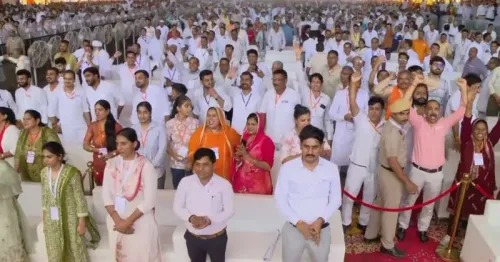
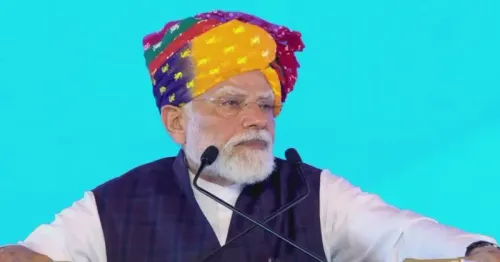
Addressing the gathering in Jind, PM Modi said he was 'happy to be in Jind' and described the bundled project launches as efforts that 'will improve Ease of Living and accelerate Haryana's development.' The remarks were accompanied by a live broadcast streamed on the official X account. The visit marks one of several prime ministerial trips to Haryana in recent years, each anchored around the inauguration of centrally supported infrastructure and social-sector schemes.
Policy Backdrop
The 'Ease of Living' framing traces back to the Ministry of Housing and Urban Affairs, which introduced the Ease of Living Index in 2017 to benchmark quality-of-life improvements across Indian cities. Clean mobility, one of the four pillars cited by the Prime Minister, aligns with the FAME scheme — launched in 2015 — and subsequent electric-vehicle promotion policies that the central government has extended to states including Haryana. The simultaneous launch of connectivity, healthcare, and cultural-heritage projects reflects a recurring central-government approach of bundling diverse schemes into a single high-visibility event.
Haryana, which borders Delhi and holds strategic electoral significance, has been a consistent recipient of centrally sponsored infrastructure pushes. Jind, the district headquarters, sits at the geographic heart of the state and has been identified in multiple rounds of urban and rural development planning.
Stakeholders and Impact
The projects are expected to benefit Haryana residents across several segments: commuters who stand to gain from improved road and transit connectivity, patients who may see expanded or upgraded healthcare facilities, and communities whose cultural landmarks are slated for heritage conservation. Clean-mobility infrastructure, if it includes electric-bus corridors or charging networks, would reduce vehicular emissions in a region that frequently records high pollution levels during winter months.
Local civic bodies, the Haryana state government, and central ministries covering road transport, health, and culture are the primary institutional stakeholders responsible for implementation and maintenance of the launched projects.
What's Next
Detailed project costs, funding-sharing ratios between the central and state governments, and completion timelines are expected to be released by the Haryana government and the relevant central ministries in the days following the inauguration. Observers will track whether the clean-mobility components receive dedicated budget allocations under existing EV-promotion frameworks or represent new central outlays. Progress on the healthcare and cultural-heritage components will be monitored by district administration and parliamentary committees overseeing social-sector expenditure. The Jind visit reinforces the government's stated intent to extend development dividends beyond metropolitan centres and into Haryana's smaller district towns.
Point of View
Connectivity, healthcare and heritage into a single event maximises political visibility while distributing credit across multiple ministries. The explicit invocation of 'Ease of Living' signals that the government intends to keep quality-of-life metrics central to its development narrative ahead of future electoral cycles. Whether the projects translate into measurable on-ground improvements will depend on implementation timelines and inter-governmental funding clarity, which remain to be disclosed.
NationPress
15 Oct 2026
Frequently Asked Questions
Why did PM Modi visit Jind in Haryana?
PM Modi visited Jind on 17 July 2026 to inaugurate a set of projects covering clean mobility, connectivity, healthcare and cultural heritage, framing them as measures to improve 'Ease of Living' and accelerate Haryana's development.
What projects were launched by PM Modi in Jind, Haryana?
The projects span four sectors — clean mobility, road and transit connectivity, healthcare infrastructure, and cultural heritage conservation — though detailed names and budgets are yet to be officially released.
What is the Ease of Living Index that PM Modi referenced?
The Ease of Living Index was introduced in 2017 by the Ministry of Housing and Urban Affairs to benchmark quality-of-life improvements in Indian cities; the government frequently uses the 'Ease of Living' phrase to describe citizen-centric development initiatives.
What is the FAME scheme and how does it relate to clean mobility in Haryana?
The FAME (Faster Adoption and Manufacturing of Electric Vehicles) scheme was launched in 2015 to promote electric vehicles across India; Haryana has been among the states receiving support under this and subsequent EV-promotion policies.
Who benefits from the projects launched in Jind?
The primary beneficiaries are Haryana residents, particularly commuters who gain from improved connectivity, patients who may access upgraded healthcare facilities, and local communities whose cultural heritage sites are earmarked for conservation.