CM Bhajan Lal Signs ISA Framework for Clean Energy
Synopsis
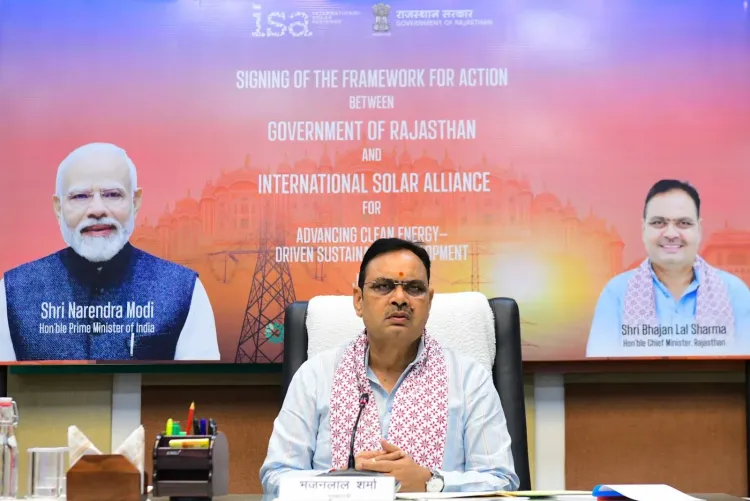
Rajasthan CM Bhajan Lal Sharma signed a 'Framework for Action' with the International Solar Alliance on 8 July 2026, aiming to accelerate clean energy, global investment, and sustainable development in the state, in line with PM Modi's Panchamrit climate commitments.
Key Takeaways
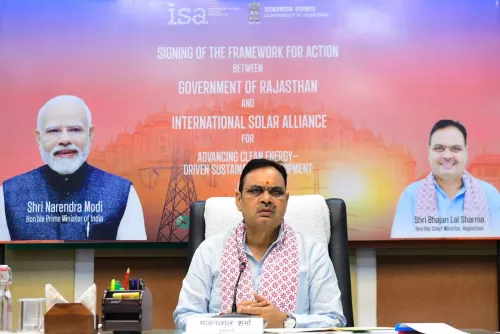
Rajasthan CM Bhajan Lal Sharma and the International Solar Alliance signed the 'Framework for Action (FFA): Advanced Clean Energy-driven Sustainable Development' on 8 July 2026 .
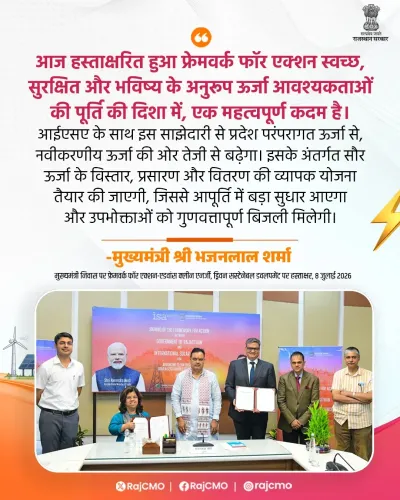
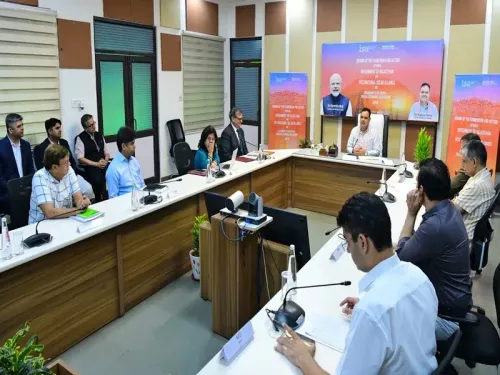
The signing took place at the Chief Minister's residence during a meeting with state energy department and ISA representatives.
The ISA is a treaty-based intergovernmental organisation co-founded by India and France at COP21 in 2015 .
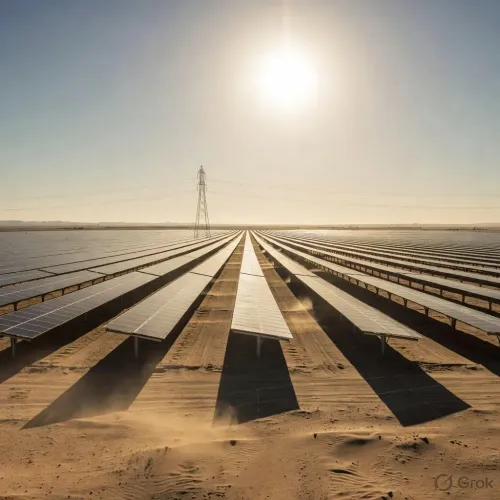
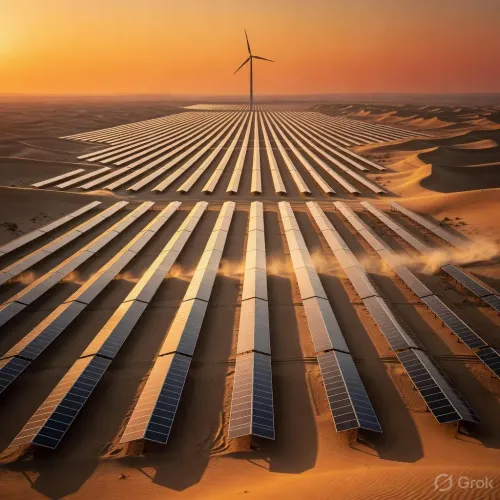
Rajasthan has one of India's highest solar irradiation levels and hosts the Bhadla Solar Park , one of the world's largest solar installations.
India targets 500 GW of non-fossil fuel capacity by 2030 under its Panchamrit climate commitments, with state-level ISA partnerships as a key mechanism.
The FFA is expected to unlock global investment, technology transfer, and capacity-building opportunities for Rajasthan's clean energy sector.
Rajasthan Chief Minister Bhajan Lal Sharma on Wednesday, 8 July 2026, chaired a meeting at the Chief Minister's residence with representatives of the state's energy department and the International Solar Alliance (ISA), during which the Rajasthan government signed a landmark cooperation agreement with the global solar body. The accord — titled 'Framework for Action (FFA): Advanced Clean Energy-driven Sustainable Development' — is designed to connect Rajasthan with new dimensions of clean energy, global collaboration, investment, and innovation.
Context
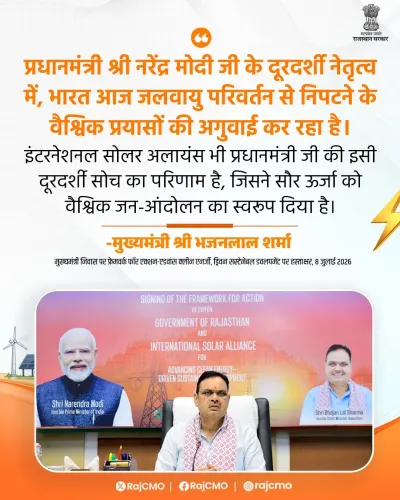
Posting in Hindi on X, CM Sharma described the signing as 'hrit vikas ki disha mein ek mahatvapurn mil ka patthar' [an important milestone on the path to green development]. He credited the agreement to the 'visionary leadership' of Prime Minister Narendra Modi, who co-founded the ISA, and expressed confidence that the partnership would 'provide new energy to the resolve of a developed Rajasthan and lay a strong foundation for a prosperous, secure, self-reliant and sustainable future for coming generations.'
The meeting brought together senior officials from Rajasthan's Energy Department and ISA representatives, signalling a formal institutional channel between the state government and the treaty-based intergovernmental body.
Policy Backdrop
The International Solar Alliance was launched in 2015 at COP21 in Paris by India and France with a mandate to mobilise solar investments and accelerate deployment across member countries. India's broader climate target — 500 GW of non-fossil fuel capacity by 2030 under its Panchamrit commitments — has encouraged state-level partnerships with the ISA as a mechanism for technical and financial support.
Rajasthan holds one of the country's highest solar irradiation levels and is already home to landmark infrastructure including the Bhadla Solar Park. The state's Solar Energy Policy 2019 had set a target of 30 GW of renewable capacity by 2024–25, and the FFA is expected to build on that foundation. Multiple Indian states have signed similar cooperation frameworks with the ISA since 2020, reflecting coordinated centre-state action on renewable targets.
Stakeholders and Impact
The agreement is likely to benefit renewable energy investors, clean energy project developers, and communities in Rajasthan's arid districts where utility-scale solar parks and emerging green hydrogen projects are being planned. Access to ISA's global network could open pathways to concessional financing, technology transfer, and capacity-building programmes for the state's energy workforce.
For the ISA, the Rajasthan partnership adds a high-potential Indian state to its sub-national cooperation portfolio, potentially strengthening the alliance's case for mobilising private capital into large-scale solar corridors.
What's Next
The immediate focus will shift to operationalising the FFA through specific project pipelines, investment commitments, and implementation timelines. Upcoming ISA Assembly sessions could provide a platform for Rajasthan to seek additional technical or financial support under the new framework.
As India's clean energy transition accelerates, the Rajasthan–ISA agreement positions the state as a potential model for sub-national climate partnerships — one that other states with strong solar potential may look to replicate in the months ahead.
Point of View
Lending the state's solar ambitions institutional credibility. By invoking PM Modi's co-founding of the ISA, CM Sharma is also reinforcing the political narrative of centre-state alignment on climate action, a message with resonance ahead of India's ongoing international climate diplomacy. The agreement reflects a broader pattern where large solar-potential states are leveraging ISA's network to attract concessional capital and technical expertise that purely domestic channels may not offer. Whether the FFA translates into tangible project pipelines will be the real test of its significance.
NationPress
6 Oct 2026
Frequently Asked Questions
What is the Framework for Action signed between Rajasthan and the ISA?
The 'Framework for Action (FFA): Advanced Clean Energy-driven Sustainable Development' is a cooperation agreement signed on 8 July 2026 between the Rajasthan government and the International Solar Alliance , aimed at advancing clean energy, global investment, and sustainable development in the state.
What is the International Solar Alliance and who founded it?
The International Solar Alliance (ISA) is a treaty-based intergovernmental organisation founded in 2015 at COP21 by India and France , with PM Narendra Modi among its key co-founders, to accelerate solar energy deployment and mobilise investment globally.
Why is Rajasthan important for solar energy in India?
Rajasthan has one of the highest solar irradiation levels in India and hosts major infrastructure such as the Bhadla Solar Park . The state's arid geography makes it a primary site for utility-scale solar parks and emerging green hydrogen projects.
What is India's solar energy target by 2030?
India has committed to achieving 500 GW of non-fossil fuel electricity capacity by 2030 under its Panchamrit climate pledges, with state-level partnerships with the ISA forming a key part of the strategy.
How will the Rajasthan–ISA agreement benefit the state?
The agreement is expected to open pathways for global investment, technology transfer, concessional financing, and capacity-building for Rajasthan's renewable energy sector, benefiting project developers, investors, and communities in solar-rich districts.