Rajasthan Signs ISA Framework, First Indian State to Do So
Synopsis
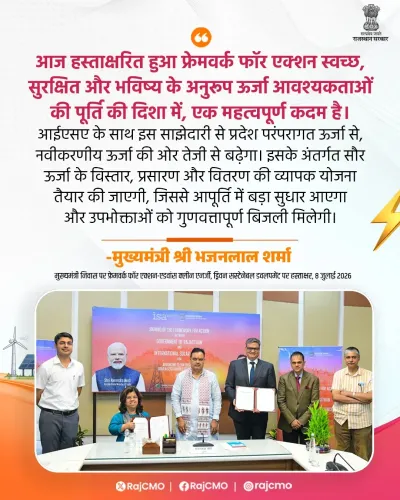
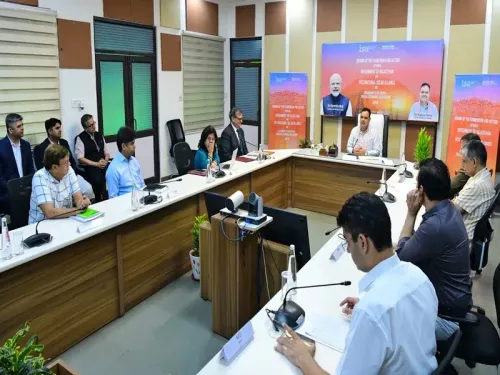
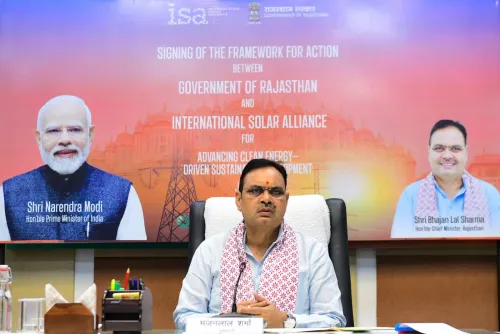
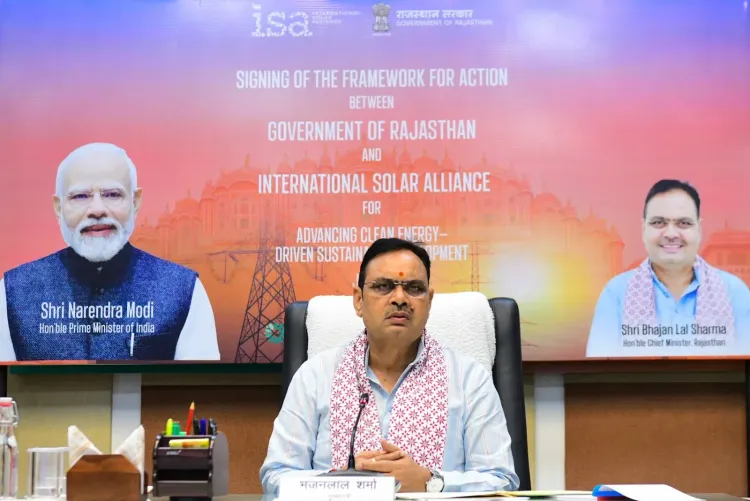
Rajasthan has become the first Indian state to sign a framework agreement with the International Solar Alliance, the 128-nation intergovernmental body. The 'Framework for Action: Advance Clean Energy-Driven Sustainable Development' was signed at the Chief Minister's Residence on 8 July 2026 in the presence of CM Bhajanlal Sharma.
Key Takeaways
Rajasthan is the first Indian state to sign a framework agreement directly with the International Solar Alliance (ISA) .
The agreement is titled the 'Framework for Action: Advance Clean Energy-Driven Sustainable Development' .
The signing took place at the Chief Minister's Residence on 8 July 2026 in the presence of CM Bhajanlal Sharma .
The ISA, co-founded by PM Modi at COP21 in 2015 , now comprises over 128 member countries .
The move could open technical cooperation, capacity-building, and financing channels for Rajasthan's solar sector.
The agreement may set a precedent for other high-solar states like Gujarat and Karnataka to pursue similar ISA partnerships.
The Chief Minister's Office of Rajasthan announced on Wednesday, 8 July 2026 that Rajasthan has become the first Indian state to sign a framework agreement with the International Solar Alliance (ISA), the 128-nation intergovernmental body, marking a direct sub-national partnership with the multilateral clean-energy platform.
Context
The agreement — formally titled the 'Framework for Action: Advance Clean Energy-Driven Sustainable Development' — was signed at the Chief Minister's Residence in the presence of Chief Minister Bhajanlal Sharma. The signatories were the state's Energy Secretary and the Director General of the International Solar Alliance.
The CMO's post declared: 'Rajasthan desh ka aisa pehla rajya ban gaya hai' ('Rajasthan has become the first such state in the country') to enter into this framework with the ISA, positioning the state as an emerging global hub for solar energy — not just a national leader.
Policy Backdrop
The International Solar Alliance was co-launched by Prime Minister Narendra Modi and then French President François Hollande at COP21 in Paris in 2015, with the goal of mobilising solar deployment across sun-rich nations. It has since grown to over 120 member countries, making India's diplomatic solar initiative one of the most expansive multilateral energy platforms in the world.
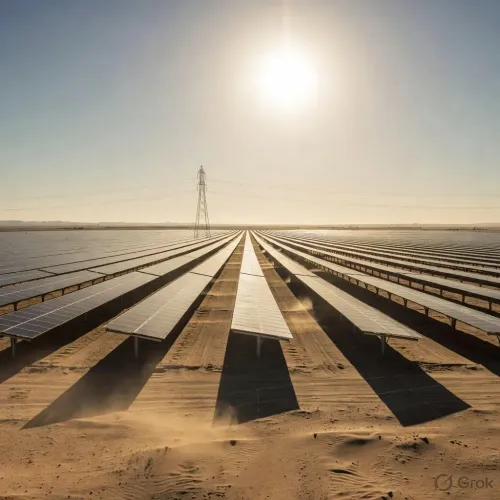
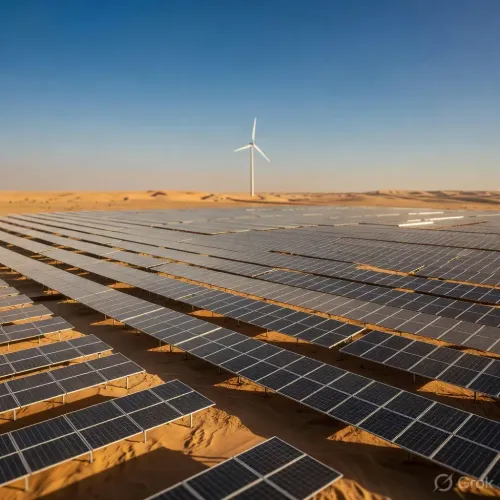
Rajasthan is a natural anchor for such ambitions: the state hosts the Bhadla Solar Park, one of the world's largest solar installations, and benefits from among the highest solar irradiance levels in India. The state's solar energy policy framework, last updated in 2019, was designed to attract large-scale private investment into solar parks across the desert region.
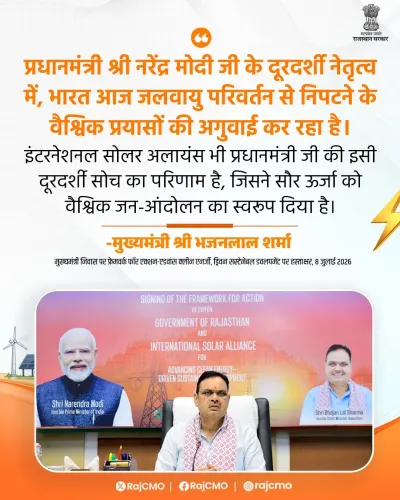
Speaking at the signing ceremony, CM Bhajanlal Sharma said that under Prime Minister Modi's visionary leadership, India is today leading global efforts to tackle climate change. He described the ISA itself as a product of that vision, one that has given solar energy the character of a global people's movement.
Stakeholders and Impact
The framework directly links a sub-national government — for the first time — to the ISA's multilateral clean-energy architecture, a model that could unlock technical cooperation, capacity-building support, and project financing channels for Rajasthan's solar sector. Solar project developers, state energy departments, and ISA member nations are among the primary stakeholders who stand to benefit from the coordination this agreement enables.
India's renewable energy strategy has long relied on combining central diplomatic initiatives with state-level execution. Rajasthan's solar capacity addition has consistently outpaced many peer states under national targets set since 2015, and this agreement formalises that momentum within an international institutional framework.
What's Next
Attention will now turn to the specific pilot projects and rollout timelines envisaged under the Framework for Action, details of which are yet to be made public. The agreement could set a precedent for other high-irradiance states such as Gujarat and Karnataka to pursue similar sub-national partnerships with the ISA. If replicated, it would represent a structural shift in how India's federal renewable energy push engages with multilateral platforms — moving beyond the central government as the sole interlocutor.
Point of View
But active participants in multilateral frameworks. For the BJP government in Jaipur, the signing also carries political value: it ties the state's solar credentials to PM Modi's foundational diplomatic legacy, reinforcing the party's clean-energy narrative ahead of future electoral cycles. The real test will be whether the framework translates into tangible project pipelines or remains largely symbolic. If Rajasthan can demonstrate measurable outcomes, the ISA sub-national model could be replicated across India's sunbelt states, deepening the country's global solar leadership at a granular level.
NationPress
7 Oct 2026
Frequently Asked Questions
What is the International Solar Alliance and how many countries are in it?
The International Solar Alliance (ISA) is an intergovernmental body co-founded by India and France at COP21 in 2015 to promote solar energy deployment. It currently comprises over 128 member countries.
What did Rajasthan sign with the ISA?
Rajasthan signed the 'Framework for Action: Advance Clean Energy-Driven Sustainable Development' with the ISA on 8 July 2026, making it the first Indian state to enter into such a direct sub-national agreement with the alliance.
Who signed the ISA framework on behalf of Rajasthan?
The framework was signed by Rajasthan's Energy Secretary and the Director General of the International Solar Alliance, in the presence of Chief Minister Bhajanlal Sharma at the Chief Minister's Residence.
Why is Rajasthan significant for solar energy in India?
Rajasthan has some of the highest solar irradiance levels in India and is home to the Bhadla Solar Park, one of the world's largest solar installations. The state has consistently been a leading contributor to India's solar capacity addition.
Will other Indian states sign similar agreements with the ISA?
No official announcements have been made, but the Rajasthan agreement could set a precedent for other high-irradiance states such as Gujarat and Karnataka to pursue similar sub-national frameworks with the ISA.