CM Fadnavis: Mumbai hospitals to add 3,000 beds, reach 8,056 total

Synopsis
Chief Minister Devendra Fadnavis told the Maharashtra assembly on 8 July 2026 that Mumbai will gain 3,000 new hospital beds through redevelopment and new projects, raising total capacity to 8,056 — a significant pledge made during the Monsoon Session 2026.
Key Takeaways
3,000 new beds will be added to Mumbai's public hospital network upon completion of redevelopment and new infrastructure projects.
Total hospital bed capacity in Mumbai will rise to 8,056 once all projects are complete.
The announcement was made by CM Devendra Fadnavis on the floor of the Maharashtra Vidhan Sabha on 8 July 2026 during the Monsoon Session 2026 .
Both hospital redevelopment of existing facilities and new projects are cited as sources of the additional capacity.
Delivery timelines and specific project lists were not detailed in the announcement and are expected to be the focus of further legislative scrutiny.
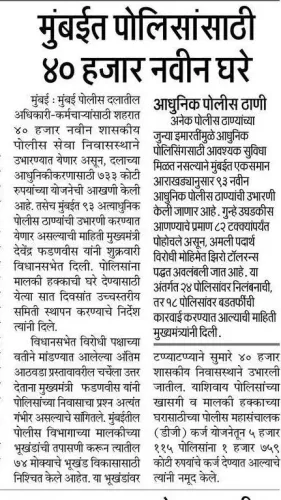
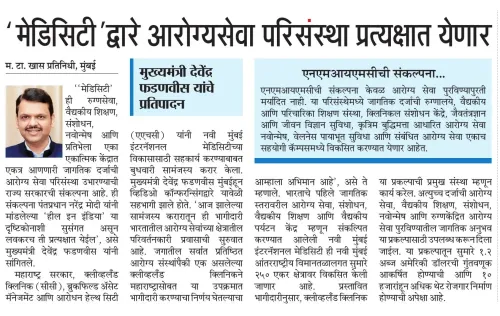
Maharashtra Chief Minister Devendra Fadnavis announced on Wednesday, 8 July 2026 that Mumbai will add 3,000 new hospital beds upon completion of ongoing redevelopment and new infrastructure projects, bringing the city's total public hospital bed capacity to 8,056. The announcement was made on the floor of the Maharashtra Vidhan Sabha during the Monsoon Session 2026.
Context
Addressing the assembly, CM Fadnavis stated — in both English and Marathi — that hospital redevelopment and new projects, once complete, would add 3,000 beds to Mumbai's public health network. In Marathi he said: 'मुंबईतील रुग्णालयांची पुनर्बांधणी आणि नव्या प्रकल्पांची कामे पूर्ण झाल्यानंतर 3000 नव्या बेड्सची भर पडेल' ['After the completion of hospital redevelopment and new project works in Mumbai, 3,000 new beds will be added']. The statement was made during a legislative session, a forum where infrastructure commitments carry formal weight and are subject to scrutiny by opposition members.
Policy Backdrop
Mumbai, as India's most populous city and Maharashtra's commercial capital, has long placed extraordinary demand on its public health infrastructure. Hospitals under the Brihanmumbai Municipal Corporation (BMC) and the state government together serve millions of patients annually, many of them from lower-income groups who rely exclusively on public facilities. Urban population pressure, combined with patient inflows from surrounding districts, has made bed shortages a recurring concern for successive administrations.
State governments across India have periodically announced public hospital expansions during assembly sessions to signal healthcare investment, often linking them to redevelopment of ageing facilities or greenfield projects on government-owned land. The current announcement follows that established pattern, with the Monsoon Session 2026 serving as the legislative backdrop for the disclosure.
Stakeholders and Impact
The primary beneficiaries of the expanded capacity would be Mumbai's patients — particularly those dependent on public hospitals who currently face long waiting periods for admission and treatment. Hospital staff, including doctors, nurses, and paramedics, would also be affected, as additional beds typically require commensurate increases in workforce and equipment. The announcement is likely to draw attention from patient-welfare groups, municipal health administrators, and opposition legislators who will seek timelines and budget allocations.
A jump from the current baseline to 8,056 beds — an addition of 3,000 — would represent a significant proportional increase in the city's public bed count, if realised on schedule. The scale of the commitment places pressure on both state and municipal agencies to coordinate project execution and commissioning within stated timelines.
What's Next
The government will be expected to table or reference specific project lists, budget provisions, and completion timelines — either during the ongoing Monsoon Session or in subsequent supplementary budget discussions. Opposition legislators are likely to seek accountability on delivery schedules, given that large infrastructure announcements in the health sector have historically faced delays. Progress on individual hospital redevelopment projects will be a key indicator of whether the 3,000-bed target is met within the projected period.
Point of View
On-record commitment — raising the political stakes for delivery. Mumbai's chronically strained public hospital system makes this a high-visibility promise, and the specific figure of 8,056 total beds gives opposition and civil society a clear benchmark to track. The timing, during the Monsoon Session, follows a familiar pattern of using assembly floors to signal governance intent on urban services. Whether the pledge translates into commissioned beds will depend on inter-agency coordination between the state government and the BMC, and on whether budget provisions keep pace with project timelines.
NationPress
7 Oct 2026
Frequently Asked Questions
How many new hospital beds will Mumbai get according to CM Fadnavis?
CM Devendra Fadnavis announced that Mumbai will add 3,000 new hospital beds through hospital redevelopment and new infrastructure projects, bringing the total to 8,056 beds .
What is the current hospital bed capacity in Mumbai?
Based on CM Fadnavis's statement, the current capacity is implied to be approximately 5,056 beds in the public hospital network, with the addition of 3,000 beds taking the total to 8,056.
When did CM Fadnavis make this hospital beds announcement?
The announcement was made on 8 July 2026 during the Monsoon Session 2026 of the Maharashtra Vidhan Sabha in Mumbai.
Which hospitals in Mumbai are being redeveloped?
CM Fadnavis's statement referred broadly to hospital redevelopment and new projects across Mumbai, but specific hospital names or a project list were not detailed in the announcement made in the assembly.
Why is Mumbai expanding its public hospital capacity?
Mumbai's public hospitals serve millions of patients annually, including those from surrounding districts, and have long faced pressure from high patient volumes. Expanding bed capacity is aimed at reducing admission waiting times and improving healthcare access for residents dependent on public facilities.