CM Fadnavis Promises GST Relief for Dharavi Businesses
Synopsis
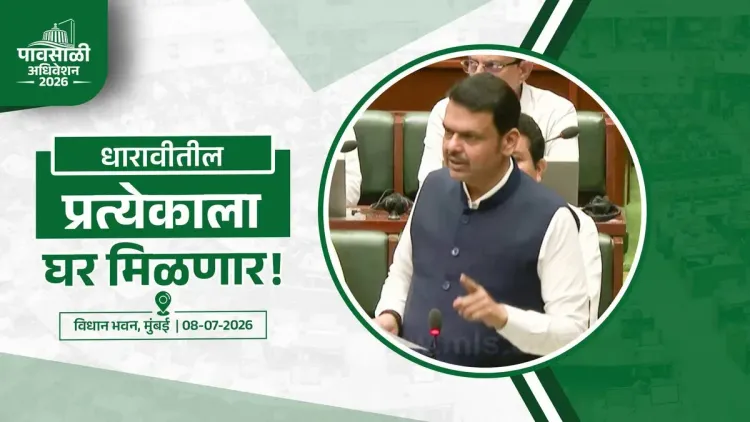
Maharashtra CM Devendra Fadnavis told the state assembly on 8 July 2026 that the Dharavi Redevelopment Project will resettle local businesses within the area and offer them a GST concession for five years, alongside housing for all residents.
Key Takeaways
Devendra Fadnavis announced on 8 July 2026 at the Maharashtra Legislative Assembly that the Dharavi Redevelopment Project will provide homes to all residents.
Local businesses in Dharavi will be resettled within the same locality — not displaced to other areas of the city.
A GST concession for the first five years will be granted to businesses resettled under the project.
The announcement was made during the Monsoon Session 2026 , lending it formal legislative weight.
Dharavi is Asia's largest informal settlement and a major hub for small-scale manufacturing, leather goods, and recycling industries.
The project builds on Maharashtra's SRA framework established in 1995 for private-participation-led slum redevelopment.
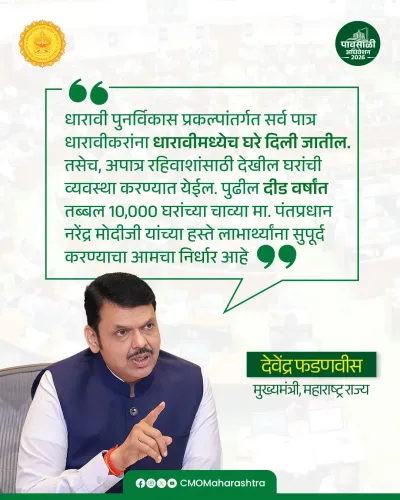
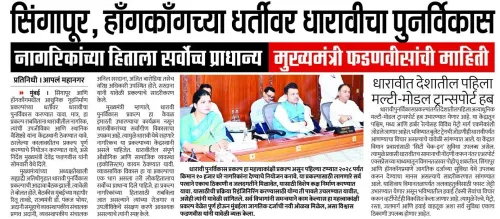
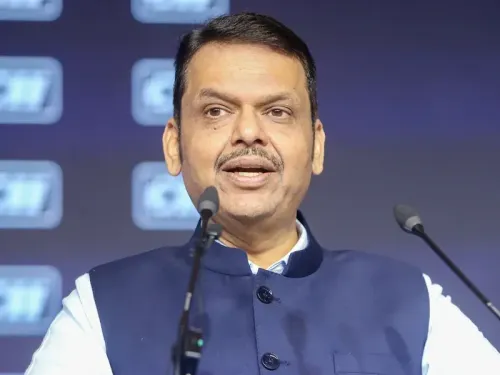
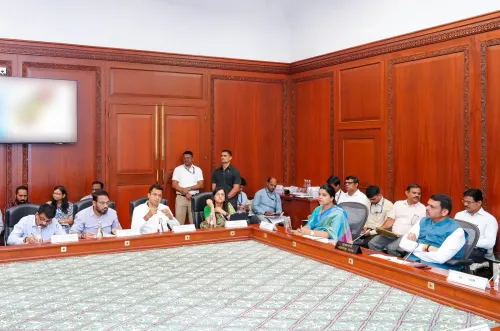
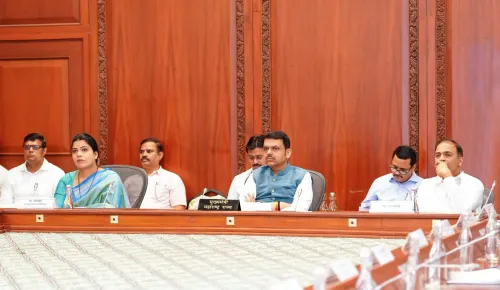
Maharashtra Chief Minister Devendra Fadnavis announced on Wednesday, 8 July 2026, that the Dharavi Redevelopment Project will not only provide homes to all residents but will also resettle local businesses within the area and grant them a GST concession for the first five years. The announcement was made from the floor of the Maharashtra Legislative Assembly, Mumbai, during the ongoing Monsoon Session 2026.
In his post on X, Fadnavis stated in both English and Marathi: 'धारावी पुनर्विकास प्रकल्पात प्रत्येकाला घरे देण्याबरोबरच स्थानिक उद्योगांचे तिथेच पुनर्वसन केले जाणार आहे' ['Along with ensuring homes for all under the Dharavi Redevelopment Project, local businesses will be resettled locally'], adding that a GST concession will be available for the first five years.
Context
Dharavi, located in the heart of Mumbai, is widely regarded as Asia's largest informal settlement and a significant economic hub, home to dense clusters of small-scale manufacturers, leather goods producers, and recycling enterprises. The area's informal economy supports tens of thousands of livelihoods that have historically been at risk of displacement during redevelopment drives.
The Dharavi Redevelopment Project has been in various stages of planning and execution for over two decades. An earlier proposal was advanced in 2004 under the then Congress-NCP government, involving a global tender for cluster-by-cluster redevelopment. The current initiative is structured around in-situ rehabilitation — rebuilding residents within the same geography rather than relocating them elsewhere in the city.
Policy Backdrop
Maharashtra's approach to slum redevelopment has long been governed by the Slum Rehabilitation Authority (SRA) framework, established in 1995, which enables private developers to participate in redevelopment through transferable development rights. The Dharavi project is among the most complex applications of this framework, given the area's scale and economic density.
The proposed five-year GST concession for local businesses marks a notable fiscal dimension to the project. Indian state governments have increasingly paired large-scale urban rehabilitation schemes with targeted tax or regulatory relief for micro-enterprises, recognising that housing provision alone does not secure livelihoods. Similar linkages have appeared in redevelopment projects across Mumbai, Delhi, and Bengaluru.
Stakeholders and Impact
Dharavi's resident and business communities stand as the primary stakeholders. The settlement is estimated to house a large population of both families and small enterprises whose continuity within the redeveloped zone has been a longstanding demand. The dual commitment — residential rehabilitation and local business resettlement — directly addresses concerns that redevelopment benefits landowners and developers while displacing the working poor.
For small manufacturers and traders, the GST concession offers a transitional buffer during what is typically a disruptive resettlement phase. The announcement, made in the Maharashtra Legislative Assembly during the Monsoon Session 2026, lends it the weight of a legislative commitment rather than a policy aspiration.
What's Next
Attention will now turn to legislative progress on enabling bills during the current Monsoon Session and the finalisation of resettlement modalities. The specific contours of the GST concession — including eligibility criteria, applicable business categories, and the administrative mechanism for the relief — are expected to be detailed in subsequent notifications or legislative instruments.
The Monsoon Session of the Maharashtra Legislative Assembly provides the immediate legislative window for advancing these measures, and any bills or resolutions tabled in the coming days will be closely watched by urban planners, business associations, and the hundreds of thousands of people whose futures are tied to Dharavi's transformation.
Point of View
The government is converting a policy promise into a legislative record, raising the political cost of future dilution. The GST concession component is particularly significant because it shifts the conversation from mere housing provision to economic continuity, a frame that has gained traction in urban policy circles. If implemented, this could serve as a template for other contested redevelopment projects in Maharashtra and beyond.
NationPress
7 Oct 2026
Frequently Asked Questions
What is the Dharavi Redevelopment Project?
The Dharavi Redevelopment Project is a long-planned initiative to transform Dharavi — Asia's largest informal settlement in Mumbai — through in-situ rehabilitation, providing formal housing and upgraded civic infrastructure while preserving local economic activity. It builds on Maharashtra's Slum Rehabilitation Authority framework established in 1995.
What GST concession did CM Fadnavis announce for Dharavi businesses?
CM Devendra Fadnavis announced on 8 July 2026 that local businesses resettled under the Dharavi Redevelopment Project will receive a GST concession for the first five years. The specific eligibility criteria and administrative mechanism are yet to be detailed in formal notifications.
Will Dharavi residents be relocated outside the area?
No. CM Fadnavis stated that the project is based on in-situ rehabilitation, meaning both residents and local businesses will be resettled within Dharavi itself, not moved to other parts of Mumbai.
When was the Dharavi Redevelopment Project announcement made?
The announcement was made on Wednesday, 8 July 2026, from the floor of the Maharashtra Legislative Assembly in Mumbai during the Monsoon Session 2026.
What industries are based in Dharavi?
Dharavi is home to a dense concentration of small-scale manufacturers, leather goods producers, pottery makers, and recycling enterprises, making it one of Mumbai's most significant informal economic hubs.